Ever stand in your driveway during a bad windstorm and wonder if this is the one that finally does damage? If you live anywhere near the Gulf Coast, that thought has probably crossed your mind more than once. The wind out here isn’t rare or occasional, it’s practically part of the seasonal rhythm, and at some point it’s worth knowing exactly what speed turns a normal breezy day into a shingle lifting problem.
Why “How Windy Is Too Windy” Is a Real Question on the Gulf Coast
Living along the Gulf means dealing with everything from routine gusty afternoons to full blown tropical systems, sometimes within the same season. That range makes it genuinely useful to understand where the actual threshold sits, rather than just assuming any wind under hurricane strength is harmless.
The Actual Wind Speeds That Start Causing Shingle Problems
Standard Shingle Wind Ratings Explained
Most asphalt shingles sold today carry a wind rating somewhere between 60 and 130 miles per hour, depending on the product line and how they were installed. That number represents a lab-tested threshold, not a guarantee, since real world conditions like age, nail placement, and prior storm exposure all affect how a specific roof actually performs.
Where Most Roofs Start Showing Stress
In practice, we start seeing lifted shingle edges and early stress on standard asphalt roofs once sustained winds climb into the 45 to 55 mile per hour range, with gusts pushing higher. That’s well below hurricane force, which surprises a lot of homeowners who assume only a named storm can cause real damage.
Why Age and Installation Quality Change the Threshold
A shingle roof installed correctly, with proper nailing patterns and sealed adhesive strips, holds up noticeably better than one that was rushed or improperly fastened. Age matters just as much. Sealant strips that bond shingles together weaken over the years, so a ten-year-old roof might start lifting at wind speeds a five-year-old roof would shrug off without issue.
What Wind Damage Roof Problems Actually Look Like
Lifted or Creased Shingles
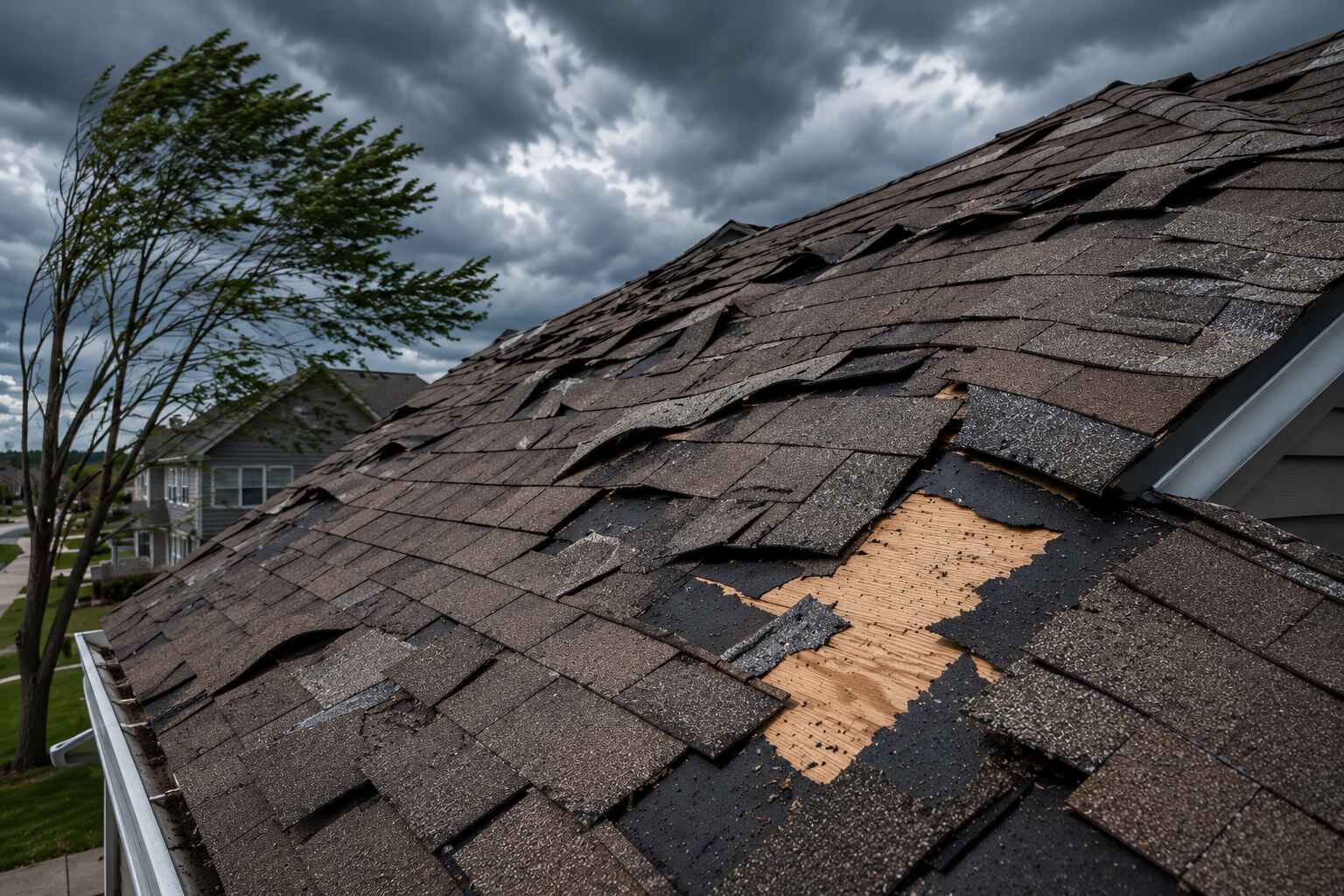
The earliest sign is usually a shingle edge that’s lifted slightly, sometimes with a visible crease line where it bent under the gust before settling back down. It doesn’t always tear off completely, but that crease weakens the shingle permanently, even if it looks mostly fine afterward.
Torn Tabs and Missing Shingles
More severe wind events tear shingle tabs off entirely, sometimes leaving bare patches of exposed underlayment or decking. This is the damage most people notice right away, since it’s visible from the ground and often shows up scattered across the yard afterward too.
Damage You Can Only See From the Attic
Wind can loosen a shingle’s seal without visibly tearing it, which means water can start working its way in during the next rain even though nothing looks obviously wrong from outside. Checking the attic for fresh moisture or daylight after any significant wind event catches this kind of wind damage shingles problem before it becomes a bigger leak.
Why Gulf Coast Homes Face This More Often
Tropical Systems and Sustained Wind Exposure
Unlike a quick thunderstorm gust, tropical systems bring sustained wind over hours, sometimes a full day or more. That extended exposure matters, since a roof enduring hours of steady stress is more likely to develop lifted seams than one hit by a brief, sharp gust.
Straight Line Wind Events Between Named Storms
Named storms get the attention, but plenty of roof damage around here comes from straight line wind events tied to regular severe thunderstorms, especially in spring. These can produce gusts just as strong as a moderate tropical system, without the days of advance warning a hurricane provides.
What to Do the Moment You Suspect Wind Damage
Check From the Ground First, Safely
A pair of binoculars from the yard is a reasonable first step. Look for shingles that appear lifted, curled, or visibly out of alignment with the rest of the roof plane. Never climb onto the roof yourself right after a storm, especially if conditions are still unstable.
Document Before Repairs Start
Photos matter here just like they do with hail claims. Capture what you can see from the ground, note the date of the wind event, and let a professional handle the closer inspection from there.
When Wind Damage Roof Repair Becomes Necessary
Isolated lifted shingles or a handful of torn tabs are often repairable without a full replacement, assuming the surrounding roof is still in reasonably good shape. Widespread lifting across multiple slopes, or a roof that was already aging before the wind event, is a different story, and usually points toward a larger repair or full replacement conversation. Our wind damage roof repair team can walk the property and give an honest read on which situation you’re actually in.
Final Thoughts on Watching Your Roof’s Wind Limits
Wind damage doesn’t wait for a hurricane to show up. Plenty of it happens quietly during regular seasonal storms that never make the news, which is exactly why it pays to check your roof after any significant wind event, not just the ones with a name attached. According to the National Weather Service, damaging straight line winds can regularly exceed 58 miles per hour during severe thunderstorms, well within the range that stresses an aging or improperly installed roof.
If a recent windstorm has you second guessing your roof, call 346-733-8558 and we’ll get a proper inspection scheduled before a small lift turns into a real leak.
Frequently Asked Questions
What wind speed typically voids a shingle manufacturer’s warranty?
It depends on the specific product’s rated wind speed, which usually appears in the manufacturer’s warranty documentation. Exceeding that rating can affect warranty coverage, though installation quality plays a role too.
Can a new roof still get wind damage in a moderate storm?
Yes, though it’s less common. Even well installed new roofs can experience isolated lifting in unusually strong or sustained gusts, especially near roof edges and corners where wind pressure concentrates.
Does wind damage always come with visible missing shingles?
Not always. Some of the more costly wind damage involves seals breaking loose without a shingle actually tearing off, which can go unnoticed until a leak develops later.
Is wind damage typically covered by homeowners insurance?
Wind damage is commonly covered under most homeowner policies, though coverage details and deductibles vary, so it’s worth confirming specifics with your insurer.
How soon after a windstorm should a roof be checked?
As soon as it’s safe to do so, ideally within a couple of weeks. Prompt inspection helps catch early lifting before the next rain finds a weak spot.