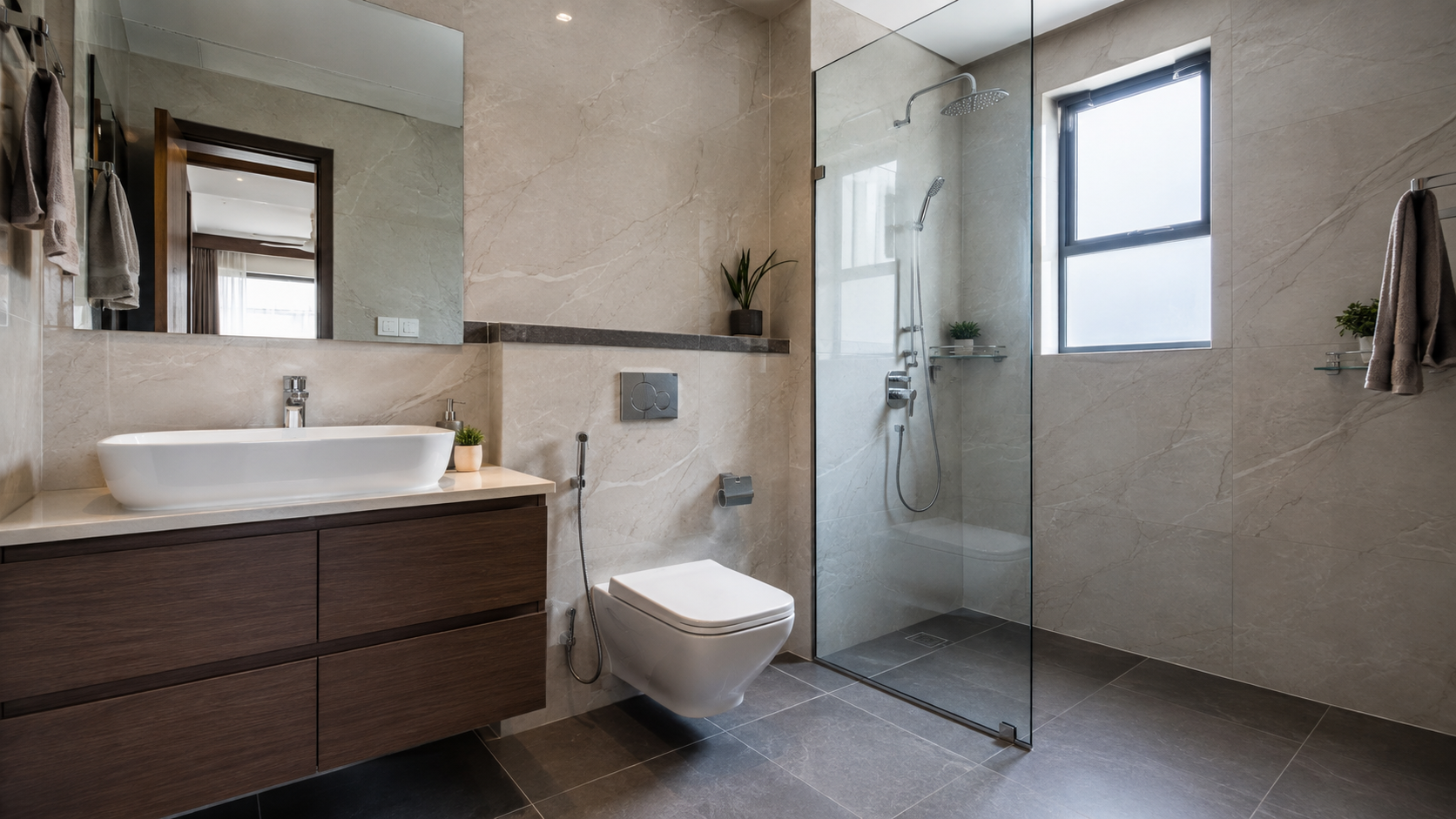
A small bathroom does not have to feel cramped or boring. The right tile colour, size, finish, and layout can make a compact bathroom look brighter, wider, and more comfortable. For Indian homes, where bathrooms are often compact, choosing the right tiles becomes especially important.
If you are planning a bathroom renovation or building a new home, these small bathroom tile design ideas can help you create a stylish and practical space without making the room feel crowded.

From light-coloured wall tiles and marble-look surfaces to vertical layouts and simple accent walls, there are many ways to make a small bathroom look visually larger. The key is to choose tiles that work with the size, lighting, and everyday use of the bathroom.
Why Tile Design Matters in a Small Bathroom
Tiles cover a large part of a bathroom’s visible surface. Because of this, their colour, pattern, size, and grout lines can strongly affect how spacious the room appears.
Dark colours can sometimes make a compact bathroom feel enclosed, especially when natural light is limited. Light shades such as white, beige, ivory, and light grey reflect more light and create an open appearance.
Tile size also matters. Larger wall tiles create fewer grout lines, which can make the walls look cleaner and less visually divided. For small bathrooms, 300×600 mm wall tiles are a practical option, while larger formats can also work when the layout allows them.
The right combination of tiles can therefore improve both the appearance and functionality of a compact bathroom.
10 Small Bathroom Tile Design Ideas
1. Light Grey Tiles for a Modern Look
Light grey is one of the easiest colours to use in a small bathroom. It is softer than pure white and gives the room a clean, modern appearance.
Use light grey tiles across the main walls and pair them with a slightly darker matte floor tile. This creates enough contrast without making the room look smaller.
For a contemporary Indian bathroom, light grey marble-look or concrete-look tiles can add subtle texture without overwhelming the space.
2. White Tiles With a Simple Accent Wall
White bathroom tiles are a classic choice for compact spaces because they help reflect available light.
Instead of covering every wall with a complicated pattern, use plain white tiles on most surfaces and introduce one accent wall behind the washbasin or shower area.
A light geometric, marble-look, or textured tile can create a focal point while keeping the overall bathroom bright.
This approach works particularly well when the bathroom has limited natural light.
3. Use Vertical Wall Tiles to Add Height
The direction in which tiles are installed can change the visual proportions of a bathroom.
Vertical installation can draw the eyes upward and make the ceiling appear higher. This is useful in narrow bathrooms where the walls feel taller than they are wide.
A 300×600 mm rectangular tile can be arranged vertically on the main walls. Choose a light or neutral colour to keep the effect subtle.
For more information about bathroom wall tile selection, you can also explore the Bathroom Wall Tiles Buyers Guide.
4. Marble-Look Tiles for a Premium Appearance
Marble-look tiles can make even a small bathroom look more luxurious.
Instead of using heavily patterned tiles throughout the room, choose a marble-look design with soft veins. White or light beige backgrounds with grey veins are particularly versatile.
Use the marble-look tile on one main wall and keep the remaining surfaces simple. This prevents the design from becoming too busy.
Large-format wall tiles can also reduce the number of visible grout lines, creating a more continuous appearance.
5. Beige and Cream Tiles for a Warm Bathroom
If you want something warmer than white or grey, beige and cream tiles are excellent options.
These colours work well with wooden vanity cabinets, brass fixtures, black accessories, or warm lighting. They can give a small bathroom a comfortable and welcoming appearance.
For a simple Indian bathroom design, try combining light beige wall tiles with a slightly darker stone-look floor tile.
Avoid using too many different shades. Two or three coordinated colors are usually enough for a compact space.
6. Match the Wall and Floor Color Family
One effective way to make a small bathroom feel more spacious is to use wall and floor tiles from the same color family.
For example, combine:
- Light grey wall tiles with medium grey floor tiles
- Beige wall tiles with stone-look beige flooring
- White wall tiles with light grey flooring
- Ivory walls with cream or sand-cultured flooring
The surfaces do not have to be exactly identical. Similar tones create a smoother visual transition between the floor and walls.
This technique can make the bathroom feel less divided.
7. Choose a Simple Geometric Accent
Geometric tiles can add personality to a small bathroom without requiring a complete redesign.
Use a geometric pattern on one limited section, such as the wall behind the mirror, washbasin, or shower area.
Keep the remaining walls plain. This gives the pattern enough space to stand out.
Avoid using large, high-contrast patterns on every wall because they can make a compact bathroom look visually crowded.
8. Use Stone-Look Tiles for a Natural Feel
Stone-look tiles are another good option for modern small bathrooms.
Light stone shades can create a natural appearance while maintaining a clean and contemporary style. They can also work well with wooden bathroom cabinets and indoor plants.
For a minimalist bathroom, choose a subtle stone pattern instead of a heavily textured design.
If you want to explore different tile looks, TilesFinders also provides categories for marble, stone, wood, terrazzo, geometric, subway, and other tile styles.
9. Keep the Floor Matte and Practical
A bathroom should not be designed around appearance alone. Floor safety is equally important.
For wet bathroom floors, matte or anti-skid surfaces are generally more practical than highly polished surfaces. Water can make smooth glossy surfaces slippery.
A medium-format floor tile can also be easier to manage around drainage slopes in compact bathrooms.
For example, 300×300 mm or 400×400 mm formats can work well depending on the bathroom layout and installation requirements.
You can explore more ideas in this guide to 16×16 Tile Designs.
10. Create a Minimalist Two-Tile Combination
Sometimes the best small bathroom design is the simplest one.
Choose one primary wall tile and one floor tile. Keep both colours within the same palette and use the vanity, mirror, and fittings to add character.
For example:
1: White wall tiles + light grey matte floor
2: Beige wall tiles + stone-look floor
3: Light grey wall tiles + charcoal anti-skid floor
4: Marble-look wall tile + plain matte floor
A two-tile combination reduces visual clutter and makes the bathroom easier to coordinate.
Best Tile Colours for Small Bathrooms
The best colour depends on lighting and the overall interior style, but lighter shades are usually easier to work with in compact bathrooms.
White
White reflects light and gives the bathroom a clean, open appearance. It can be paired with almost any accent colour.
Light Grey
Light grey provides a modern appearance without being as stark as pure white. It works especially well with chrome and black fixtures.
Beige
Beige and cream shades add warmth and work well with wood-look furniture.
Ivory
Ivory offers a softer alternative to bright white. It is suitable for classic and contemporary bathrooms.
Light Blue
Soft blue shades can give a bathroom a fresh and relaxing appearance. Keep the shade light if the bathroom is very small.
What Tile Size Is Best for a Small Bathroom?
There is no single tile size that works for every compact bathroom. The choice depends on the wall dimensions, floor slope, drainage, and installation requirements.
For walls, rectangular formats such as 300×600 mm can create a cleaner appearance with fewer grout lines.
For floors, smaller or medium-format tiles can be easier to install around drainage slopes. Anti-skid performance should also be considered before selecting the final floor tile.
If you want to understand how different bathroom tile sizes work, read this Bathroom Tile Size Guide.
Glossy vs Matte Tiles for a Small Bathroom
Glossy and matte tiles can both look attractive, but they serve different purposes.
Glossy tiles reflect light and can make bathroom walls look brighter. They are generally more suitable for walls than wet floors.
Matte tiles have a softer appearance and are often a practical choice for bathroom flooring because they can provide better grip than highly polished surfaces.
For a compact bathroom, a combination of glossy or smooth wall tiles and matte anti-skid floor tiles can offer a good balance between appearance and practicality.
How to Make a Small Bathroom Look Bigger With Tiles
Follow these simple design tips:
- Choose light or neutral wall colours.
- Avoid using too many patterns.
- Reduce unnecessary colour breaks.
- Use larger wall formats where appropriate.
- Consider vertical tile installation for narrow bathrooms.
- Keep the grout colour close to the tile colour.
- Use mirrors to increase the feeling of openness.
- Keep one wall as the visual focal point.
- Use matte, anti-skid tiles for wet floors.
- Coordinate tiles with the vanity and bathroom fittings.
The objective is not to make every surface identical. Instead, create visual continuity so the room feels clean and uncluttered.
Common Mistakes to Avoid
Choosing tiles for a small bathroom can become difficult when too many design elements are combined.
Using Too Many Patterns
Multiple decorative patterns can make a small room feel busy. Select one main pattern and keep the other surfaces simple.
Choosing Very Dark Tiles Everywhere
Dark tiles can look dramatic, but covering every wall and floor with dark colours may reduce the feeling of space, especially in a bathroom with limited lighting.
Ignoring Floor Safety
A beautiful tile is not necessarily the best bathroom floor tile. Always consider the finish, grip, water exposure, and intended use.
Using Too Many Different Tile Sizes
Mixing several tile sizes can create unnecessary visual breaks. In a compact bathroom, a simple combination is usually easier to manage.
Selecting Tiles Only From Showroom Lighting
A tile can look different under showroom lights compared with your bathroom. Check a physical sample in lighting similar to the actual space before finalising the design.
Final Thoughts
A small bathroom can look stylish, spacious, and practical with the right tile selection. Light colours, clean layouts, appropriate tile sizes, and limited patterns can make a noticeable difference.
Among these small bathroom tile design ideas, light grey walls, white-and-grey combinations, marble-look accents, vertical layouts, and simple two-tile combinations are especially versatile for Indian homes.
Remember that appearance is only one part of the decision. For bathroom floors, also consider anti-skid performance, water exposure, cleaning requirements, and the drainage layout.
Before buying, compare different tile sizes, finishes, colors, and designs. Explore the Bathroom Tiles collection on TilesFinders to discover options for your next bathroom project.
A thoughtfully planned tile design can make a compact bathroom feel brighter, cleaner, and more comfortable without requiring a major change in its actual size.