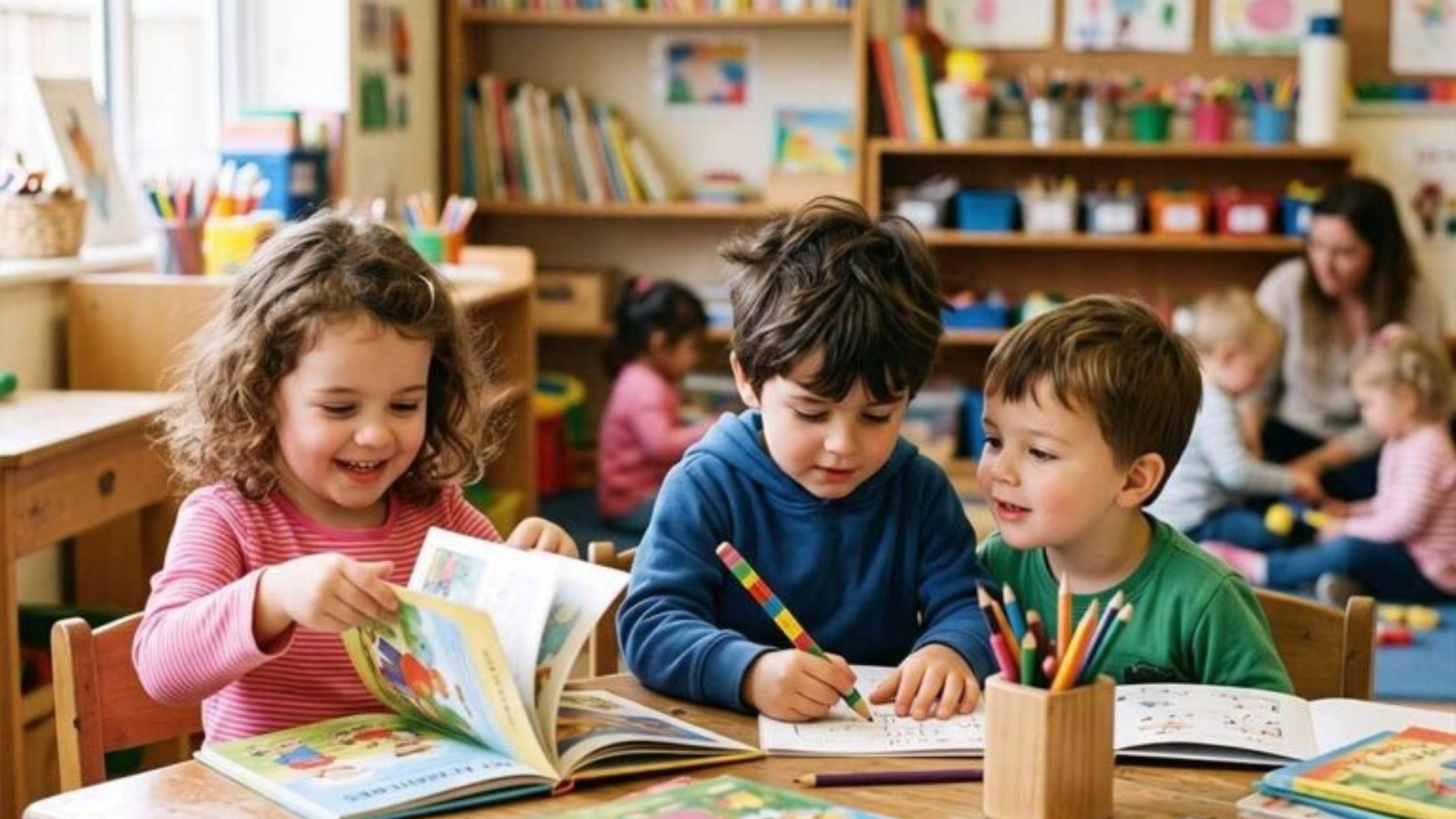
Two four-year-olds sit near a bin of wooden blocks. One reaches for a red block, and the other pulls it back. An adult kneels close, ready to help them sort out what to say.
Moments like this are the working material of group sessions. Families who look for an ABA clinic in Albuquerque, NM often wonder how a group fits with one-on-one therapy. The short answer is practice with real peers.
Why a Group Is Not Just a Bigger Session
Individual teaching gives a child many clean repetitions with one patient adult. A group adds something an adult alone cannot supply, which is another child with ideas of their own. Peers move fast, change the rules, and sometimes say no.
The CDC notes that social skills groups give people with autism a chance to practice in a structured environment. Structure matters here. Without it, a crowd can feel like noise instead of practice.
One Group Hour, Step by Step
Programs differ, and no two clinics run the hour the same way. Still, many groups share a recognizable shape.
- Arrival and a visual schedule, so each child sees what comes next.
- A short greeting routine, such as a wave, a name, or a card.
- A teaching moment on one skill, like asking to join or waiting a turn.
- Guided play, where staff step in lightly and then step back.
- A calm wrap-up with a snack, a song, or a quick review.
Notice how little of this is lecture. Most of the learning happens inside the play itself.
How Staff Set Up Peer Play
Good peer play rarely happens by accident. Staff usually choose the activity, the materials, and even the seating before children arrive.
Cooperative toys help. A marble run, a shared puzzle, or a pretend kitchen gives children a reason to interact. One-person toys tend to produce side-by-side play with little exchange.
Adults then give the lightest prompt that works. A gesture may be enough. If not, a short phrase or a model of what to say can follow.
Matching Children Thoughtfully
Group makeup shapes the whole experience. Teams often think about age, language level, interests, and how comfortable each child is in a busy room.

A child who loves trains may speak more with a peer who shares that interest. A mismatch in energy can leave one child overwhelmed and another bored. Some children start with a single partner before moving to a group of four.
When a Squabble Becomes the Lesson
Back to the red block. A skilled adult does not simply take it away or hand it over. She might offer a card that says “my turn, please” or model a short phrase.
Both children then get a second try at the same moment. That quick replay is hard to create at home, where siblings and parents handle conflict differently. In a group, the same small problem returns often, so practice repeats.
Skills a Group May Target
Goals come from each child’s own plan, not from a standard menu. Common targets give a sense of the range.
- Starting and ending a conversation, with words, signs, or a device.
- Sharing materials and trading turns.
- Noticing a friend’s face or tone.
- Handling a loss in a game without a meltdown.
- Joining play that is already underway.
Progress is usually tracked with simple notes or tallies during each session. Those records help the team decide when to change the plan.
What Parents Can Look For
A family does not need clinical training to read a group well. A few quiet observations can tell you a great deal.
- Do children seem relaxed enough to try new things?
- Do staff prompt gently, then fade their help?
- Is every child’s communication style respected, including nonspeaking children?
- Can the team explain why your child is in this particular group?
It is also fair to ask how group goals connect to home life. A skill practiced with peers matters most when it shows up at the park or the dinner table.
Limits Worth Keeping in Mind
Groups are not the right fit for every child at every moment. Some children need more one-on-one time first, and that is a sound choice.
No group can promise a particular result for a particular child. Each child’s pace, history, and health picture differ. A pediatrician or the child’s own clinical team is the right place for personal medical questions.
Think of group time as one tool among several. When it fits a child’s plan, a few blocks and a patient adult offer a safe place to practice.