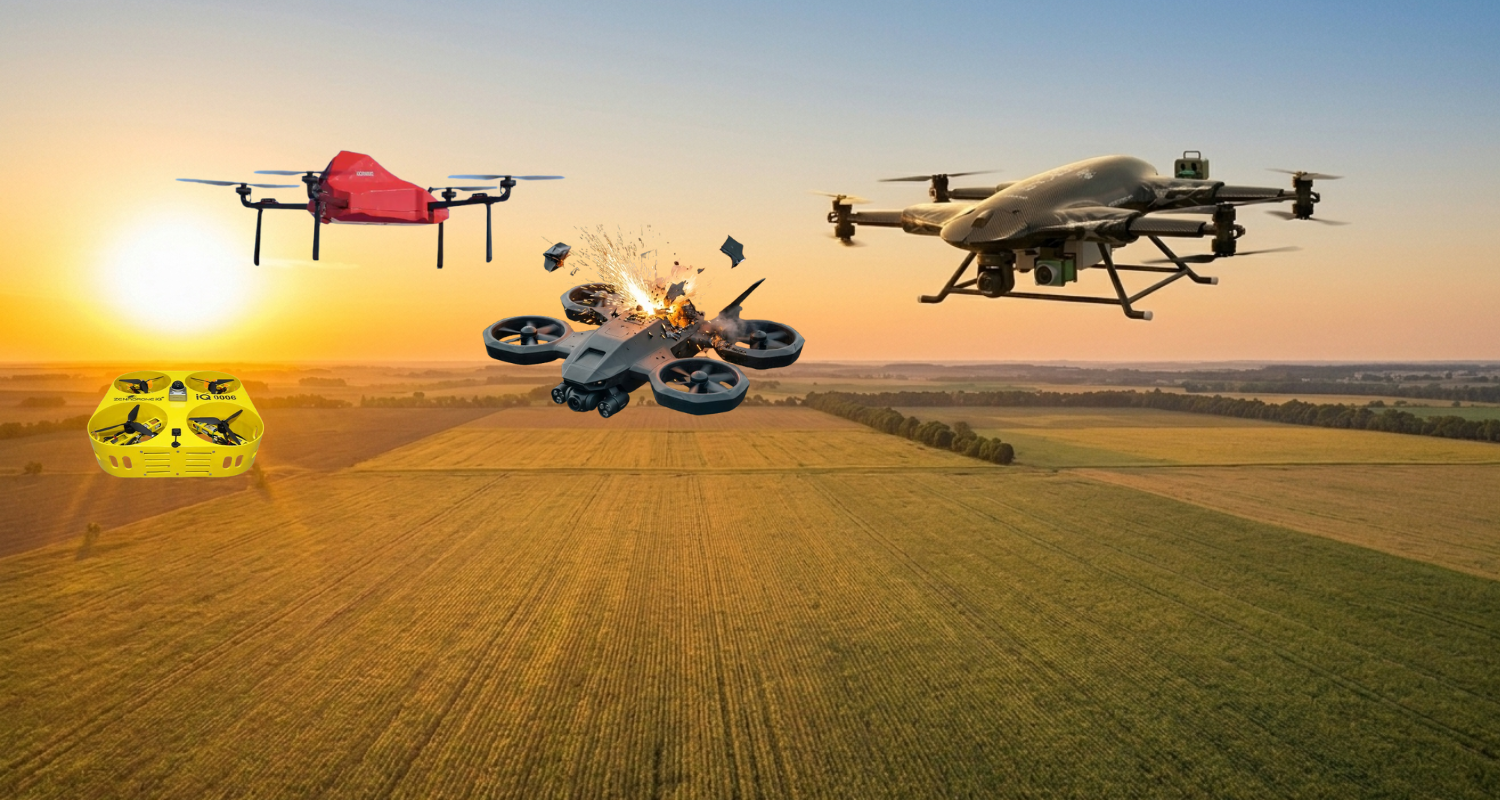
Drones have transformed the way industries operate, offering solutions that were once considered impossible or too expensive. From aerial photography to military surveillance, drones are now an essential tool across multiple sectors. Understanding the types of drones and their uses helps businesses and individuals make informed decisions when investing in drone technology.
What Is a Drone?
A drone, also known as an Unmanned Aerial Vehicle (UAV), is an aircraft that operates without a human pilot on board. Drones can be remotely controlled or fly autonomously using pre-programmed flight paths. They come in various shapes, sizes, and configurations, each designed for specific purposes and environments.
Main Types of Drones
1. Multi-Rotor Drones
Multi-rotor drones are the most common type used today. They feature multiple rotors — typically four (quadcopter), six (hexacopter), or eight (octocopter) — that provide stability and control.
Key Specifications:
- Flight time: 20–40 minutes
- Payload capacity: 0.5 kg – 10 kg
- Speed: 45–90 km/h
- Range: Up to 8 km
Best For: Photography, videography, inspections, and short-range delivery.
2. Fixed-Wing Drones
Fixed-wing drones resemble traditional airplanes with a rigid wing structure. They are more efficient for covering large areas and longer distances.
Key Specifications:
- Flight time: 1–16 hours
- Speed: 100–200 km/h
- Range: Up to 150 km
- Payload: 1 kg – 20 kg
Best For: Agriculture, surveying, mapping, and military reconnaissance.
3. Single-Rotor Drones (Helicopters)
These drones resemble small helicopters and use a single large rotor for lift. They offer greater efficiency and can carry heavier payloads than multi-rotor drones.
Key Specifications:
- Flight time: Up to 2 hours
- Payload: Up to 50 kg
- Speed: 100–150 km/h
Best For: Heavy lifting, agriculture spraying, and research.
4. Fixed-Wing Hybrid VTOL Drones
Hybrid VTOL (Vertical Take-Off and Landing) drones combine the benefits of multi-rotor and fixed-wing designs. They can take off and land vertically but cruise efficiently like a fixed-wing aircraft.
Key Specifications:
- Flight time: 1–3 hours
- Range: Up to 100 km
- Speed: 60–120 km/h
Best For: Long-range inspections, delivery, and surveillance.
5. Micro and Nano Drones
These are extremely small drones designed for indoor use or covert operations. Some weigh as little as a few grams.
Key Specifications:
- Size: 2 cm – 25 cm
- Flight time: 5–15 minutes
- Range: Up to 1 km
Best For: Indoor inspections, military reconnaissance, and research.
Key Factors to Consider When Choosing a Drone
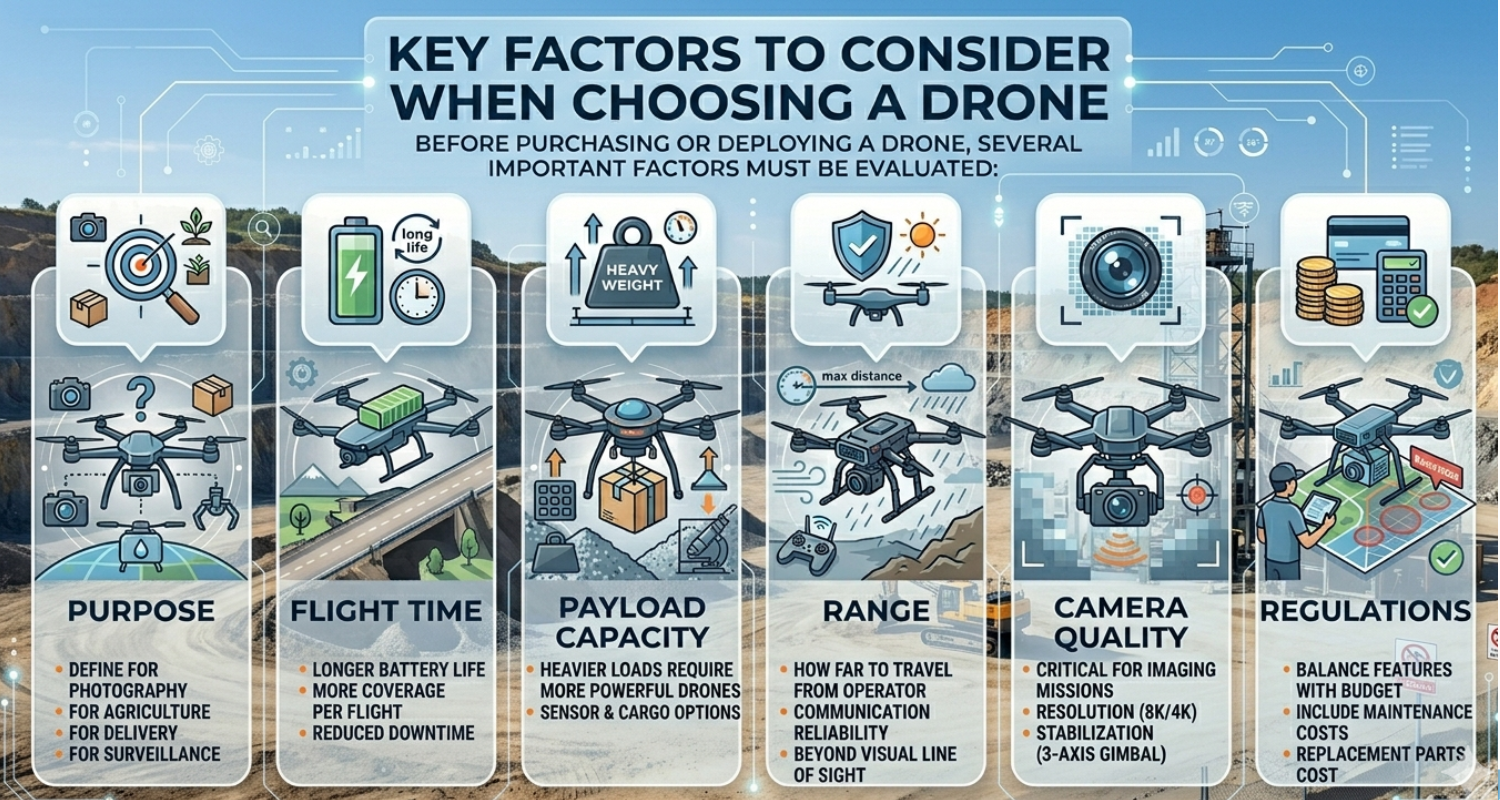
Before purchasing or deploying a drone, several important factors must be evaluated:
- Purpose: Define whether the drone is for photography, agriculture, delivery, or surveillance.
- Flight Time: Longer battery life means more coverage per flight.
- Payload Capacity: Heavier loads require more powerful drones.
- Range: Consider how far the drone needs to travel from its operator.
- Durability: Weather resistance and build quality matter for outdoor use.
- Camera Quality: For imaging missions, resolution and stabilization are critical.
- Regulations: Always check local aviation authority rules before flying.
- Cost: Balance features with budget, including maintenance costs.
Understanding the Types of Drones and Their Uses
When it comes to exploring the types of drones and their uses, ZenaDrone offers deep insight into how modern UAV technology is being applied across different industries. From lightweight consumer drones to heavy-duty industrial UAVs, each type serves a unique and valuable function in today’s world.
Industries Where Drones Are Used
Agriculture
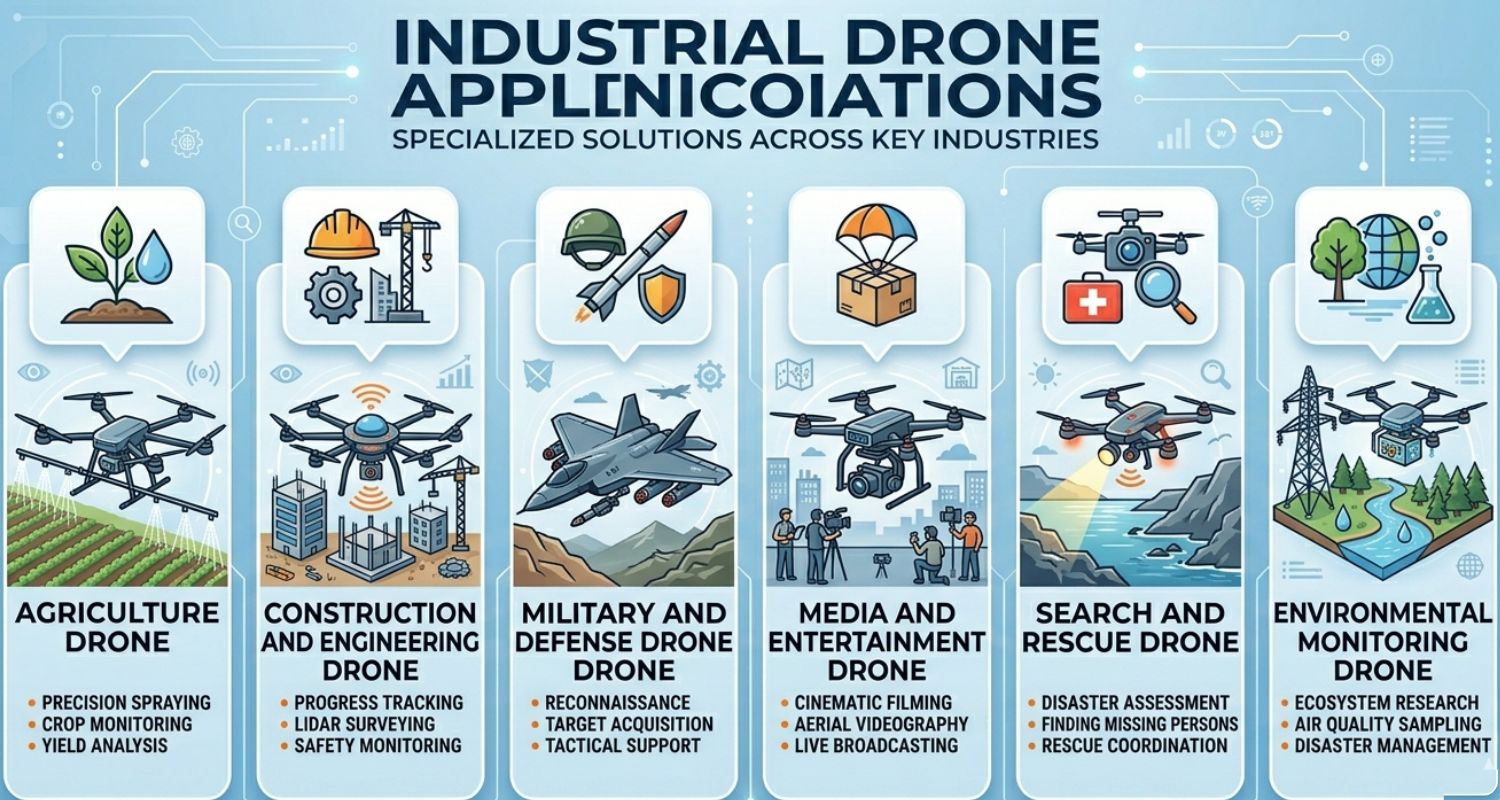
Drones are revolutionizing farming by enabling precision agriculture. They are used for:
- Crop monitoring and health analysis
- Pesticide and fertilizer spraying
- Soil and field mapping
- Irrigation management
ZenaDrone’s agricultural UAVs help farmers increase yield while reducing costs and chemical use.
Construction and Engineering
In construction, drones provide:
- Site surveying and 3D mapping
- Progress monitoring
- Safety inspections of tall structures
- Volume calculations for earthworks
Military and Defense
Military drones are among the most advanced in the world, used for:
- Surveillance and reconnaissance
- Target acquisition
- Border patrol
- Combat missions
ZenaDrone develops robust defense-grade UAVs built for demanding operational environments.
Logistics and Delivery
E-commerce and logistics companies are deploying drones for:
- Last-mile delivery
- Medical supply transport to remote areas
- Emergency package drops
Media and Entertainment
Drones have changed how content is created by enabling:
- Aerial cinematography
- Live event coverage
- Real estate photography and videography
- Sports broadcasting
Search and Rescue
In disaster zones, drones save lives by:
- Locating missing persons
- Delivering emergency supplies
- Assessing dangerous areas without risking human lives
- Providing thermal imaging in low-visibility conditions
Infrastructure Inspection
Inspecting bridges, power lines, pipelines, and cell towers is now safer and cheaper with drones:
- Visual and thermal inspectio
- Crack and corrosion detection
- Reduced downtime and human risk
Environmental Monitoring
Scientists and conservationists use drones for:
- Wildlife tracking and population surveys
- Forest fire detection
- Pollution monitoring
- Climate research data collection
Conclusion
Drones are no longer just a novelty — they are a powerful technology driving efficiency, safety, and innovation across the world. Whether you are a farmer, engineer, filmmaker, or military professional, there is a drone designed to meet your specific needs. Understanding the different types, their specifications, and their real-world applications empowers you to choose the right UAV for the right job.
As drone technology continues to evolve, companies like ZenaDrone remain at the forefront, developing cutting-edge UAV solutions that push the boundaries of what’s possible. Exploring the full potential of drones means staying informed, staying compliant, and always thinking about how this technology can solve real-world problems more effectively.