Industrial manufacturing and specialized repair sectors continuously seek ways to optimize material removal workflows while maintaining strict dimensional tolerances. For decades, traditional grinding and surface conditioning relied heavily on bonded mineral composites. While these standard options function adequately on rigid metals, they often struggle when applied to flexible, resilient elastomers. Modern production facilities are progressively moving away from the standard rubber abrasive wheel in favor of structured tungsten-carbide configurations. This engineering shift dramatically reduces heat buildup, eliminates smoke generation, and enhances overall process stability during demanding roll grinding and surface texturing operations.
The Mechanics of Material Removal on Flexible Substrates
To appreciate why structured tooling performs better, it helps to examine how different surfaces interact with elastomeric compounds like natural rubber or polyurethane. A typical rubber abrasive wheel operates primarily through friction, essentially rubbing and tearing the material away. This action creates immense surface friction, leading to localized heat spikes that can easily scorch or degrade sensitive polymers.
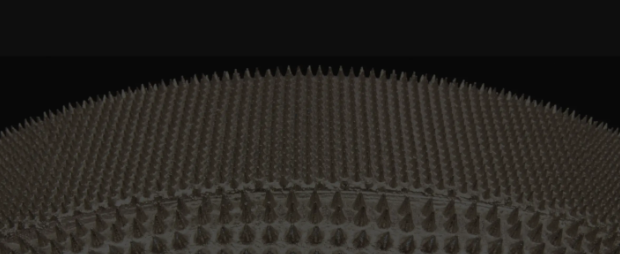
Conversely, specialized cutting tools act more like micro-milling cutters. Instead of relying on friction, they utilize permanently brazed, individually formed tungsten-carbide teeth to cleanly slice through the substrate. This mechanical cutting action creates clear chip flow channels, allowing material to move away from the tool face rapidly without loading or clogging the wheel geometry.
Why Technical Teams Are Shifting Away From Bonded Grit
Relying on a standard rubber abrasive wheel poses significant hurdles when dealing with high-volume industrial roll resurfacing. Over time, traditional vitrified or resin-bonded stones lose their sharp edges, causing an incremental decline in operational throughput.
Friction-based reduction quickly elevates surface temperatures, resulting in dense smoke and unwanted material odor. As rubber particulates load the open pores of a mineral wheel, operators must frequently pause production lines to dress the tool surface, drastically reducing overall equipment effectiveness.
Optimizing Workflows With a Carbide Grinding Wheel
Integrating an advanced Carbide Grinding Wheel into your production floor unlocks notable improvements in structural precision. These tools maintain their geometric profiles over long operational cycles, allowing operators to execute aggressive hogging passes and ultra-smooth finish runs without changing hardware.
By combining distinct coarseness zones on a single steel core—such as a dual-grit or triple-grit layout—a machine can strip away heavy rubber overbuild and establish a refined, predictable micro-finish in a single traverse pass. This stability proves invaluable when manufacturing high-precision industrial rollers used in steel mills, laminating lines, and offset printing presses.
Elevating Bond Strength via Specialized Tooling
The advantages of structured cutting tech extend well beyond large-scale cylindrical roll machining. In industrial field services and fleet maintenance workshops, preparing elastomeric surfaces for durable bonding demands an identical level of mechanical control.
When executing technical adjustments, working with a dedicated abrasive rubber tool can sometimes over-polish the surface instead of texturing it. Instead, utilizing structured contour wheels ensures optimal patch adhesion by cleanly stripping away damaged or oxidized layers and leaving behind a uniform, micro-textured surface. This pristine surface geometry maximizes the available contact area for bonding agents, producing exceptionally strong and reliable repairs for passenger, commercial transport, and heavy off-the-road equipment.
Operating with an upgraded tool setup guarantees that the underlying rubber compound is never scorched. Technicians achieve total texture control, lower operational risks, and enhanced repair reliability, ensuring that the base material remains perfectly receptive to chemical vulcanization.
Conclusion
Maximizing processing efficiency on elastomeric surfaces requires a fundamental departure from old-school friction methodologies. Utilizing specialized tire patch preparation tools and advanced carbide systems allows industrial organizations to ensure maximum bonding strength, extended tool life, and a highly optimized manufacturing workflow. Upgrading to a permanent metal core system streamlines material removal, prevents thermal damage, and delivers total architectural consistency across production lines.