Selecting the right voltage class for your electrical infrastructure is a critical decision that affects safety, cost, efficiency, and scalability. Professional electrical engineering services will guide you through this decision, but understanding the fundamental differences between low voltage (LV) and medium voltage (MV) systems will help you have more informed conversations with your consultant and make smarter investment decisions. This guide breaks down both systems and explains which industries and applications they are best suited for.
Defining Voltage Classes
In the UK and Europe, voltage systems are classified according to IEC standards as follows:
| Voltage Class | Voltage Range | Typical Application |
| Extra Low Voltage (ELV) | Up to 50V AC / 120V DC | Control circuits, telecoms, safety systems |
| Low Voltage (LV) | 50V to 1000V AC | Commercial buildings, light industry, retail |
| Medium Voltage (MV) | 1kV to 36kV AC | Heavy industry, large campuses, substations |
| High Voltage (HV) | 36kV to 150kV | Transmission and primary distribution |
| Extra High Voltage (EHV) | Above 150kV | National grid transmission |
Low Voltage Systems: What You Need to Know
Low voltage systems operating at up to 1000V AC are the most common electrical infrastructure in the UK. They power offices, retail units, schools, hospitals, hotels, and light industrial facilities. The majority of electrical engineering projects in the commercial sector involve LV systems, which are governed in the UK by BS 7671.
Advantages of Low Voltage Systems
- Lower installation and equipment costs compared to MV systems
- Simpler protection and switching equipment
- Wider availability of qualified electricians and contractors
- Extensive range of standard equipment and components
- Lower risk to personnel from direct contact
Limitations of Low Voltage Systems
- Higher transmission losses over long cable runs
- Limited capacity for very high power demands
- Not practical for distributing power across large sites
Medium Voltage Systems: What You Need to Know
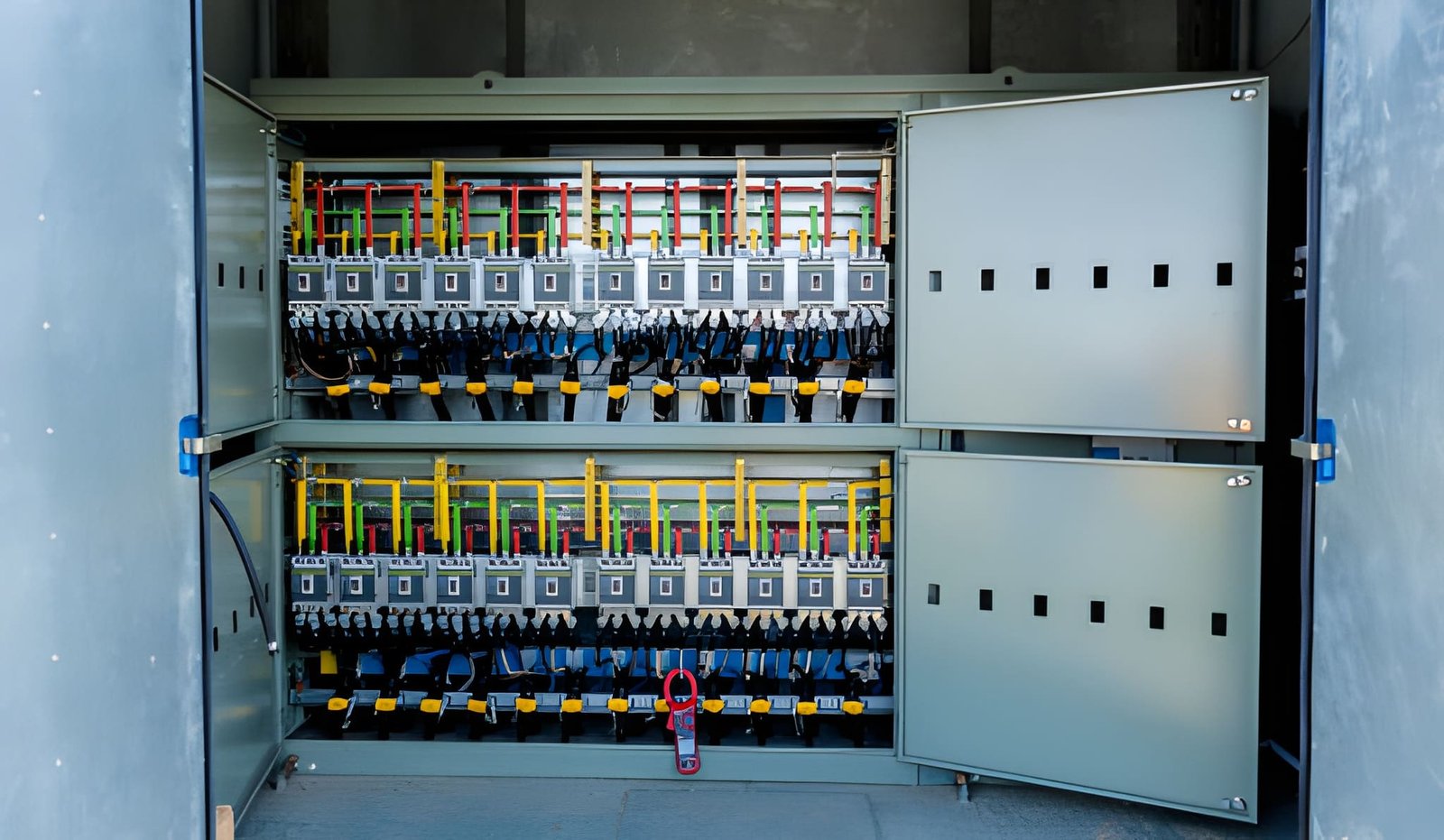
Medium voltage systems, operating between 1kV and 36kV, are used where power needs to be distributed over larger distances or where the installed load is too large to be efficiently served at LV. MV systems are found in manufacturing plants, hospitals with multiple buildings, large universities, airports, data centres, and commercial developments with on-site substations.
Advantages of Medium Voltage Systems
- Much lower transmission losses over long distances
- Ability to serve very large electrical loads efficiently
- Reduced cable sizes for equivalent power transmission
- More flexible ring main architecture options
- Greater resilience and redundancy options
Limitations of Medium Voltage Systems
- Higher equipment and installation costs
- Requires specialist engineers and strictly qualified personnel
- More complex protection and control systems
- Stricter access controls and safety procedures required
Which System Does Your Industry Need?
| Industry / Application | Recommended System | Reason |
| Office buildings | Low Voltage (LV) | Load profile suits LV infrastructure |
| Retail stores and shopping centres | LV or MV ring main | Depends on site size and total load |
| Manufacturing and processing plants | Medium Voltage (MV) | High installed loads, large site area |
| Hospitals and healthcare | LV with MV substation | Resilience, large load, zoned distribution |
| Data centres | MV with LV UPS feeds | High density, resilience critical |
| Universities and campuses | MV ring main to LV buildings | Multiple buildings, diverse loads |
| Hotels | LV (larger hotels may need MV) | Generally suits LV infrastructure |
| Airports | MV with multiple substations | Massive load, critical resilience |
The Role of the Substation
For facilities that require MV power distribution, on-site substations are essential. A substation steps down the MV supply from the Distribution Network Operator (DNO) to LV for use within individual buildings or zones. Electrical engineering consultants design substations to handle current and future load demands, with full consideration of protection, metering, and switching requirements. A well-designed substation is the hub of an efficient and resilient electrical network.
Hybrid LV/MV Approaches
Many larger facilities use a hybrid approach, with MV distribution across the site and LV distribution within individual buildings. This combines the efficiency advantages of MV over long distances with the simplicity and lower cost of LV for final distribution. The design of such systems requires careful coordination between MV and LV engineers to ensure protection systems are correctly coordinated and fault levels are manageable.
Cost Comparison: LV vs MV
While MV systems involve higher upfront equipment and installation costs, they can be more cost-effective for large sites over the long term due to lower transmission losses, reduced cable costs, and greater operational flexibility. The right choice depends on a detailed cost-benefit analysis that considers the total cost of ownership over the project lifecycle.
Why Almens Consult Is Your Best Choice for Electrical Engineering Services
When it comes to reliable, compliant, and future-ready electrical solutions, Almens Consult stands head and shoulders above the rest. With a team of highly qualified electrical engineers, consultants, and project managers, Almens Consult delivers end-to-end electrical engineering services that are tailored to your unique business needs. From power design and energy audits to full compliance management and smart system integration, every project is executed with precision, transparency, and a commitment to long-term results. Whether you are a small business looking to optimise your energy usage or a large corporation planning a complex infrastructure rollout, Almens Consult brings the expertise, tools, and dedication to make your project a success. Trusted by clients across the UK and Ghana, Almens Consult is the partner you need for safe, scalable, and efficient electrical engineering solutions.
Conclusion
The choice between low voltage and medium voltage electrical systems is not one-size-fits-all. It depends on the scale of your operations, the size of your site, your power demands, and your long-term growth plans. Engaging experienced electrical engineering consultants who understand both LV and MV design will ensure you make the right decision and invest in infrastructure that serves your business efficiently for years to come.
Frequently Asked Questions (FAQs)
At what point should a business consider a medium voltage system?
A medium voltage system is typically considered when a facility’s maximum demand exceeds approximately 1MVA, when power needs to be distributed across a large site, or when multiple buildings need to be served from a central source.
Can a low voltage system be upgraded to medium voltage later?
In principle yes, but it is complex and costly. It is far better to design for the correct voltage class from the outset based on a thorough load analysis and long-term growth projections.
Who is qualified to work on medium voltage systems?
MV systems must be designed and maintained by specialist engineers with specific MV qualifications and competencies. Work on live MV systems is strictly controlled and requires authorised personnel working within formal safety rules.
What is a ring main unit in a medium voltage system?
A ring main unit (RMU) is a compact, factory-assembled switching device used in MV ring distribution networks. It allows sections of the ring to be isolated for maintenance or fault clearance without affecting the rest of the network.
Does Almens Consult design both LV and MV systems?
Yes. Almens Consult has the expertise to design, specify, and manage both low voltage and medium voltage electrical systems, ensuring the most appropriate and efficient solution for your specific needs.