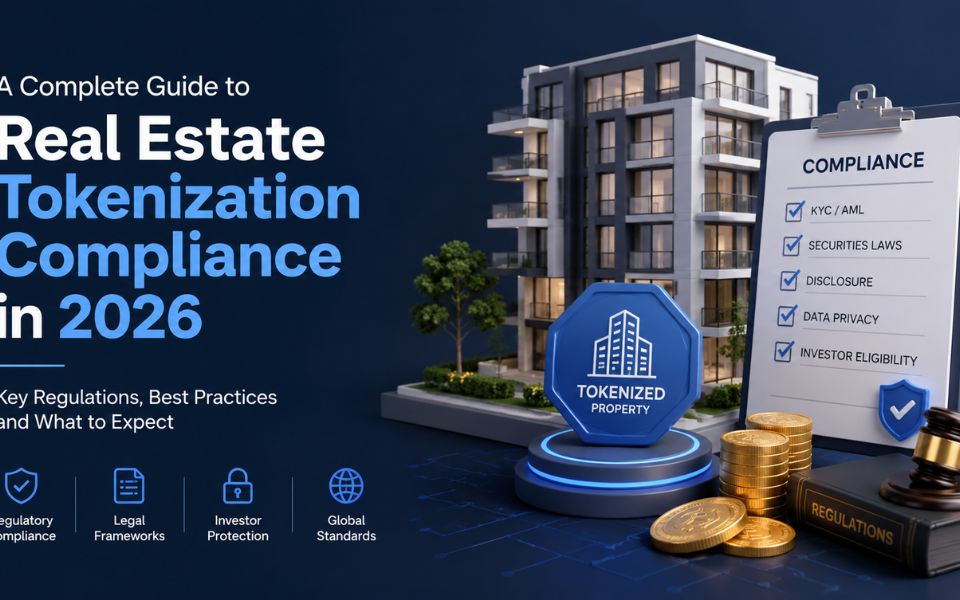
The real estate sector has entered a new phase where blockchain technology and digital ownership models are becoming increasingly common. Among these developments, Real Estate Tokenization has attracted significant attention from property owners, investors, developers, and financial institutions. By converting ownership rights into digital tokens, real estate assets can be divided into smaller units and distributed among a broader investor base.
As adoption increases across various regions, compliance has become one of the most important topics surrounding tokenized property investments. Regulatory agencies worldwide are paying closer attention to digital assets, investor protection, anti-money laundering requirements, and securities laws. Organizations entering this market must understand the legal responsibilities associated with tokenized real estate offerings.
In 2026, compliance is no longer an optional consideration. It is a fundamental requirement that determines whether a tokenization project can operate successfully and gain trust from investors, regulators, and market participants. This guide explains the compliance landscape, legal frameworks, operational requirements, and practical methods organizations should follow when launching tokenized real estate projects.
Understanding Real Estate Tokenization
Real Estate Tokenization refers to the process of converting ownership interests in physical property into blockchain-based digital tokens. These tokens represent a portion of ownership, revenue rights, rental income participation, or other financial interests linked to a real estate asset.
The concept allows investors to purchase fractions of a property rather than acquiring an entire building or land parcel. Commercial properties, residential developments, hotels, warehouses, office spaces, and mixed-use projects can all be tokenized.
A growing number of organizations are working with a Real Estate Tokenization company to structure compliant investment offerings and manage digital ownership records. The objective is not simply digitization but creating a legally recognized framework that connects blockchain records with real-world property ownership.
However, tokenized ownership introduces legal and regulatory considerations that differ from traditional real estate transactions. This is why compliance planning must begin before token issuance.
Why Compliance Matters in 2026
Regulators across North America, Europe, the Middle East, and Asia have expanded their focus on digital asset markets. While blockchain technology continues to evolve, authorities remain concerned about investor protection, financial crime prevention, and market integrity.
A tokenized real estate project that ignores compliance requirements may face:
- Regulatory investigations
- Financial penalties
- Suspension of token trading
- Investor lawsuits
- Banking restrictions
- Reputational damage
Compliance helps establish legitimacy in a market where investors increasingly evaluate legal structures before committing capital.
Many Real Estate Tokenization Services providers now place legal compliance at the beginning of project planning rather than treating it as a secondary consideration. This approach reduces operational risks and improves long-term project viability.
Method 1: Determine Whether the Token Is a Security
The first compliance step involves classifying the token correctly.
In many jurisdictions, tokenized real estate interests are considered securities because they represent investment opportunities where investors expect returns from underlying assets.
Questions regulators typically evaluate include:
- Does the token represent ownership rights?
- Does it provide income distribution?
- Is there an expectation of profit?
- Are investors relying on management efforts?
If the answer to these questions is yes, securities regulations generally apply.
A real estate tokenization development project must carefully analyze the token structure before launch. Misclassification can create significant legal complications after issuance.
Legal counsel specializing in securities regulations should review token economics, governance rights, distribution models, and investor agreements.
Method 2: Establish a Legally Recognized Ownership Structure
Blockchain records alone do not automatically establish legal property ownership.
Most tokenized real estate projects use special-purpose entities such as:
- Limited Liability Companies (LLCs)
- Special Purpose Vehicles (SPVs)
- Trust structures
- Real estate investment entities
The property is usually owned by the legal entity, while investors own tokens representing interests in that entity.
This arrangement creates a clear relationship between the physical asset and the digital token.
Organizations involved in Real Estate Tokenization Development Services often collaborate with legal professionals to create structures that comply with local property laws and securities regulations.
Without a legally recognized framework, token holders may face uncertainty regarding their rights and ownership claims.
Method 3: Implement KYC and AML Procedures
Know Your Customer (KYC) and Anti-Money Laundering (AML) requirements have become mandatory components of tokenized asset offerings.
Regulators expect issuers to verify investor identities before allowing participation.
KYC processes generally include:
- Identity verification
- Address verification
- Government-issued document review
- Sanctions screening
- Politically exposed person screening
AML controls focus on monitoring transactions and identifying suspicious activities.
A Real Estate Tokenization Platform Development project should integrate KYC and AML systems directly into investor onboarding workflows. Manual verification methods are becoming less practical as projects expand internationally.
Maintaining detailed compliance records is equally important because regulators may request documentation during audits or investigations.
Method 4: Follow Jurisdiction-Specific Securities Regulations
Compliance requirements vary significantly across countries.
A tokenized property offering that complies with one jurisdiction may not satisfy requirements elsewhere.
Key areas of regulatory review include:
United States
Projects often fall under securities regulations administered by federal authorities. Exemptions may apply depending on investor categories and fundraising structures.
European Union
The regulatory environment continues to evolve through digital asset frameworks and national securities laws.
United Kingdom
Tokenized real estate projects may fall under existing financial services regulations depending on token characteristics.
Middle East
Several jurisdictions have introduced blockchain-friendly frameworks while maintaining strict investor protection requirements.
Asia-Pacific
Countries have adopted varying approaches ranging from supportive regulatory sandboxes to highly regulated digital asset environments.
Organizations pursuing real estate asset tokenization across multiple regions must conduct separate legal assessments for each market.
Method 5: Create Comprehensive Disclosure Documentation
Investors must receive sufficient information before purchasing tokens.
Disclosure documents typically include:
- Property details
- Asset valuation reports
- Financial projections
- Risk factors
- Governance structure
- Ownership rights
- Distribution policies
- Exit mechanisms
Transparent disclosures reduce misunderstandings and support informed investment decisions.
A Real Estate Tokenization Development company frequently works with legal advisors and financial consultants to prepare offering materials that satisfy regulatory expectations.
Incomplete or misleading disclosures can create significant legal exposure.
Method 6: Maintain Accurate Property Valuations
Property valuation plays a critical role in compliance and investor confidence.
Token prices should be supported by reasonable valuation methodologies.
Best practices include:
- Independent appraisals
- Periodic valuation reviews
- Documentation of valuation assumptions
- Disclosure of market conditions
Regulators increasingly expect valuation transparency for tokenized real estate offerings.
Accurate valuations also support secondary market activities by providing investors with reliable information regarding asset performance.
Method 7: Develop Smart Contract Governance Controls
Smart contracts automate many token-related functions.
These may include:
- Ownership transfers
- Revenue distributions
- Voting rights
- Compliance restrictions
- Investor eligibility verification
Despite automation, governance oversight remains necessary.
Compliance teams should conduct:
- Smart contract audits
- Security assessments
- Legal reviews
- Change management procedures
A Real Estate Tokenization Platform Development initiative should include governance policies covering contract updates, emergency interventions, and operational accountability.
Poorly designed smart contracts may create legal and financial complications that are difficult to resolve after deployment.
Method 8: Address Data Privacy Requirements
Real estate tokenization platforms often collect significant amounts of investor information.
Compliance responsibilities may include:
- Data storage controls
- Consent management
- Access restrictions
- Breach notification procedures
- Data retention policies
Privacy regulations vary across jurisdictions, making cross-border operations more complex.
Organizations offering Real Estate Tokenization Services should evaluate applicable privacy laws before collecting investor data.
Maintaining secure information management practices helps reduce regulatory and operational risks.
Method 9: Monitor Secondary Market Trading
Secondary market trading introduces additional compliance responsibilities.
When investors buy and sell tokens after issuance, regulatory requirements may continue to apply.
Areas requiring oversight include:
- Transfer restrictions
- Investor eligibility checks
- Transaction monitoring
- Market abuse prevention
- Recordkeeping
Compliance obligations do not end after token issuance.
Continuous monitoring supports regulatory alignment throughout the token lifecycle.
Many organizations conducting real estate tokenization development integrate compliance mechanisms directly into token transfer processes.
Method 10: Conduct Regular Compliance Audits
Regulations continue to evolve as digital asset markets mature.
Periodic compliance reviews help organizations identify gaps before they become regulatory issues.
Audit activities may include:
- Policy reviews
- KYC effectiveness assessments
- AML program evaluations
- Smart contract audits
- Data protection assessments
- Recordkeeping verification
A Real Estate Tokenization company should treat compliance as an ongoing responsibility rather than a one-time project milestone.
Regular audits help organizations adapt to changing legal requirements and operational conditions.
Common Compliance Challenges in Real Estate Tokenization
Despite growing adoption, several challenges remain.
Regulatory Fragmentation
Different countries apply different rules to tokenized assets.
Cross-Border Investment Restrictions
International investor participation often introduces additional compliance requirements.
Technology Risks
Security vulnerabilities can affect both operational stability and regulatory standing.
Documentation Complexity
Legal agreements, disclosures, and investor records require careful management.
Market Education
Many investors remain unfamiliar with tokenized ownership models, increasing the importance of clear communication and disclosures.
Organizations pursuing real estate asset tokenization should prepare for these challenges during project planning rather than after launch.
Future Compliance Trends for 2026 and Beyond
Several developments are expected to influence tokenized real estate compliance over the coming years.
Regulators are gradually introducing more detailed digital asset frameworks. Standardized reporting practices are becoming more common across jurisdictions. Institutional participation is increasing, leading to greater expectations around governance and risk management.
Technology providers are also integrating compliance features directly into tokenization platforms. Automated verification systems, transaction monitoring tools, and digital identity solutions are becoming more prevalent.
As the market matures, organizations that prioritize regulatory alignment from the beginning are likely to encounter fewer operational obstacles.
Conclusion
Real Estate Tokenization continues to attract interest from investors and property owners seeking alternative investment structures and broader market participation. However, long-term success depends heavily on compliance. Securities regulations, KYC requirements, AML controls, property ownership structures, disclosure obligations, privacy laws, and governance frameworks all play important roles in project execution.
Organizations planning a tokenization initiative should approach compliance as an ongoing business function rather than a single approval process. Proper planning, legal review, operational oversight, and regulatory monitoring contribute significantly to project sustainability.
For businesses seeking professional support, Blockchain App Factory provides Real Estate Tokenization Development Services covering tokenization strategy, legal framework integration, smart contract implementation, investor onboarding systems, compliance-focused platform architecture, and Real Estate Tokenization Platform Development solutions. With experience in blockchain-based asset digitization, the company assists organizations in navigating the technical and regulatory requirements associated with modern real estate asset tokenization projects while supporting long-term market participation.