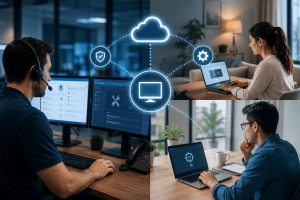

The modern workplace has undergone a dramatic transformation over the past few years. Businesses that once relied entirely on office-based operations are now embracing hybrid work models, allowing employees to split their time between the office and remote locations. While this shift has improved flexibility and employee satisfaction, it has also introduced new IT challenges. As a result, remote PC support services have become an essential component of business operations, helping organizations maintain productivity, security, and efficiency regardless of where employees work.

The Rise of Hybrid Work
Hybrid work combines the benefits of traditional office environments with the flexibility of remote work. Employees can work from home, co-working spaces, or other locations while remaining connected to their teams through digital tools and cloud-based platforms. This model has become increasingly popular because it supports work-life balance, reduces commuting time, and enables businesses to access a wider talent pool.
However, managing a workforce spread across multiple locations creates technical complexities. Employees often use different devices, internet connections, and software environments, making it difficult for in-house IT teams to provide timely support through traditional methods. This challenge has accelerated the adoption of remote PC support services.
What Is Remote PC Support?
Remote PC support is a service that allows IT professionals to access and troubleshoot a computer from a different location using secure remote access technology. Instead of waiting for a technician to visit in person, users can receive assistance instantly through a secure connection.
These services can address a wide range of issues, including:
- Software installation and updates
- Virus and malware removal
- Operating system troubleshooting
- Network connectivity problems
- Performance optimization
- Email configuration and support
- Security monitoring and maintenance
By eliminating the need for physical visits, remote support provides faster resolutions and minimizes business disruptions.
Faster Problem Resolution
One of the primary reasons remote PC support is growing in popularity is its ability to resolve issues quickly. In a hybrid work environment, employees cannot always bring their devices to the office for repairs. Waiting for an on-site technician can lead to hours or even days of downtime.
Remote support allows technicians to diagnose and fix problems immediately. Whether an employee is working from home, traveling, or stationed in another city, support can be delivered within minutes. This rapid response helps businesses maintain productivity and avoid costly interruptions.
Cost-Effective IT Management
Hiring and maintaining a large in-house IT team can be expensive, especially for small and medium-sized businesses. Remote PC support offers a cost-effective alternative by reducing travel expenses, minimizing downtime, and streamlining support processes.
Businesses can access expert technical assistance without investing heavily in additional infrastructure or personnel. Many remote support providers also offer subscription-based plans, making IT costs more predictable and manageable.
As organizations continue to optimize operational expenses, remote support has emerged as a practical solution that delivers significant value.
Enhanced Security for Remote Workers
Cybersecurity remains a major concern in the hybrid work era. Employees frequently connect to corporate systems from home networks, public Wi-Fi connections, and personal devices, increasing the risk of cyber threats.
Remote PC support providers help organizations strengthen security by:

- Installing critical software updates
- Monitoring system vulnerabilities
- Configuring security settings
- Removing malware and ransomware threats
- Implementing endpoint protection measures
By proactively managing security issues, remote support services help businesses reduce the likelihood of data breaches and costly cyberattacks.
Supporting a Distributed Workforce
Modern organizations often have employees working across different cities, states, or even countries. Providing consistent technical support to a geographically dispersed workforce can be challenging without remote capabilities.
Remote PC support ensures that all employees receive the same level of assistance regardless of location. IT teams can remotely access devices, perform maintenance, and resolve issues without requiring users to visit a physical office.
This capability is particularly valuable for companies with remote-first policies, field teams, sales representatives, and international staff.
Increased Productivity and Employee Satisfaction
Technical issues can be frustrating and disruptive for employees. Slow computers, software errors, and connectivity problems can significantly impact work performance and morale.
Remote support reduces these frustrations by providing quick access to professional assistance. Employees spend less time troubleshooting issues themselves and more time focusing on their core responsibilities.
When workers know help is readily available, they feel more confident and supported, leading to higher job satisfaction and improved overall productivity.
The Role of Automation and AI
Advancements in automation and artificial intelligence are further driving the growth of remote PC support. Modern support platforms can automatically detect system issues, monitor device health, and perform routine maintenance tasks.
AI-powered tools can identify potential problems before they become serious disruptions, enabling proactive support rather than reactive troubleshooting. This predictive approach helps organizations maintain stable and efficient IT environments while reducing support workloads.
As these technologies continue to evolve, remote support services will become even more efficient and effective.
Looking Ahead
The hybrid work model is no longer a temporary trend—it has become a permanent part of the modern business landscape. As organizations continue to embrace flexible work arrangements, the demand for reliable, secure, and scalable IT support will continue to grow.
Remote PC support provides the agility businesses need to support employees wherever they work. By offering faster issue resolution, stronger security, lower costs, and improved productivity, remote support has become an essential service for organizations navigating the challenges of the hybrid work era.
Businesses that invest in robust remote support solutions today will be better positioned to maintain operational efficiency, protect their digital assets, and support a productive workforce in the years ahead.