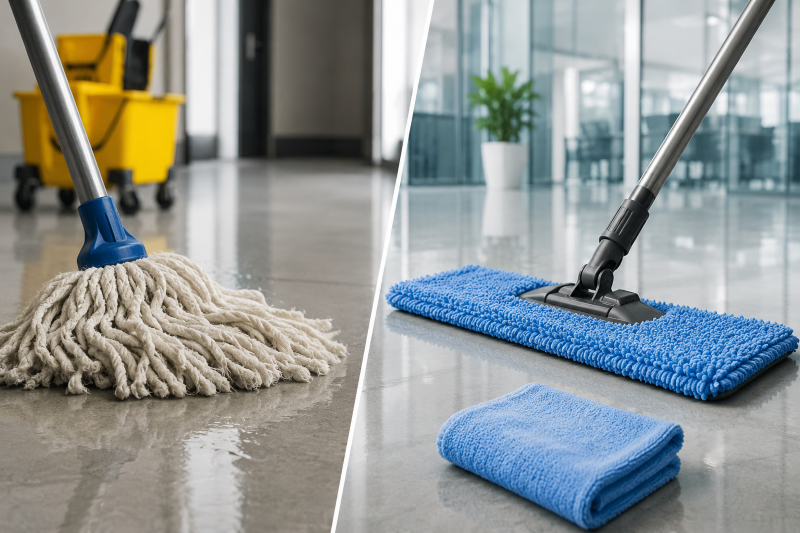
Commercial facilities face increasing pressure to maintain cleaner, safer, and more efficient environments while controlling operational costs. From office buildings and healthcare facilities to educational institutions and post-construction projects, cleaning systems play a major role in appearance, health standards, and long-term facility maintenance.
One area that has transformed commercial cleaning practices is the shift from traditional cleaning systems to microfiber technology. While traditional cotton mops, cloths, and cleaning methods have served facilities for decades, microfiber systems have become the preferred choice for many professional cleaning companies due to their superior cleaning performance and efficiency.
For businesses investing in commercial construction clean up and ongoing facility maintenance, understanding the differences between microfiber and traditional cleaning systems can help decision-makers choose the most effective solution for their property.
Understanding Traditional Cleaning Systems
Traditional cleaning systems typically rely on cotton mops, cotton cloths, string mops, bucket-and-wringer setups, and standard cleaning chemicals. These methods have been widely used across commercial facilities for generations.
Common Components of Traditional Systems
Traditional cleaning equipment often includes:
- Cotton dust mops
- String wet mops
- Cotton cleaning rags
- Large mop buckets
- Heavy chemical usage
- Manual scrubbing tools
While these systems can effectively remove visible dirt and debris, they often require more water, more chemicals, and greater labor effort to achieve desired results.
Limitations of Traditional Cleaning Methods
Many commercial facility managers encounter challenges when relying solely on traditional cleaning systems.
Common issues include:
- Cross-contamination between areas
- Higher water consumption
- Increased chemical usage
- Longer drying times
- Greater physical strain on cleaning staff
- Reduced ability to capture microscopic particles
These limitations become especially noticeable in high-traffic facilities where cleanliness standards are closely monitored.
What Is Microfiber Cleaning Technology?
Microfiber is a synthetic material composed of extremely fine fibers, typically made from polyester and polyamide blends. Each fiber is significantly smaller than a human hair and engineered to attract, trap, and hold dust, dirt, bacteria, and moisture.
Unlike traditional cotton fibers that tend to push contaminants around surfaces, microfiber physically captures particles within its dense structure.
How Microfiber Works
Microfiber cleaning products contain millions of microscopic fibers that create a larger cleaning surface area.
When used properly, microfiber can:
- Trap dust and allergens
- Remove bacteria from surfaces
- Reduce streaking
- Absorb liquids efficiently
- Reach into surface pores and crevices
This innovative technology allows cleaning crews to achieve higher levels of cleanliness with less effort.
Cleaning Effectiveness Comparison
The primary goal of any cleaning system is effective soil and contaminant removal.
Dirt and Dust Removal
Traditional cotton mops often redistribute dirt as they become saturated during use. As a result, contaminants may spread across multiple areas before mop water is changed.
Microfiber systems perform differently.
The fibers create a static charge that attracts dust and debris while physically trapping particles. This leads to more complete removal of contaminants rather than simply moving them from one location to another.
In commercial facilities with heavy foot traffic, microfiber often delivers noticeably cleaner surfaces after a single pass.
Bacteria and Germ Reduction
Commercial buildings increasingly prioritize health and sanitation standards.
Studies conducted by healthcare and environmental organizations have shown that microfiber cleaning tools can remove a significantly higher percentage of bacteria from surfaces compared to traditional cotton products when used correctly.
For facilities such as:
- Medical offices
- Schools
- Corporate offices
- Retail centers
- Government buildings
This added level of cleaning effectiveness can contribute to healthier indoor environments.
Water and Chemical Usage
Sustainability has become a major consideration in facility management.
Traditional System Requirements
Traditional cleaning methods generally require:
- Larger volumes of water
- Frequent bucket changes
- Greater chemical dilution
- Additional rinsing
These factors increase both operating expenses and environmental impact.
Microfiber Efficiency
Microfiber products require considerably less water to perform effectively.
In many applications, microfiber mops and cloths can clean surfaces using minimal moisture and reduced chemical solutions.
Benefits include:
- Lower water consumption
- Reduced chemical purchases
- Faster drying times
- Improved indoor air quality
- Less environmental impact
For organizations pursuing sustainability initiatives, microfiber systems align well with modern environmental goals.
Labor Productivity and Efficiency
Labor remains one of the largest expenses in commercial cleaning operations.
Traditional Cleaning Challenges
Traditional equipment can create inefficiencies such as:
- Heavy buckets that require transportation
- Frequent water replacement
- Increased setup and cleanup time
- Greater worker fatigue
These challenges often reduce overall productivity during large-scale cleaning projects.
Advantages of Microfiber Systems
Microfiber cleaning programs are designed for speed and efficiency.
Cleaning crews can often cover larger areas in less time because:
- Equipment is lighter
- Surface coverage improves
- Less re-cleaning is required
- Faster drying reduces interruptions
For large commercial facilities, these productivity gains can significantly reduce labor costs over time.
Microfiber During Commercial Construction Clean Up
One area where microfiber systems provide substantial advantages is commercial construction clean up.
Construction and renovation projects generate large amounts of:
- Fine dust
- Drywall particles
- Wood debris
- Paint residue
- Concrete dust
These particles can be difficult to remove using traditional cleaning tools.
Why Microfiber Excels After Construction
Microfiber products are particularly effective at capturing microscopic construction dust that often remains airborne or settles on surfaces after initial cleaning.
A professional commercial construction clean up team can use microfiber technology to:
- Remove fine particulate matter more effectively
- Reduce dust redistribution
- Improve indoor air quality
- Achieve cleaner final inspections
- Prepare spaces for occupancy faster
This is especially important when facilities must meet strict turnover deadlines.
Real-World Example
Consider a newly completed corporate office building preparing for occupancy.
The project required a comprehensive commercial construction clean up before employees could move in. Initial cleaning using traditional cotton dust mops left visible dust accumulation on desks, window sills, and HVAC vents after several days.
The cleaning contractor then implemented a microfiber-based cleaning system for the final detailing phase.
The results included:
- Improved dust removal from hard-to-reach surfaces
- Reduced airborne dust during cleaning
- Faster completion times
- Fewer customer callbacks
- Higher satisfaction during final walkthrough inspections
This example demonstrates why many industry-leading cleaning providers now incorporate microfiber technology into post-construction cleaning programs.
Cost Considerations
Some facility managers hesitate to adopt microfiber systems because of higher initial equipment costs.
Upfront Investment
Microfiber products often cost more initially than traditional cotton products.
Examples include:
- Microfiber mops
- Cleaning pads
- Specialized carts
- Laundering systems
However, evaluating only the purchase price can be misleading.
Long-Term Value
Microfiber systems frequently provide better long-term value through:
- Lower labor costs
- Reduced chemical consumption
- Decreased water usage
- Extended product lifespan
- Improved cleaning results
Many organizations find that the return on investment offsets initial costs relatively quickly.
Best Practices for Implementing Microfiber Systems
Successfully transitioning to microfiber requires more than purchasing new equipment.
Staff Training
Cleaning teams should receive instruction on:
- Proper microfiber usage
- Color-coding procedures
- Cross-contamination prevention
- Correct laundering methods
Training helps maximize performance and extend product life.
Maintenance Procedures
Microfiber products must be maintained properly to preserve effectiveness.
Recommended practices include:
- Following manufacturer washing guidelines
- Avoiding fabric softeners
- Separating microfiber from cotton products
- Replacing damaged materials promptly
Consistent maintenance ensures reliable cleaning performance.
Choosing the Right Cleaning System for Your Facility
Not every facility has identical cleaning requirements.
Factors to consider include:
- Facility size
- Traffic levels
- Health and safety standards
- Sustainability goals
- Budget considerations
- Cleaning frequency
Many top-rated commercial cleaning providers now combine microfiber technology with proven cleaning protocols to create scalable, results-driven maintenance programs.
For facilities seeking higher cleanliness standards, improved efficiency, and reduced environmental impact, microfiber systems often provide measurable advantages over traditional cleaning methods.
Conclusion
The comparison between microfiber and traditional cleaning systems highlights a clear evolution in commercial facility maintenance. While traditional cotton-based methods remain familiar and accessible, microfiber technology offers superior cleaning performance, greater efficiency, reduced resource consumption, and improved health outcomes.
For organizations managing office buildings, educational facilities, healthcare environments, and commercial construction clean up projects, microfiber systems provide a reliable and high-performance solution capable of meeting modern cleaning demands.
As facility expectations continue to rise, investing in innovative cleaning technologies can help organizations maintain cleaner environments, enhance operational efficiency, and deliver better long-term value. Prestige Building Maintenance of Nevada, LLC understands the importance of using advanced cleaning methods that deliver consistent results, helping commercial properties maintain high standards of cleanliness, safety, and professionalism.