Property development has traditionally relied on a limited number of funding channels. Developers often seek financing from banks, private investors, real estate funds, or institutional firms. While these approaches have supported the industry for decades, they can involve lengthy approval cycles, extensive documentation, geographical restrictions, and significant administrative requirements.
The emergence of blockchain-based ownership structures has introduced a different approach to raising capital. Through real estate asset tokenization, property ownership can be divided into digital units that represent fractional interests in an asset. These units can then be offered to qualified investors through compliant digital platforms.
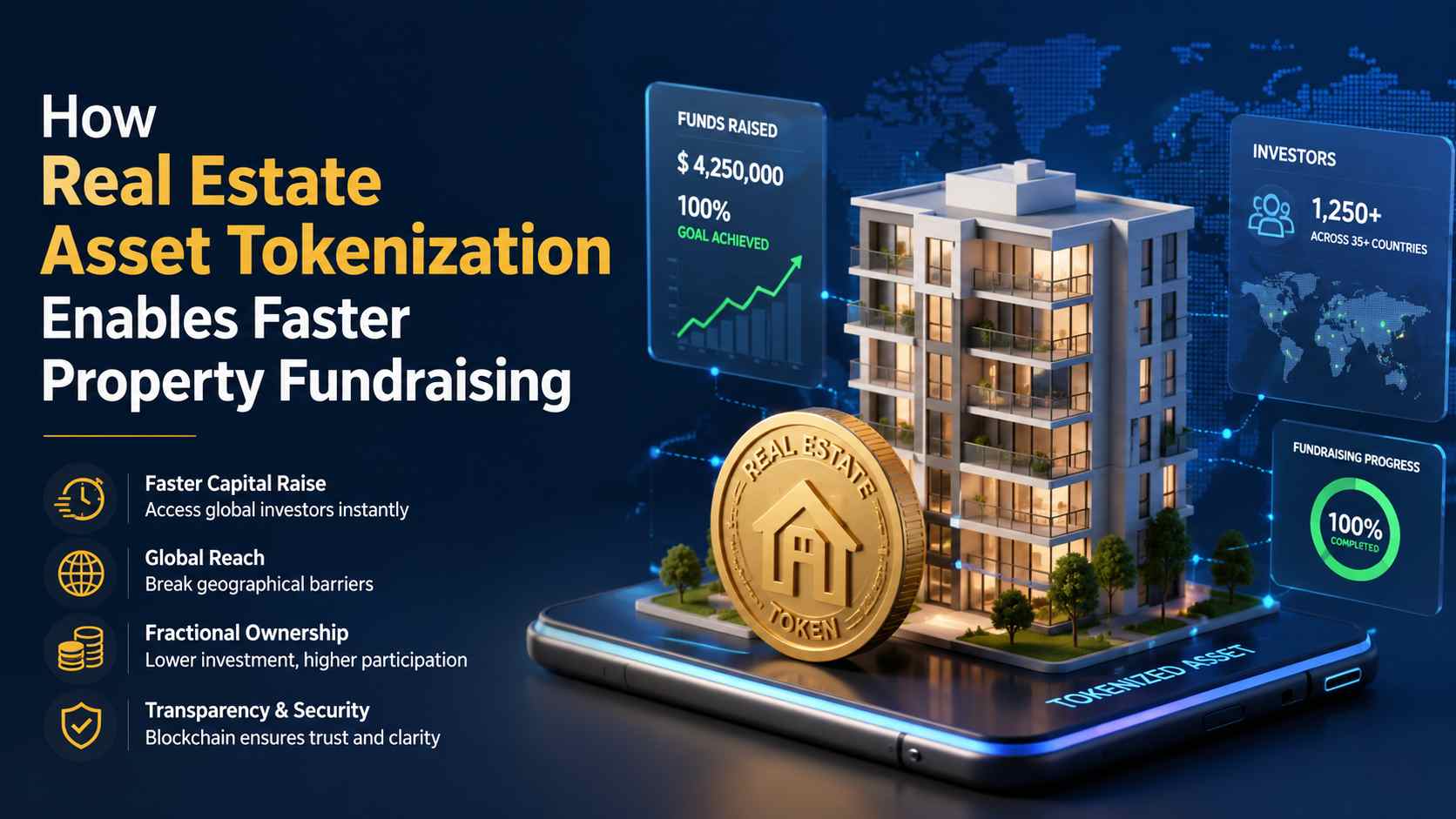
As investment markets become increasingly global, developers are searching for practical methods to attract capital from a broader investor base. This is where Real Estate Tokenization has gained attention. By converting ownership rights into digital tokens, property owners can access new funding opportunities while investors gain access to real estate opportunities that were previously difficult to enter.
This article examines how real estate asset tokenization supports faster property fundraising, why developers are considering this model, and the role of technology providers in creating compliant tokenized property ecosystems.
Understanding Real Estate Asset Tokenization
Real estate asset tokenization refers to the process of representing ownership rights in a property through blockchain-based digital tokens. Each token corresponds to a specific share of the asset, economic interest, or revenue participation arrangement depending on the legal structure used.
Rather than selling an entire building to one buyer or relying on a small group of investors, developers can divide ownership into thousands of digital units. Investors can purchase these units according to regulatory requirements and investment thresholds.
The concept combines traditional property ownership with blockchain recordkeeping. Ownership data, transaction histories, and investor allocations are recorded digitally, creating a verifiable system for asset management and investor participation.
Many organizations work with a Real Estate Tokenization company to determine the legal, technical, and operational framework needed before launching a fundraising campaign.
Why Traditional Property Fundraising Often Takes Time
Before understanding the fundraising advantages of tokenization, it is useful to examine the challenges associated with conventional fundraising methods.
Property fundraising generally involves multiple parties, including lenders, legal advisors, brokers, investment managers, compliance teams, and investors. Each participant contributes to the transaction process, often increasing timelines and administrative costs.
Developers frequently encounter obstacles such as:
- Limited investor reach
- Lengthy due diligence procedures
- Geographic investment restrictions
- High minimum investment requirements
- Manual documentation processes
- Negotiation delays
- Banking approval timelines
In many situations, fundraising can take several months before sufficient capital is secured for project execution.
As competition within the property sector increases, developers are seeking alternatives that can attract investment participation more efficiently.
Access to a Larger Investor Pool
One reason tokenization contributes to faster fundraising is broader investor accessibility.
Traditional property deals often target institutional investors, high-net-worth individuals, or private investment groups. This naturally limits the number of potential participants.
With Real Estate Tokenization, ownership can be divided into smaller investment portions. This structure allows more investors to participate in a project while remaining within applicable legal frameworks.
A larger investor audience increases the likelihood of reaching fundraising targets within shorter timeframes. Instead of depending on a handful of major investors, developers can attract contributions from numerous participants across multiple regions.
This expanded market reach can significantly influence fundraising outcomes, particularly for commercial properties, residential developments, and mixed-use projects.
Fractional Ownership Reduces Investment Barriers
Property investments have traditionally required substantial capital commitments. Many investors are interested in real estate but lack the financial capacity to purchase entire properties or large ownership stakes.
Tokenization addresses this challenge through fractional ownership structures.
By dividing property value into digital units, investors can acquire smaller portions of an asset. This lowers entry requirements and creates opportunities for participation from a wider investment community.
For developers, lower investment thresholds often translate into greater investor activity. When more individuals can participate, fundraising campaigns may gather momentum more quickly than conventional fundraising approaches.
This is one reason why many businesses are investing in real estate tokenization development initiatives to modernize capital formation strategies.
Global Investment Participation
Geographical limitations have historically restricted property fundraising opportunities.
Developers frequently focus on investors within specific regions because cross-border investments involve additional administrative and legal complexities.
Tokenized property structures create opportunities for broader international participation when implemented under applicable regulations.
Investors from different jurisdictions can review property information, conduct due diligence, and participate through digital investment platforms.
This international accessibility increases exposure for fundraising campaigns and reduces dependence on local investor networks.
Organizations that provide Real Estate Tokenization Services often assist developers in structuring offerings that accommodate investors from multiple regions while complying with legal requirements.
Faster Distribution of Investment Opportunities
Traditional fundraising frequently depends on personal networks, broker introductions, roadshows, and lengthy investor outreach efforts.
Digital token offerings can present investment opportunities through online platforms where information is available to prospective investors in a centralized environment.
Property details, valuation reports, ownership structures, financial projections, and legal documentation can be presented digitally for investor review.
This approach reduces delays associated with physical documentation exchanges and repetitive information requests.
As a result, developers can engage with potential investors more rapidly and move fundraising initiatives forward without extensive manual coordination.
Improved Liquidity Expectations
Liquidity has long been a concern within real estate investing.
Property ownership is generally considered less liquid than stocks, bonds, or other financial instruments. Investors may hesitate to commit funds when exit opportunities are limited.
Tokenized ownership structures may offer secondary trading possibilities depending on jurisdictional regulations and platform capabilities.
While liquidity is not guaranteed, the possibility of future secondary market participation can increase investor interest.
Greater investor confidence may contribute to quicker fundraising outcomes because participants perceive more flexibility in managing their investments.
This factor is frequently considered during Real Estate Tokenization Platform Development projects.
Digital Investor Onboarding
Investor onboarding can become a major bottleneck during fundraising campaigns.
Traditional processes often involve paperwork, identity verification procedures, manual approvals, and document reviews that require significant administrative resources.
Modern tokenization platforms integrate digital onboarding workflows that support:
- Identity verification
- Know-your-customer procedures
- Compliance checks
- Accreditation verification
- Investor registration
- Digital document execution
By reducing manual intervention, developers can process investor applications more efficiently.
Many Real Estate Tokenization Development Services providers focus heavily on creating streamlined onboarding environments that reduce operational delays.
Efficient Capital Collection Processes
Fundraising efficiency depends not only on attracting investors but also on collecting and allocating capital.
Conventional fundraising often involves multiple banking processes, payment reconciliations, and administrative reviews before investments are finalized.
Tokenization platforms can integrate structured payment and allocation systems that simplify investment tracking.
Investors receive token allocations based on approved participation amounts, creating a more organized framework for managing fundraising campaigns.
This operational efficiency can help developers monitor funding progress and respond quickly to changing market conditions.
Enhanced Investor Confidence Through Recordkeeping
Investors are more likely to participate when they can access reliable information regarding ownership and transaction history.
Blockchain-based records provide an auditable history of token issuance, transfers, and ownership allocations.
While legal ownership rights are determined through underlying legal structures, blockchain records provide an additional layer of verification that investors can review.
This visibility often contributes to investor confidence during fundraising campaigns.
A reputable Real Estate Tokenization company typically works with legal, compliance, and technology specialists to create reliable asset management structures that support investor trust.
Reduced Dependence on Traditional Intermediaries
Traditional fundraising often involves multiple intermediaries who participate in marketing, administration, investor management, and transaction processing.
Each intermediary introduces additional costs and operational requirements.
Tokenized fundraising models can consolidate several processes within a unified digital ecosystem.
Although legal advisors, compliance professionals, and platform operators remain important, many administrative functions can be coordinated through integrated technology systems.
Reducing operational complexity may contribute to shorter fundraising cycles and lower administrative burdens.
Data-Driven Fundraising Management
Modern tokenization platforms generate valuable operational insights during fundraising campaigns.
Developers can track:
- Investor participation levels
- Geographic interest patterns
- Subscription activity
- Capital commitments
- Campaign performance metrics
- Investor engagement trends
These insights help project sponsors make informed decisions throughout the fundraising process.
Organizations investing in Real Estate Tokenization Platform Development often prioritize analytics capabilities because they provide visibility into fundraising performance and investor behavior.
Regulatory Frameworks Supporting Market Growth
Regulatory clarity continues to play an important role in the adoption of tokenized real estate investments.
Many jurisdictions have introduced frameworks governing digital securities, investor protections, compliance obligations, and asset-backed token offerings.
As regulations mature, investor confidence generally increases.
Developers that work with experienced Real Estate Tokenization Development company partners can better navigate regulatory requirements and structure compliant fundraising initiatives.
Compliance remains a critical component of successful tokenized fundraising campaigns and significantly influences investor participation.
The Growing Role of Technology Providers
The technical and legal complexity involved in tokenizing property assets has created demand for specialized service providers.
A Real Estate Tokenization company typically assists clients with:
- Asset tokenization strategy
- Legal structure planning
- Smart contract implementation
- Investor onboarding systems
- Compliance integrations
- Digital asset management
- Security controls
- Platform deployment
These services help property owners move from concept to fundraising execution with a structured approach.
As market adoption continues to expand, technology providers are becoming increasingly involved in property fundraising initiatives worldwide.
Future Outlook for Property Fundraising
The real estate industry continues to evaluate digital ownership models as investment behavior evolves.
Investors increasingly expect digital access, online participation, and efficient transaction experiences. Property developers are responding by considering fundraising methods that align with these expectations.
Real estate asset tokenization represents one approach that addresses many of the limitations associated with conventional fundraising structures.
While traditional financing channels will continue to play a major role in property development, tokenized fundraising introduces additional flexibility for sponsors seeking broader investor participation.
As infrastructure, regulations, and market awareness continue to mature, tokenized property offerings may become a more common component of real estate capital formation strategies.
Conclusion
Property fundraising has historically involved lengthy processes, limited investor access, and significant administrative requirements. Real estate asset tokenization introduces a digital ownership framework that allows developers to engage a broader investor audience, support fractional ownership, facilitate international participation, and manage fundraising activities through technology-driven platforms. These characteristics contribute to shorter fundraising cycles and improved capital accessibility for property projects. As adoption continues to grow, businesses are increasingly turning to Real Estate Tokenization, Real Estate Tokenization Services, and real estate tokenization development initiatives to modernize how real estate investments are structured and financed. Organizations seeking to enter this market often partner with a Real Estate Tokenization Development company that provides Real Estate Tokenization Development Services and Real Estate Tokenization Platform Development expertise to support compliant and efficient fundraising ecosystems.