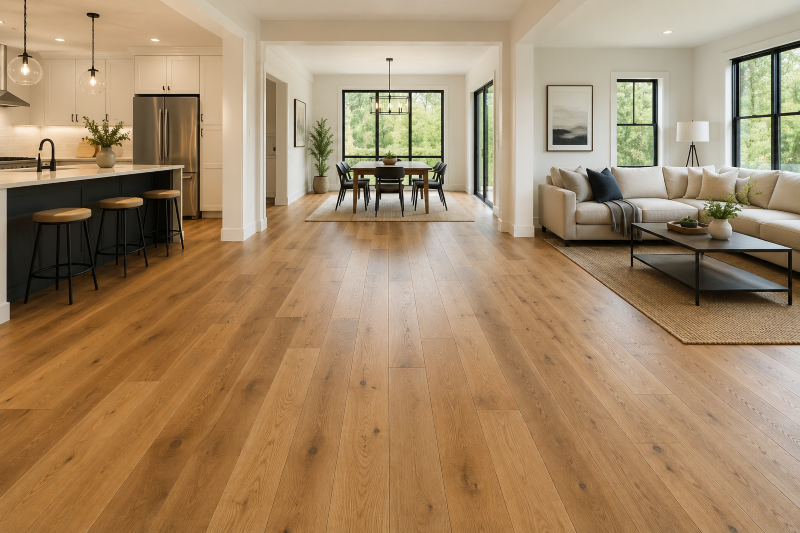
Open-concept homes have transformed modern living by removing barriers between kitchens, dining rooms, and living spaces. These expansive layouts create a sense of openness, improve natural light flow, and make homes feel larger and more connected. However, achieving a truly seamless appearance in an open-concept space requires thoughtful flooring design, particularly when selecting hardwood floor layout patterns.

The right hardwood pattern can visually unify multiple living zones, enhance architectural features, and create a polished appearance throughout the home. Homeowners investing in hardwood staining in Portland ME often focus on color selection but may overlook how plank direction, installation patterns, and stain consistency influence the overall aesthetic.

At D&T Hardwood Floors, understanding how layout patterns affect the visual flow of a home helps homeowners make informed decisions that maximize both beauty and long-term value.
Why Hardwood Layout Patterns Matter in Open-Concept Homes
Unlike traditional homes with clearly separated rooms, open-concept designs rely on visual continuity. Flooring often becomes the primary design element that connects multiple functional spaces.
A carefully planned hardwood layout can:
- Create a unified appearance across large areas
- Make rooms appear larger and more balanced
- Highlight architectural focal points
- Improve natural light reflection
- Increase property value
- Support furniture placement and room transitions
Poor layout planning can have the opposite effect, creating visual interruptions that make open spaces feel disconnected.
Understanding Visual Flow in Hardwood Flooring
Visual flow refers to how the eye naturally moves throughout a space. In open-concept homes, flooring acts as a guide that directs attention and establishes continuity.
Several factors influence visual flow:
Plank Direction
The direction hardwood planks run significantly impacts how large or connected a space feels.
Generally, installers recommend running planks:
- Parallel to the longest wall
- In the direction of natural light when possible
- Along the main traffic pathway
- Consistently throughout connected spaces
Maintaining one direction across an open floor plan minimizes visual breaks and creates a cohesive look.
Consistent Stain Color
A unified stain color is equally important. Professional hardwood staining in Portland ME helps ensure consistency across large floor areas while enhancing the natural beauty of the wood species.
Even slight color variations between sections can disrupt the seamless appearance that open-concept designs aim to achieve.
Traditional Straight-Lay Pattern: The Most Popular Choice
The straight-lay pattern remains the most common and effective hardwood installation method for open-concept homes.
Benefits of Straight-Lay Installation
This pattern involves installing boards parallel to one another in a single direction.
Advantages include:
- Timeless appearance
- Lower installation costs
- Easier future repairs
- Cleaner visual flow
- Compatibility with nearly all home styles
From modern farmhouses to contemporary homes, straight-lay installations provide reliable and attractive results.
Best Applications
Straight-lay patterns work especially well in:
- Large open living spaces
- Combined kitchen and dining areas
- Ranch-style homes
- Coastal-inspired interiors
- Traditional family homes
Because the design is simple and versatile, it remains one of the best choices for homeowners seeking a classic look.
Diagonal Hardwood Layouts for Added Dimension
Diagonal installations place boards at a 45-degree angle rather than parallel to walls.
Visual Advantages
Diagonal patterns can:
- Make rooms feel larger
- Add architectural interest
- Draw attention toward focal points
- Create movement throughout the home
This pattern works particularly well in homes where standard layouts may appear too plain.
Considerations
Diagonal installations generally require:
- More material
- Additional labor
- Greater installation expertise
Working with a trusted hardwood flooring professional helps ensure accurate alignment and minimize material waste.
Herringbone Pattern: Elegant and Sophisticated
Herringbone flooring has experienced a resurgence in luxury home design.
What Makes Herringbone Unique?
This pattern consists of rectangular planks arranged in a staggered zigzag formation.
Benefits include:
- Distinctive visual appeal
- Timeless luxury aesthetic
- Enhanced property value
- Strong design statement
Despite its decorative nature, herringbone can still provide continuity throughout open-concept spaces when installed consistently.
Ideal Design Styles
Herringbone works beautifully in:
- Luxury residences
- Historic renovations
- Transitional interiors
- High-end custom homes
Pairing herringbone flooring with professional hardwood staining in Portland ME allows homeowners to personalize the look while preserving the elegance of the pattern.
Chevron Pattern for Contemporary Homes
Chevron flooring resembles herringbone but creates a more continuous V-shaped appearance.
Why Homeowners Choose Chevron
The angled ends of each plank meet perfectly to form clean, symmetrical lines.
Advantages include:
- Modern visual impact
- Increased perception of space
- Architectural sophistication
- Excellent compatibility with minimalist interiors
This pattern is becoming increasingly popular among homeowners seeking cutting-edge design features.
Best Use Cases
Chevron flooring complements:
- Contemporary homes
- Modern open-concept layouts
- Luxury condominiums
- Custom architectural residences
Its geometric precision creates a striking foundation without overwhelming the space.

Wide-Plank Layouts for Seamless Transitions
Wide-plank hardwood flooring continues to dominate residential design trends.
Benefits of Wide Planks
Wider boards reduce the number of seams visible across the floor.
This creates:
- A cleaner appearance
- Improved visual continuity
- Enhanced perception of room size
- Greater emphasis on natural wood grain
In open-concept homes, fewer seams help maintain uninterrupted sightlines.
Popular Wood Species
Common choices include:
- White oak
- Red oak
- Hickory
- Maple
- European oak
Each species responds differently to staining, making professional guidance especially valuable.
Mixed-Width Hardwood Patterns
Mixed-width installations combine boards of varying dimensions within the same floor.
Creating Character Without Disruption
When executed correctly, mixed-width flooring adds:
- Visual texture
- Custom craftsmanship
- Rustic elegance
- Historical authenticity
The key is maintaining consistent stain color and installation direction.
This approach works especially well in farmhouse, coastal, and rustic-modern homes.
Border Designs and Feature Zones
Some homeowners consider using borders or transitions to define living areas within open-concept spaces.
When Borders Work
Subtle borders may be appropriate for:
- Formal dining spaces
- Entryways
- Large great rooms
However, excessive use can undermine the seamless appearance open-concept designs strive to achieve.
Most flooring professionals recommend minimal transitions whenever possible.
Real-World Example: Creating Continuity in a Portland Open-Concept Renovation
A recent renovation project involved a homeowner updating a 1990s floor plan in the Portland area. The goal was to remove walls between the kitchen, dining room, and living room while creating a cohesive hardwood design.
The original flooring consisted of multiple materials, including tile, carpet, and hardwood installed in different directions.
The renovation team selected:
- Wide-plank white oak flooring
- Straight-lay installation
- Consistent medium-brown stain
- Continuous installation across all connected rooms
The result was a significantly larger visual footprint, improved natural light reflection, and a seamless transition between functional spaces. The homeowners noted that guests frequently commented on how much larger the home felt despite no increase in square footage.
This example demonstrates how layout strategy often contributes as much to visual success as the flooring material itself.
Hardwood Staining Considerations for Open Spaces
Layout patterns and stain selection should work together.
Uniform Color Distribution
Large open spaces magnify inconsistencies.
Professional hardwood staining helps ensure:
- Even color penetration
- Consistent appearance across rooms
- Proper wood preparation
- Long-lasting results
Matching Design Style
Different stain colors support different aesthetics:
- Light stains create airy, contemporary spaces
- Medium stains offer versatility and warmth
- Dark stains add drama and sophistication
The ideal stain should complement the chosen installation pattern while supporting the home’s overall design goals.
Common Mistakes to Avoid
Homeowners planning hardwood installations should avoid several common issues.
Frequent Design Errors
Changing Plank Direction Between Rooms
Direction changes often create unnecessary visual breaks.
Using Multiple Flooring Types
Mixing materials can reduce cohesion within open-concept layouts.
Ignoring Natural Light
Floor orientation should consider how sunlight enters the home.
Prioritizing Trends Over Function
Highly decorative patterns may not suit every home or lifestyle.
Consulting experienced flooring professionals helps prevent costly mistakes while achieving long-term satisfaction.
Choosing the Right Pattern for Your Home
The best hardwood layout pattern depends on several factors:
- Home size
- Architectural style
- Budget
- Desired visual impact
- Maintenance preferences
- Future resale considerations
For many homeowners, wide-plank straight-lay installations provide the best balance of affordability, elegance, and versatility. Others may prefer the luxury appeal of herringbone or the contemporary sophistication of chevron.
An experienced flooring contractor can evaluate the home’s layout and recommend solutions tailored to its unique characteristics.
Final Thoughts
Open-concept homes rely heavily on visual continuity, making hardwood flooring one of the most important design decisions homeowners can make. The right layout pattern can unify living spaces, enhance natural light, and create a more spacious and inviting environment.
Whether selecting a classic straight-lay design, an elegant herringbone pattern, or a modern chevron installation, thoughtful planning is essential. Combined with professional hardwood staining in Portland ME, homeowners can achieve a seamless appearance that enhances both beauty and value.
D&T Hardwood Floors helps homeowners create cohesive, long-lasting hardwood flooring solutions tailored to modern open-concept living. By selecting the appropriate layout pattern and stain combination, homeowners can enjoy floors that remain stylish, functional, and visually impressive for years to come.