Trademark Class: Understanding Classes 1-45 for Brand Protection
At the time of filing a trademark application to get a trademark registration certificate, the most important step is to select the correct trademark class. A trademark registration does not mean to protect your brand across all products and services. However, protection is granted within specific classes that define the nature of goods or services specific to their business.

Knowledge of trademark classification systems can also help businesses to strengthen their business brand, reduce chances of conflicts and increase the chances of trademark registration for your intellectual property.

What is a Trademark Class?
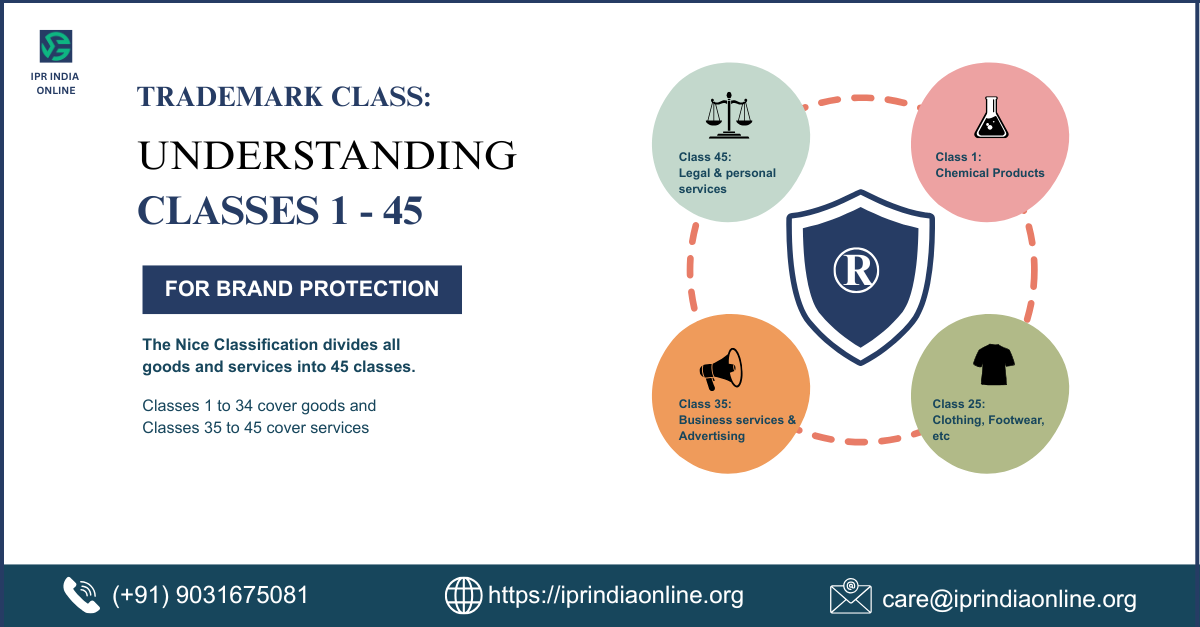
A trademark class is a type of category of goods and service that is used for trademark registration. It is based on Nice Classification, the International classification system. Based on these classification commercial activities are divided into 45 different classes.
- Classes 1-34 for goods.
- Classes 35-45 for services.
At the time of submitting an application for a trademark, applicants must identify the correct class according to their business activities. Trademark rights are limited to specific classes, so it is more important to select the right class for brand protection.
Why Trademark Classes Matter
Trademark class is not just for legal purposes, it sets the scope of protection for brands registered under that class.
It simply means, a XYZ business successfully registered a trademark with name “brand1” in one class while another company also uses a similar name “brand1” but in different classes. It happened because of class-specific trademark protection. Because registering the same name in different classes does not create confusion to consumers.
For example: “Domino” name is used by two companies, one is with “Domino’s pizza” under class 30 and 43 while “Domino Sugar” of ASR group, the world largest “can sugar refiner” also used the same name under class 30 sugar and sweeteners.
Overview of Trademark Classes (1 to 45)
First Category : Goods Classes (1-34)
Businesses who come under Goods Classes have physical products manufactured or sold or distributed.
Some of the major classes of these category are:
Class 3
Cosmetic and Cleaning supplies: Cosmetics, skincare, hair care, soaps, detergent powers etc.
Class 9
Electronics, Software, Digital Products, scientific measuring items
Class 25
Clothing, footwear, headwear, and other fashion accessories
Class 30
Rice, barley, bread, cake, salt, turmeric, ketchup, pastry, confectionery and other related food products.
Second Category : Service Classes (35-45)
Businesses who come under Service Classes have no physical products , they provide their business services.
Some of the major classes of these category are:
Class 35
Advertising, accounting, tax filing, business management, retail, e-commerce, and marketing services.
Class 41
Education and training (i.e., schools, colleges, coaching centers), entertainment (youtube, podcast, OTT), Yoga centers, sports academy, and publishing services.
Class 42
Software development, IT services, cloud computing, and technology consulting.

Class 45
Legal services, security services, and other personal social services.
Relation Between Trademark Search and Trademark Classes
A trademark search is more effective if searches with specific classes associated with a business.
Most of the conflicts arises during trademark registration is because businesses focus only on identical brand names while similar marks registered in related classes. Knowledge of proper trademark class helps businesses to identify the risks and availability of brand names more effectively.
A detailed trademark search means to consider the identical and similar trademarks within relevant classes to reduce the risk of disputes.
Is It Possible To Registered Same Brand in Multiple Classes?
Yes it is, many of the businesses operates under different categories and for different categories they require multiple trademark classes.
For example: We consider about Clothing company
- They need to register under Class 25 for selling.
- They need to register under Class 35 for e-commerce platforms.
- They need to register under Class 9 for mobile application.
Misconceptions about Trademark Classes
One Trademark Registration Protects Everything
Trademark registration is only to protect the goods and services that come under the selected class or classes.
Similar Names Are Always Reasons of Rejection
Trademark authority evaluates different factors related to trademark application such as industry or class or situation of confusion chances on consumer etc.
Only Big Companies Need Multiple Classes
Most Startups and growing businesses often benefit from protection by registering for more than one trademark class, especially if they offer products and services under the same business brand.
How Trademark Classes Helps in Brand Protection
Trademark classes help to secure proposed trademarks or intellectual property in related classes for their business while reducing conflicts between unrelated sectors.
Trademark classes create a structured system that helps businesses secure exclusive rights within their industry while reducing conflicts between other similar trademark registered under different classes.
Also Read: How to Register Trademark in India informational blog.
Conclusion
Knowledge of trademark classes is important for brand protection. Every class from 1 to 45 has their specific type for product and service, the trademark class classification helps to understand the specific types and their scope of protection. Whether you are introducing the new product or expanding their business or boosting their existing brand, selecting the right trademark class is one of the key elements for long term business growth.