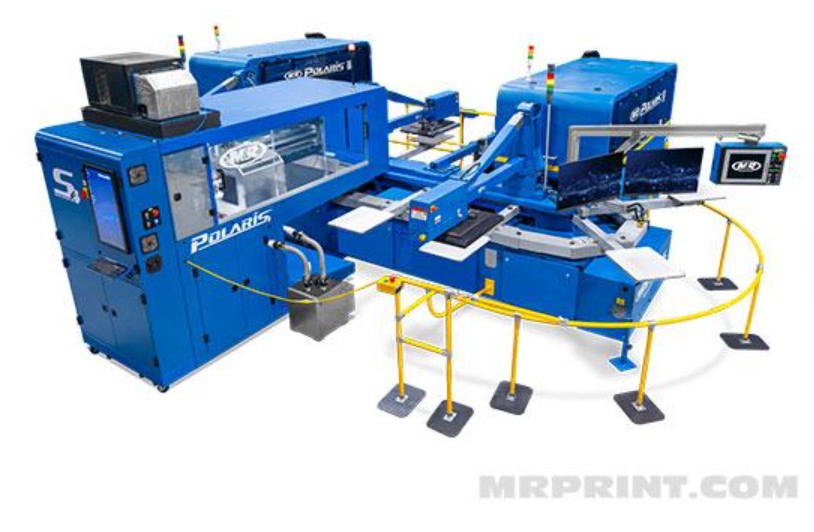
Are you comparing industrial garment printing systems and wondering which features actually matter?
It can get confusing fast. Some machines promise speed. Others highlight color quality, fabric range, or low labor needs.
But the real question is simple: will the printer improve your production process, or will it create new problems?
If you are considering a DTG printer for serious garment production, you need to look beyond basic specs and focus on output quality, workflow, space, support, and long-term usability.
Why the Right Industrial Printing System Matters
An industrial garment printer is not just a machine. It becomes part of your daily production flow. That means every feature affects labor, turnaround time, print quality, fabric flexibility, and customer satisfaction. So, before you invest, you need to understand how the system performs in real production, not just in a product brochure.
A good industrial printing system should help your team produce sharp, colorful, repeatable prints with fewer delays. It should also support different garment types without forcing major process changes. More importantly, it should fit your floor space, operator capacity, and service expectations. Otherwise, even a powerful machine can slow your shop down.
That is why buyers should judge a system by practical outcomes.
- Can one operator manage it?
- Does it handle common fabric types?
- Does it support vivid color output?
- Does it offer reliable service when production pressure is high?
These questions help you separate a smart investment from a risky purchase.
Start with print quality.
Speed matters, of course. However, speed without quality creates rework. And rework kills profit quickly. So, the first thing to check is whether the system can deliver vibrant prints with strong detail and accurate color. For garment decorators, this matters because customers rarely judge the machine. They judge the finished shirt, hoodie, jersey, or promotional piece.
A strong industrial system should produce clean lines, rich color, and consistent results across repeat jobs. It should also handle artwork with fine details without turning the final print muddy. Additionally, look at the ink configuration. A system using CMYK and white ink can support core production needs.
Resolution also matters, but you should read it with the production context. For example, a machine may offer higher-resolution modes for sharper detail and lower-speed modes for quality-focused work. Meanwhile, faster modes may help with volume. The key is balance. You want a system that gives your shop enough control to match quality with job type.
Compare production space, labor, and daily workflow
A powerful machine does not help much if it overwhelms your shop floor. Many print businesses work with limited space. So, compact production design can make a major difference.
Here is a simple comparison to guide your evaluation:
| What to Review | Why It Matters |
| Operator needs | Affects labor cost |
| Print modes | Balances speed and detail |
| Ink system | Impacts the color range |
| Service access | Protects uptime |
This kind of checklist keeps the buying process practical. Instead of focusing only on headline claims, you look at how the printer fits your floor. Also, you see whether it supports daily output without adding labor strain. That matters because production equipment should remove pressure, not create more.
Look closely at the ink system and printhead setup.
The ink system controls much of the final print result. It also affects maintenance, uptime, and consistency. So, do not treat ink details as minor specifications. A white ink auto-circulation supply system, for example, can support smoother white ink management. That matters because white ink plays a key role in bright, bold garment transfers.
However, you should not only count printheads. You should also ask how the system uses them.
- Does the setup support consistent ink delivery?
- Does it help produce sharp detail?
- Does it allow your team to match production speed with print quality?
These practical questions matter more than specs alone.
In short, a serious garment production setup needs stable ink movement, smart printhead configuration, and enough color control to handle demanding artwork.
Check resolution settings against real production goals
Resolution can sound technical, but the idea is simple. Higher resolution helps create sharper detail. Lower-pass or faster modes can improve output speed. The right system should give your shop options, because not every job needs the same production setting.
That flexibility supports better planning. Rush orders, bold graphics, and simple designs may not need the same mode as detailed artwork. Therefore, adjustable resolution helps your shop match production strategy with customer expectations.
Still, do not chase resolution blindly. A higher number alone does not guarantee better results. Ink quality, printhead performance, file preparation, heat process, and fabric compatibility also affect final output. So, always judge resolution as part of the complete system.
Conclusion
Choosing an industrial garment printer takes more than comparing speed claims. You need to study print quality, fabric range, ink setup, printheads, workflow, space needs, and support. When all these parts work together, the machine can improve production instead of adding pressure.
A smart system should help your team print sharper designs, manage more fabric types, and keep jobs moving with fewer delays. So, before making your next investment, review the full production picture.
Explore industrial printing systems that match your shop’s workflow, quality goals, and growth plans, then choose equipment built for real daily performance.