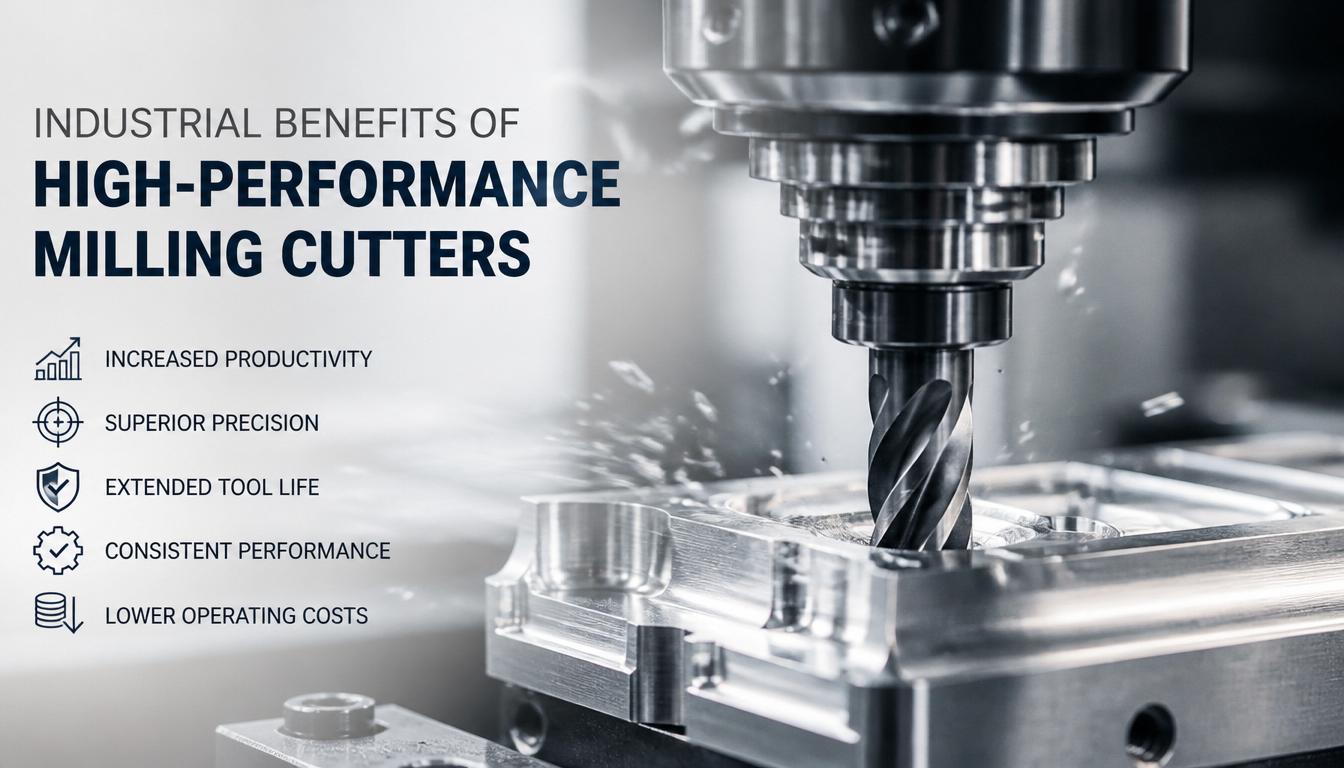
Modern manufacturing industries depend heavily on advanced machining solutions to achieve precision, speed, and production efficiency. Among the most essential cutting tools used in CNC machining are Milling cutters. These tools are designed to remove material efficiently while maintaining excellent dimensional accuracy and surface quality.
With increasing demand for high-speed production and precision engineering, manufacturers are investing in high-performance milling cutters to improve productivity and reduce operational costs. From aerospace and automotive industries to mold manufacturing and heavy engineering, milling cutters have become critical components in modern industrial machining operations.
What Are Milling Cutters?
Milling cutters are rotary cutting tools used in milling machines and CNC machining centers for removing material from a workpiece. These cutters feature multiple cutting edges that enable smooth and efficient machining operations.
They are commonly used for:
- slotting,
- contouring,
- face milling,
- profile machining,
- drilling,
- and finishing operations.
Modern milling cutters are manufactured using:
- carbide,
- high-speed steel (HSS),
- cobalt alloys,
- and advanced coated materials.
The choice of milling cutter depends on:
- material type,
- cutting speed,
- machining complexity,
- and production requirements.
Importance of High-Performance Milling Cutters in Manufacturing
In highly competitive industrial environments, manufacturers require tools that can deliver:
- high precision,
- faster machining,
- longer tool life,
- and reduced downtime.
High-performance milling cutters are specifically engineered to meet these demands. Advanced tool geometries and coatings allow manufacturers to machine difficult materials while maintaining excellent cutting performance.
These tools play a vital role in:
- increasing productivity,
- improving product quality,
- and optimizing manufacturing processes.
Major Industrial Benefits of Milling Cutters
Increased Machining Efficiency
One of the biggest advantages of high-performance milling cutters is improved machining efficiency. These cutters support:
- higher spindle speeds,
- faster feed rates,
- and aggressive material removal.
As a result, manufacturers can complete production tasks more quickly without compromising accuracy.
Superior Precision and Accuracy
Precision is essential in industries such as aerospace, automotive, and medical manufacturing. High-quality milling cutters provide:
- tight dimensional tolerances,
- smooth surface finishes,
- and consistent machining results.
Advanced cutter geometries help minimize vibration and tool deflection during machining operations.
Longer Tool Life
Modern milling cutters are designed with advanced coatings such as:
- TiAlN,
- TiCN,
- and diamond-like coatings.
These coatings improve:
- heat resistance,
- wear resistance,
- and durability.
Longer tool life reduces:
- replacement costs,
- machine downtime,
- and maintenance requirements.
Improved Surface Finish
Surface quality directly affects product performance and appearance. High-performance milling cutters produce smoother finishes, reducing the need for secondary polishing or finishing operations.
This helps manufacturers save both time and production costs.
Reduced Production Costs
Efficient cutting performance lowers overall manufacturing expenses by:
- reducing machining time,
- minimizing tool wear,
- lowering energy consumption,
- and decreasing scrap rates.
For large-scale production facilities, these savings can significantly improve profitability.
Ability to Machine Difficult Materials
Industries increasingly work with hard-to-machine materials such as:
- titanium,
- stainless steel,
- hardened steel,
- and superalloys.
High-performance milling cutters are specifically designed to handle these challenging materials efficiently while maintaining cutting stability.
Industrial Applications of Milling Cutters
Aerospace Industry
The aerospace sector requires extreme precision for aircraft components and turbine parts. Milling cutters are used for:
- machining aluminum structures,
- titanium components,
- and complex aerospace geometries.
Automotive Manufacturing
Automotive manufacturers use milling cutters for:
- engine block machining,
- transmission components,
- mold production,
- and CNC precision parts.
High-speed machining improves production efficiency in mass manufacturing environments.
Mold and Die Industry
Precision milling cutters are essential for:
- cavity machining,
- contour shaping,
- and detailed mold finishing.
Ball nose and corner radius cutters are widely used in mold-making applications.
Medical Equipment Production
The medical industry uses milling cutters for manufacturing:
- implants,
- surgical tools,
- and precision medical components.
Strict dimensional accuracy and smooth finishes are critical in medical manufacturing.
Heavy Engineering
Heavy machinery manufacturers rely on durable milling cutters for:
- industrial machine components,
- steel fabrication,
- and large mechanical structures.
Types of High-Performance Milling Cutters
Different machining operations require specialized milling cutters, including:
Face Milling Cutters
Used for machining flat surfaces efficiently.
End Milling Cutters
Ideal for slotting, profiling, and contouring operations.
Ball Nose Milling Cutters
Commonly used for 3D machining and mold making.
Roughing Milling Cutters
Designed for heavy material removal during rough machining operations.
Corner Radius Cutters
Provide improved strength and smoother transitions during machining.
How to Select the Right Milling Cutters
Choosing the correct milling cutter depends on several factors:
- workpiece material,
- machine capability,
- spindle speed,
- cutting depth,
- feed rate,
- and surface finish requirements.
Manufacturers often select carbide milling cutters for high-speed CNC machining due to their durability and heat resistance.
Future of Milling Cutters in Modern Industries
The future of Milling cutters is closely connected with advancements in:
- CNC automation,
- smart manufacturing,
- AI-driven machining,
- and Industry 4.0 technologies.
Manufacturers are increasingly adopting:
- customized cutter geometries,
- advanced coatings,
- and high-efficiency cutting solutions.
These innovations are helping industries improve machining accuracy, productivity, and operational efficiency.
Conclusion
High-performance Milling cutters have transformed modern industrial machining by delivering superior precision, productivity, and durability. Their ability to handle complex machining tasks efficiently makes them essential across aerospace, automotive, medical, mold-making, and heavy engineering industries.
As CNC technology continues to evolve, advanced milling cutters will remain a critical component in achieving high-quality manufacturing outcomes while reducing production costs and improving operational performance.