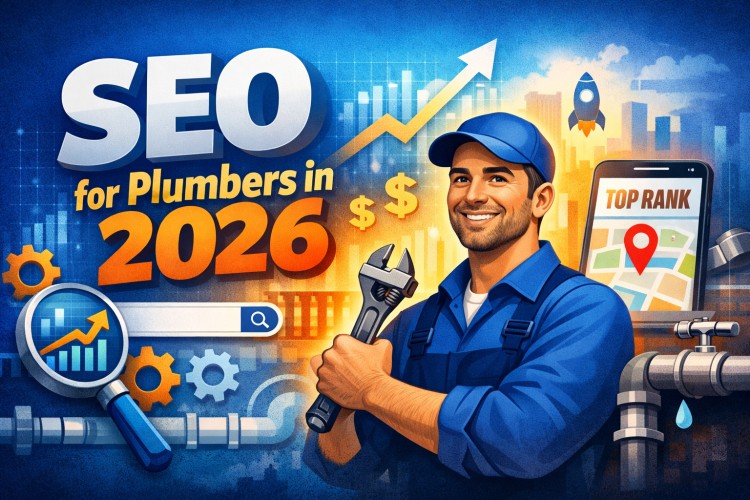
In 2026, local search ranking isn’t just “nice to have” — it’s the backbone of plumbing lead generation. When people break a pipe at 2 AM, search behavior is urgent, mobile, and intent‑driven. Plumbing companies that understand how customers find services, how AI and maps shape visibility, and how to optimize digital assets earn more calls, booked jobs, and profitable repeat business.

This guide breaks down local SEO into strategic phases tailored for plumbing businesses — so you can turn search visibility into real revenue.
Why Local SEO Is Different for Plumbing Companies
Plumbing SEO differs materially from general SEO because:
- Urgency dominates search intent: Most searches for plumbers are NOT research queries — they’re emergency or transactional.
- Local proximity matters more than brand trust: Google prioritizes nearby plumbers because users want fast service.
- Reviews, maps placement, and credibility signals matter for conversions: Prospects decide in seconds, not minutes.
Unlike some businesses where traffic can be nurtured over time, plumbing leads are often immediate revenue drivers. That’s why investing in professional SEO services for plumbers is essential — to ensure your strategy aligns with real customer urgency and local decision signals.
How Plumbing Customers Actually Search in 2026
Consumer behavior has evolved:
- Voice and mobile searches are dominant: Customers ask questions like “emergency plumber open now near me” — conversational phrases, not rigid keywords.
- AI‑powered responses reduce clicks: Google’s new systems may display answers directly, making structured content and clear answers essential.
- Location intent is explicit: Most searches include location cues (e.g., “plumber in [city]” or implicit ones like searching from within a location with GPS).
To win in 2026, you must optimize for intent, immediacy, conversational queries, and local visibility signals — not just traditional desktop keyword ranking.
Phase 1: Plumbing Keyword Strategy That Drives Calls
Your keyword strategy must reflect how customers actually search, not how SEO tools traditionally label terms.
Focus on Emergency and Transactional Intent
Transactional queries signal purchase readiness:
- “Emergency plumber near me”
- “24/7 plumber [city]”
- “Same day drain cleaning”
These phrases align with high‑value behavior — customers who pick up the phone and call.
Balance Explicit and Implicit Local Keywords
Explicit Tier (with place names):
- “Plumber in [City]”
- “[City] water heater repair”
Implicit Tier (no place name but locational intent via mobile or voice):
- “Emergency plumber open now”
- “Best leak repair services”
Both tiers send signals to Google about local service intent — explicit location strength and implicit intent relevance.
Use Real Customer Language
Don’t guess how people search. Look at:
- Actual questions from phone inquiries
- Terms used in reviews
- Voice search phrasing (“Who can fix a burst pipe right now?”)
These customer phrasing patterns are now ranking drivers because AI systems understand context and natural language better than rigid SEO terms.
Phase 2: Plumbing Website Structure That Google Trusts
A well‑organized site not only helps users — it helps search engines understand your business.
Core Pages Every Plumbing Site Must Have
Your site should include:
- Homepage — Clear value props (emergency services, 24/7, licensed)
- Service Pages — Each key service (sewer service, leak repair, water heater installation) gets its own page
- Location/Service Area Pages — If you cover multiple cities or suburbs
- Contact Page — Consistent NAP (Name, Address, Phone) and a map
- About/Trust Page — Licenses, warranties, team photos, local history
These pages create depth and breadth — two aspects Google rewards when assessing relevance and authority.
Phase 3: On‑Page SEO Built for Plumbing Intent
Good on‑page SEO connects what the customer seeks with what your site delivers.
Service Pages Must Do Three Things
- Answer the searcher’s question directly: Lay out what the service is, what it costs, and what to expect.
- Use real local context: “Serving clients within 30 miles of [City],” or “Local municipal code compliance for [Region].”
- Include clear calls to action: Phone number in header, contact form at multiple points.
In 2026, on‑page SEO is no longer about keyword stuffing — it’s about signal clarity and user clarity.
Phase 4: Google Business Profile Optimization for Plumbers
Your Google Business Profile (GBP) is central to local discovery — especially on mobile and maps.
Critical GBP Setup for Plumbing Companies
To fully optimize your GBP:
- Use accurate business name (as used in real world)
- Choose correct and complete categories (e.g., Plumber, Emergency Plumber)
- Set updated service areas and business hours
- Upload real job photos and staff/team images
A complete GBP doesn’t just look professional — it signals trustworthiness and relevance to Google.
Reviews Are a Ranking Lever for Plumbers
Reviews impact both ranking and conversion:
- Quantity signals popularity
- Recency signals activity
- Content signals relevance
Encourage customers to mention specific services — “fast toilet repair in [City]” — because keywords in reviews provide powerful context.
Responding professionally to reviews (positive and negative) reinforces trust.
Phase 5: Winning the Google Local 3 Pack for Plumbing Searches
The Local 3 Pack (the map results at the top of search) drives the majority of mobile clicks for plumbers.
Relevance Signals
Google gauges relevance by how closely your business matches the searcher’s query and intent. This is driven by:
- Website content
- GBP categories
- Reviews and review topics
- Local landing pages
Proximity Signals
Proximity matters more in service categories where speed matters (like plumbing). Even strong SEO can be outranked by a closer option if the relevance signals are tied.
Prominence Signals
Prominence reflects your overall authority:
- Backlinks from reputable local sites
- Mentions in regional directories
- Mentions in press or community posts
These signals show that you aren’t just nearby — you’re trusted and referenced.
Also read here: Why Every Plumber Needs SEO Services to Stay Competitive in 2026
Phase 6: Local Link Building for Plumbing Companies
Links still matter — but contextual and local relevance beats arbitrary volume.
High Value Link Sources for Plumbers
- Local Chamber of Commerce
- Supplier/vendor partner pages
- Community news posts (e.g., “Top Emergency Services in [Region]”)
- Local event sponsorship pages
Getting listed on regional business directories and local associations strengthens local prominence — one of the three local ranking pillars.
Phase 7: AI SEO and AEO for Plumbing Businesses
AI systems increasingly choose which plumbers to recommend based on structured, authoritative, answer‑ready content.
How AI Decides Which Plumber to Suggest
AI ranking is influenced by:
- Clear answers to real questions
- Authoritative signals (links, reviews, citations)
- Structured data (schema markup)
- Consistency of business information across platforms
In 2026, “AI SEO” is not a gimmick — it’s structural optimization for how machines read and serve results.
Answer First Plumbing Content
Best practices include:
- FAQ sections with concise, helpful answers
- Pages that answer common emergency queries
- Schema markup for FAQs and LocalBusiness
This makes your content easier for AI systems to pull as featured answers and voice results.
Phase 8: Brand Visibility Beyond Google
While Google is dominant, visibility on:
- Maps apps
- Review platforms (Yelp, industry sites)
- Social proof networks
- Local community forums
strengthens brand familiarity — which drives search engagement and direct traffic. Frequent branded searches reinforce your authority signals.
Phase 9: Recovering Lost Traffic for Plumbing Businesses
Traffic loss happens when:
- Algorithm updates affect visibility
- GBP accuracy degrades
- Competitors improve faster
The Correct Recovery Process
- Diagnose with Analytics (identify what dropped)
- Audit GBP for accuracy and activity
- Refresh on‑page content with real intent language
- Rebuild local citations and reviews
- Monitor recovery metrics weekly
Recovery isn’t one‑off — it’s systematic reinvestment in relevance, proximity, and prominence.
Phase 10: Technical SEO Essentials for Plumbing Sites
Technical basics often overlooked by plumbers:
- Mobile speed optimization: 70 %+ of local searches occur on phones
- HTTPS security: non‑negotiable trust signal
- Structured data (schema): helps machines understand your business
- Sitemaps and clean URLs: support crawlability
You can’t rank if Google can’t easily access your content.
How to Measure Plumbing SEO Success in 2026
The right metrics tell you what matters:
- Calls and direction requests from GBP
- Map pack appearances
- Keyword position for high‑intent queries
- Organic traffic trends
- Review growth and sentiment
- Conversion rate of calls to booked jobs
Rankings are nice — real business outcomes are what pay the bills.
Conclusion
In 2026, local SEO for plumbers is no longer just about ranking on Google — it’s about being visible and trusted exactly when potential customers need you most. By understanding how plumbing customers search, creating a website and content that reflect real intent, optimizing your Google Business Profile, building authority through reviews and local links, and aligning with AI-driven search behaviors, plumbing businesses can consistently attract high-intent leads. Focusing on these strategic, people-first practices ensures that your business not only appears in search results but dominates local maps, drives calls, and converts searches into real revenue.