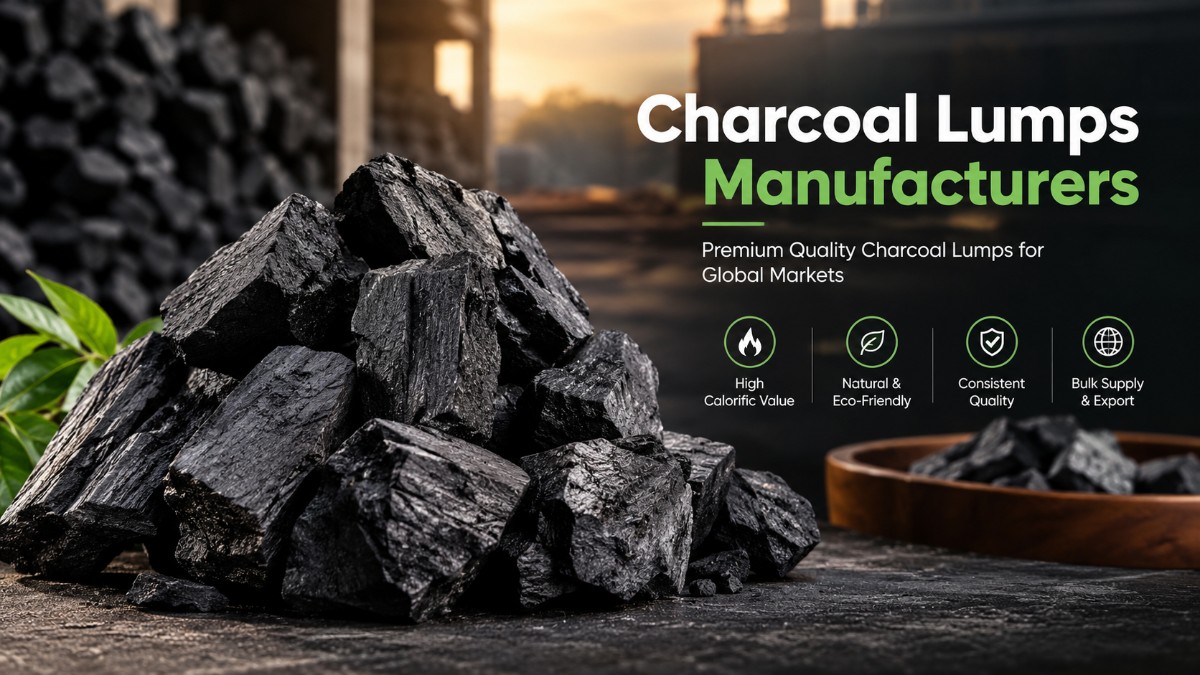
A quotation looks attractive until the shipment arrives with inconsistent lump sizes, excess fines, or charcoal that burns faster than expected. For bulk buyers, these problems affect more than product quality; they increase handling costs, customer complaints, and the cost per usable kilogram.

Choosing Charcoal Lumps requires more than comparing prices on paper. Wholesalers, procurement managers, and brand owners need evidence of consistent specifications, dependable production, and clear commercial terms.

Specification: The Details Behind Every Shipment
Before requesting quotations, establish the specifications your business actually needs.
Lump Size, Moisture and Fixed Carbon
- Lump size: Agree on the required size range and acceptable proportions of undersized pieces and fines.
- Moisture content: Excess moisture increases transported weight without adding useful fuel.
- Fixed carbon: This helps indicate the fuel’s potential burning performance, but should be assessed alongside other product properties.
- Ash content: Higher ash levels can increase residue and cleaning requirements.
- Packaging: Check bag weight, material strength, palletisation, and protection against moisture during transit.
One detail buyers overlook is the percentage of fines after handling, not merely the appearance of the charcoal before dispatch.
Ask for a Written Specification
Request a product specification sheet and a representative sample. Where applicable, ask for test results and confirm the testing method, sampling procedure, and batch identification.
Objective: Five Criteria for Comparing Suppliers
1. Consistency Between Batches
Request samples from different production batches and compare their size, moisture, ash, and burning behaviour.
Bad answer: “Every batch is the same; testing is unnecessary.”
That is a claim, not evidence.
2. Transparent Pricing
Compare the delivered cost, including packaging, loading, freight, duties where applicable, and expected material loss.
Bad answer: A low price with unclear specifications or additional charges disclosed after the purchase order.
3. Production and Supply Capacity
Ask about available stock, production lead times, peak-season capacity, and contingency arrangements.
Bad answer: “We can supply any quantity immediately,” without supporting production or dispatch details.
4. Quality Documentation
Check specification sheets, relevant test reports, batch records, and any certificates claimed by the supplier.
Bad answer: A certificate is advertised without a verifiable issuer, valid scope, or applicable product coverage.
5. Export and Packaging Experience
For international orders, confirm export documentation, shipping arrangements, packaging suitability, and responsibility for transit damage.
Bad answer: “We will sort out damaged bags after delivery.”

A supplier without an agreed claims procedure leaves the buyer carrying unnecessary risk.
Benefits: What a Better Supplier Comparison Protects
- More predictable margins: Comparing usable charcoal rather than price per bag reduces the risk of hidden material losses.
- Fewer customer complaints: Agreed specifications help wholesalers deliver more consistent products.
- Lower transport waste: Suitable packaging and controlled moisture reduce avoidable weight and damage.
- Better inventory planning: Realistic production schedules help procurement teams avoid emergency purchases.
- Stronger purchasing decisions: Samples and test reports provide evidence before committing to a large order.
- Fewer shipment disputes: Written tolerances, inspection procedures, and claims terms clarify responsibilities.
The difficult part is that charcoal is a variable natural product. Even suppliers using similar raw materials can deliver different results because of feedstock, carbonisation conditions, handling, and storage.
Availability: Finding Charcoal Lumps Manufacturers in India
India’s charcoal supply chain varies by raw material, production location, and transport access. The Coconut Development Board documents shell-charcoal production and processing in India, illustrating how feedstock influences product characteristics.
When comparing Charcoal Lumps Manufacturers in India, ask where the raw material originates, where processing takes place, and how finished goods reach your warehouse or port.
- Charcoal Lumps Suppliers: Check stock availability, grading, and dispatch schedules.
- Charcoal Lumps Suppliers in India: Compare inland freight and delivery timelines.
- Charcoal Lumps Wholesalers: Confirm pack sizes, resale suitability, and repeat-order terms.
- Charcoal Lumps Wholesalers in India: Evaluate regional distribution costs and inventory requirements.
- Charcoal Lumps Exporters: Verify documentation, packaging, and shipping responsibilities.
- Charcoal Lumps Exporters in India: Confirm destination-specific requirements before placing an export order.
Location matters because bulky charcoal can incur substantial handling and freight costs relative to its selling price.
About Credent Exports
At Credent Exports, we understand that B2B buyers need clear product information before committing to bulk purchases. We encourage buyers to communicate their intended application, preferred lump size, packaging requirements, and delivery destination so that product suitability can be assessed before quotation.
We believe specifications should be discussed before price negotiations become the centre of the conversation.
Request a Bulk Quotation
We invite wholesalers, procurement managers, and brand owners to contact us with their charcoal sourcing requirements.
For a useful quotation, please send us:
- Required charcoal type and lump-size range.
- Estimated order quantity and packaging preference.
- Delivery location or export destination.
- Required quality parameters and supporting documentation.
We will aim to respond within one business day. Our minimum order quantity (MOQ), pricing, and dispatch schedule should be confirmed with us for your specific product and destination before you place an order.
Conclusion
Comparing Charcoal Lumps Manufacturers requires evidence of quality, realistic pricing, reliable supply, and clear commercial terms. Buyers who check samples, specifications, and freight costs before ordering are better positioned to protect margins and avoid disputes. Make your next sourcing decision with documented requirements and a supplier relationship built for future orders.
Frequently Asked Questions
1. How can I identify reliable Charcoal Lumps Manufacturers?
Request representative samples, written specifications, recent test reports, and clear delivery terms. Verify that the supplier can consistently meet your required quantity.
2. What should I ask Charcoal Lumps Suppliers before buying?
Ask about moisture, ash, fixed carbon, lump size, packaging, pricing, and dispatch lead time. Test results are more useful than verbal quality assurances.
3. How do I compare Charcoal Lumps Suppliers in India?
Compare delivered cost, product specifications, freight, and expected fines. The cheapest quotation may prove more expensive if the shipment contains excess moisture or breakage.
4. What should Charcoal Lumps Wholesalers check?
Wholesalers should check resale packaging, consistency between batches, available stock, and repeat-order pricing. Actual demand and suitable grades vary by customer segment.
5. How can Charcoal Lumps Wholesalers in India reduce procurement costs?
Consolidate orders where practical and compare transport costs across suppliers. Larger orders may reduce per-unit freight, but only if storage capacity and turnover justify the purchase.