Every dog owner eventually finds themselves in front of a wall of leash options at a pet store or scrolling through page after page of results when searching for a dog leash for sale online and the experience is often more overwhelming than helpful. There are dozens of options at every price point and most of them come with product descriptions that make them sound equally ideal for every dog in every situation. The reality is that significant quality differences exist within this product category and learning to evaluate those differences before you make a purchase is what determines whether you end up with a leash that serves you well for years or one that fails at an inconvenient and potentially dangerous moment or simply frustrates you with poor performance from the first walk.

This post gives you a practical and specific framework for evaluating any dog leash for sale whether you are standing in a store with the product in your hand or evaluating an online listing based on descriptions and photographs. The factors covered here are the ones that professional trainers and experienced dog owners consistently cite as the real quality indicators once the marketing language has been set aside.

The Framework for Evaluating Any Dog Leash for Sale
Start With the Clip
The Single Most Important Component
The clip on a dog leash is the most critical structural component and the one that causes the most consequential failures when quality is poor. A leash whose material is excellent but whose clip is substandard is a leash that can fail to hold a dog during a critical moment despite looking perfectly serviceable in normal use conditions.
When evaluating a leash in person the clip test is simple and essential. Open and close the clip completely several times using only one hand. It should operate smoothly with minimal force requirement and should close with a clear and definite click that you can both feel and hear. A clip that sticks, that requires two hands to operate or that closes with a muffled or uncertain feel is already showing quality concerns. A clip with a swivel attachment is preferable for most leash configurations because it prevents line twisting during normal use.
When evaluating a leash online the clip is the hardest component to assess accurately from a listing. Look for specific descriptions of the clip mechanism, weight and material. Stainless steel or high quality zinc alloy hardware is substantially more durable than cheap cast metal alternatives that may look similar in photographs but perform very differently under real use conditions.
Evaluate the Material Construction
What the Line Itself Should Feel Like
In person evaluation of leash material is straightforward. The material should feel flexible and responsive in your hand rather than stiff or heavy. Fold it. If it resists the fold or springs back with significant force it is likely to communicate poorly during training because that same stiffness will be present between your hand and the dog’s collar during corrections and directional changes.
The width of the material should be proportional to your dog’s size and energy level. Wider and heavier construction is appropriate for larger and stronger dogs where structural integrity under high force is a genuine requirement. Narrower and lighter construction is appropriate for smaller dogs where communicative responsiveness in the hand matters more than maximum structural load capacity.
Comparing Quality Levels in the Dog Leash for Sale Category
The table below provides a framework for distinguishing between different quality tiers in the leash market based on the factors that affect real world performance rather than simply price or appearance.
| Quality Factor | Budget Tier | Mid Range | Professional Grade |
| Clip Construction | Cast metal often low grade | Quality alloy or stainless | Solid stainless or marine grade |
| Clip Operation | Often stiff or uncertain | Smooth with moderate click | Smooth with positive definite click |
| Swivel Present | Rarely | Sometimes | Usually with bearing quality |
| Material Feel | Stiff or rough | Moderately flexible | Highly responsive and comfortable |
| Stitching Quality | Minimal and loose | Machine stitched reinforced | Heavy reinforced at stress points |
| Handle Construction | Basic loop minimal comfort | Padded or reinforced | Ergonomic and long term comfortable |
| Expected Lifespan with Daily Use | 3 to 6 months | 1 to 2 years | 2 or more years with maintenance |
This comparison is a starting point rather than an absolute guide since quality within each tier varies. But it provides a useful framework for understanding what you are likely to get at different investment levels and what the specific quality indicators are that justify the difference.
What Good Walker Leash Construction Looks Like as a Standard
Using Quality as a Benchmark
Purpose Built vs General Purpose
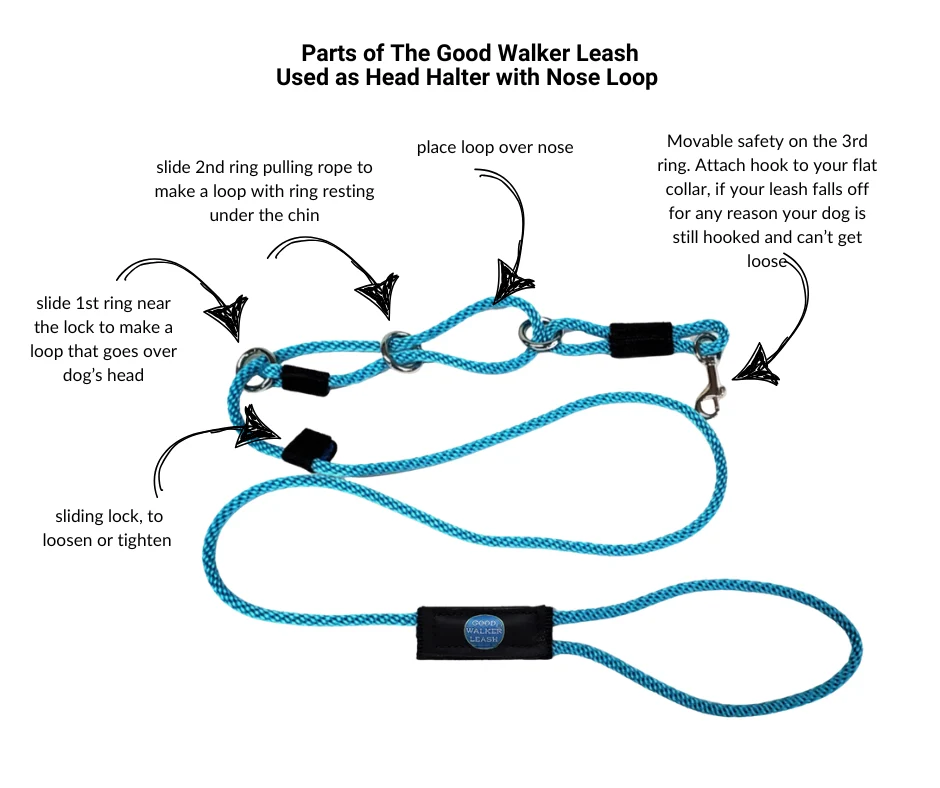
The Good Walker Leash represents the standard of construction that dog owners who take daily training walks seriously should be looking for when evaluating any dog leash for sale. It is built with training function as the primary design consideration rather than being a general purpose pet accessory that happens to be used for training.
This distinction matters because a leash built specifically for training use will make decisions about material weight, clip quality, handle construction and overall proportionality based on what makes the leash perform well during the specific demands of structured dog training rather than based on what costs least to manufacture or looks most appealing in a marketing photograph.
When you are evaluating any dog leash for sale hold the qualities of this purpose built standard in your mind as a benchmark. Does the clip operate with the same positive certainty? Does the material have the same responsive feel? Is the handle as comfortable after extended use? Using a known quality standard as a reference point is one of the most practical ways to evaluate unfamiliar options accurately.
Matching the Leash to the Dog and the Use Context
The Right Leash for the Right Situation
More Than One Leash for More Than One Need
Many experienced dog owners and virtually all professional trainers maintain more than one leash type because different use contexts genuinely call for different tools. Buying a single leash and expecting it to serve every walking and training context equally well is a reasonable approach for a very casual owner but it is not the approach that produces the best training outcomes or the most enjoyable daily walks.
If you are making a single initial purchase for a dog you are just beginning to work with a standard four to six foot leash in a quality responsive material with a reliable clip is the most versatile starting point. It will serve you well for daily structured walks, for active leash manner training and for the routine management situations that daily life with a dog presents. Add a long line when you are ready to begin recall training and distance work. Consider a hands free option when you want the added versatility of natural body movement during active outings.

The full range of Good Walker leash options available through Aly’s Puppy Boot Camp provides exactly this kind of thoughtfully matched range of purpose built tools for different aspects of daily dog walking and training. For ongoing learning support that helps you use your equipment most effectively Aly’s Academy provides the practical training education that turns good equipment into great walk outcomes.
Final Thoughts
Finding a quality dog leash for sale requires looking past marketing language to the specific construction factors that determine real world performance. The clip is your most important evaluation point. The material responsiveness is your most important feel factor. The proportionality to your dog’s size and energy is your most important fit consideration. Evaluate these factors carefully whether you are buying in person or online and you will make purchases that serve you reliably for the long term rather than ones you are replacing within a few months.
FAQs
Q: What is the most reliable way to evaluate a dog leash for sale online without seeing it in person?
A: Look for specific descriptions of hardware material including clip type and construction. Search for detailed customer reviews that specifically address how the clip and material hold up under real daily use. When possible buy from suppliers who specialize in dog training equipment rather than general pet accessories as they tend to maintain higher construction standards.
Q: How do I know if a dog walker leash I am looking at will hold my dog safely?
A: The clip is the primary safety concern. It should be made from quality stainless or alloy hardware and should operate smoothly with a definite positive click. The material stitching at both ends of the leash should be reinforced rather than simply folded and sewn minimally. Any sign of poor stitching quality at the clip end is a structural concern.
Q: Is the Good Walker Leash worth the investment compared to cheaper options?
A: A purpose built training leash like the Good Walker Leash provides the communicative responsiveness, reliable hardware and comfortable handle construction that make daily walks genuinely more effective as training maintenance sessions. When compared against the total cost of replacing cheaper options that fail or perform poorly within months the investment in quality construction typically proves to be the better value.
Q: What length should I look for when searching for a dog leash for sale for everyday use?
A: A four to six foot length is the most versatile option for everyday structured walks and active leash manner training. This length provides close enough range for precise and timely communication while giving the dog enough room to walk naturally without being held uncomfortably close throughout the entire outing.
Q: Are there specific materials to avoid when buying a dog leash?
A: Avoid leashes with cast metal hardware that shows surface roughness or imprecise clip operation as these are indicators of low grade metal that will wear and fail under regular use. Avoid retractable leash mechanisms entirely for training purposes as they actively reinforce pulling. Choose woven or rope style materials over stiff synthetic materials for better communicative responsiveness.