Every workshop has a fixed number of bays. That physical limitation defines your maximum capacity. You cannot service more vehicles than your bays can accommodate. Yet most workshops operate far below their theoretical capacity because bays sit empty while work waits, or because the wrong jobs are assigned to the wrong bays. Bay management is the art and science of maximizing the use of your most valuable physical asset.

A modern garage management system includes bay management features that transform your service area from a source of bottlenecks into a finely tuned engine of productivity. The result is more vehicles serviced per day, higher revenue per bay, and a smoother workflow that reduces stress for your team and wait times for your customers.

The True Cost of Poor Bay Utilization
An empty bay is not just unused space. It is lost revenue that can never be recovered. Every hour a bay sits idle, you lose the potential income from the jobs that could have been performed. Over a month, those lost hours add up to thousands of dollars in foregone revenue.
Industry data reveals that the average workshop operates at only 60 to 70 percent bay utilization. That means nearly a third of your physical capacity is wasted every day. The reasons vary. A bay sits empty because the next vehicle is not ready. A lift is occupied by a job that does not actually need a lift. A technician is waiting for parts while a bay remains unused. These inefficiencies compound, limiting your throughput and your profitability.
A workshop management software platform with bay management capabilities addresses these problems directly. It provides real-time visibility into which bays are occupied, which are available, and which jobs are scheduled next. It helps you assign work to the appropriate bay based on the equipment available and the nature of the repair. It eliminates the guesswork that leads to poor utilization.
Real-Time Visibility Into Bay Status
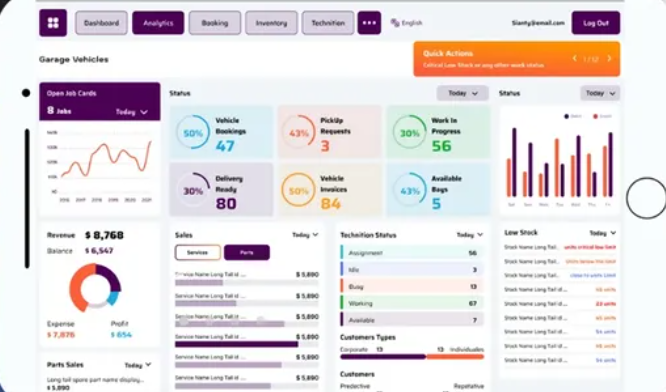
The first step to improving bay utilization is knowing what is happening at any given moment. A visual dispatch board within your garage software shows every bay and its current status. You see which bays are occupied and by which vehicle. You see which bays are available and ready for the next job. You see which jobs are waiting and what they require.
This visibility allows managers to make immediate adjustments. If a job finishes early, the next vehicle can be moved in without delay. If a job is running long, the schedule can be adjusted to avoid cascading delays. If a bay is unsuitable for a particular job, the work can be reassigned to a more appropriate location. The result is a smoother flow of work and higher utilization.
Pro Tip: Display your dispatch board on a large screen in the workshop so the entire team can see the status of every bay. This transparency reduces confusion and encourages proactive coordination.
Matching Jobs to the Right Bay
Not all bays are created equal. Some have lifts. Some have alignment racks. Some are designed for quick service while others can accommodate longer, more complex repairs. Assigning a simple oil change to a heavy repair bay wastes capacity. Assigning a complex transmission job to a bay without the necessary equipment causes delays and frustration.
A Garage CRM integrated with your bay management system helps you match jobs to the right bay every time. The system knows the capabilities of each bay and the requirements of each job. It can suggest the optimal bay for every vehicle, ensuring that your resources are used efficiently.
Do You Know: Shops that implement intelligent bay matching report increasing their daily vehicle throughput by an average of 20 percent without adding bays or technicians. The improvement comes entirely from better allocation of existing resources.
Managing Job Queues and Priorities
When demand exceeds capacity, prioritization becomes essential. Some jobs are urgent. Others can wait. Some customers are high value. Others are occasional visitors. A bay management system helps you prioritize effectively.

You can flag urgent jobs for immediate attention. You can reserve bays for fleet vehicles that need rapid turnaround. You can sequence jobs to balance the workload across your team. The system ensures that your most important customers receive the priority they deserve while other work is scheduled efficiently.
Pro Tip: Create a priority scoring system that considers customer value, job urgency, and estimated duration. Use this score to guide bay assignment when demand is high.
Reducing Changeover Time Between Jobs
The time between jobs is wasted time. When a vehicle leaves a bay, the next vehicle should be ready to move in immediately. In practice, delays happen. The next vehicle is not ready. The bay needs cleaning. The technician is on a break. These small delays accumulate, reducing effective capacity.
Bay management features reduce changeover time by coordinating the entire workflow. The system notifies the team when a job is nearing completion. The next vehicle is staged and ready. The bay is prepared for the incoming job. Technicians know what is coming next so they can prepare. This coordination minimizes idle time and maximizes throughput.
Integrating Bay Management with Scheduling
Bay management is most effective when integrated with your appointment scheduling system. A garage management system that connects these functions ensures that every appointment is matched to an available bay at the time of booking. You avoid overbooking certain bays while leaving others idle. You balance the workload across your physical resources.
This integration also improves customer communication. When a customer books an appointment, you can provide a realistic estimate of when their vehicle will be ready based on current bay availability. When delays occur, you can proactively notify affected customers. This transparency builds trust and reduces frustration.
Measuring Bay Performance
You cannot improve what you do not measure. Bay management features include reporting that shows utilization rates by bay, by day, and by job type. You can identify which bays are underperforming and why. You can see which jobs are most profitable per bay hour. You can track improvements over time.
Do You Know: Top-performing workshops achieve bay utilization rates above 85 percent. The difference between average and top performance represents hundreds of thousands of dollars in additional annual revenue.
The Bottom Line
Bay management is one of the most underrated features in workshop management software. It directly impacts your capacity, your efficiency, and your profitability. By providing real-time visibility, intelligent job matching, and integrated scheduling, a modern garage management system helps you get the most from your physical space. The result is more vehicles serviced, more revenue generated, and a smoother operation for everyone.
More Resources: