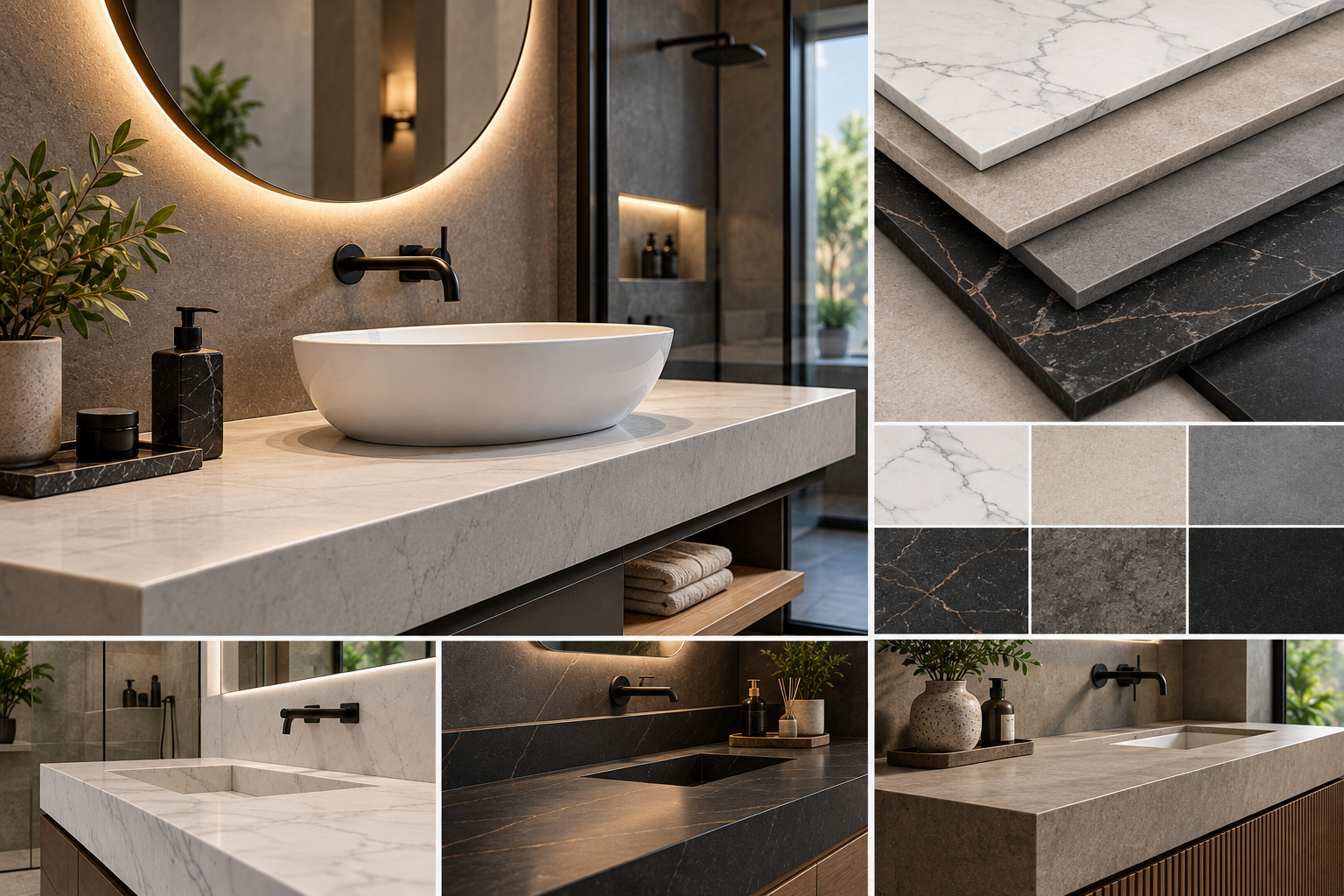
A Dekton worktop is made from an ultracompact surface developed by Cosentino. It blends glass, porcelain and quartz raw materials, then subjects them to intense heat and pressure in a process that mimics how stone forms over thousands of years. The result is a very hard, very stable slab. Here’s an honest look at how it performs in real homes.

What is a Dekton worktop made of?
Dekton is sintered, not resin bound like quartz. Because it’s fired at extreme temperatures, it doesn’t contain the resins that can scorch or yellow. That’s why it shrugs off hot pans, UV light and most household chemicals. It’s also non porous, so red wine, coffee and oil don’t soak in the way they can with natural stone.

What are the most popular Dekton worktop colours?
The range is broad, and the dekton worktop colours people ask about most tend to fall into a few families.
Marble looks: Aura and Danae reproduce veined white and grey stone without the etching worries of real marble.
Concrete and industrial: Entzo and Kelya give a soft, cloudy grey that suits modern kitchens.
Dark and dramatic: Sirius is a deep, almost black tone with subtle texture, and Laos has a rich, dark mineral feel.
Warm and earthy: Trilium and Keon bring in browns, taupes and rusts that pair nicely with timber cabinets.
Range names and availability change from time to time, so always check with your supplier and request a physical sample. Photos rarely capture the depth of tone.
What finishes does Dekton come in?
Most colours are offered in a few surface styles. A polished finish is glossy and reflects light, which makes a small kitchen feel brighter but shows fingerprints more. A matte or silk finish is softer, hides marks well and feels pleasant under the hand. Some ranges also have textured finishes that mimic stone or leather, adding grip and visual depth.

If you cook a lot, matte is usually the more forgiving choice. If you want drama, polished darker shades look striking, though you’ll be wiping more often.
Where does Dekton work best?
Kitchens are the obvious home, particularly around hobs and ovens where heat resistance matters. Because it handles UV, it’s also a good outdoor option for barbecue areas and outdoor kitchens, where other surfaces fade or crack.
It’s also well suited to bathrooms, wall cladding, splashbacks, tabletops and even flooring. Thin profiles of 8mm and 12mm make it handy for cladding, while 20mm is more common for kitchen worktops.
What are the downsides of a Dekton worktop?
No surface is perfect. These are the points to weigh up.
Cost: It’s generally priced above granite and most quartz.
Fabrication: Dekton is very hard, so it needs a trained fabricator with the right tools. Not every stoneworker is approved to cut it, so ask about experience.
Edges and corners: It’s tough on the surface, but a sharp knock on a thin edge or corner can chip it. Rounded corners and slightly softened edges reduce the risk.
Limited repair options: If it does chip, repairs are harder than with softer materials.
Is a Dekton worktop worth buying?
For most households that cook often, entertain or have children, yes. You get a surface that resists heat, scratches and stains with almost no upkeep. If your budget is tight, a good quartz may offer better value. If you want a worktop you can largely forget about, a Dekton worktop is hard to beat. Ask to see a full slab, compare two or three dekton worktop colours in your own light, and get quotes from fabricators who handle it regularly.