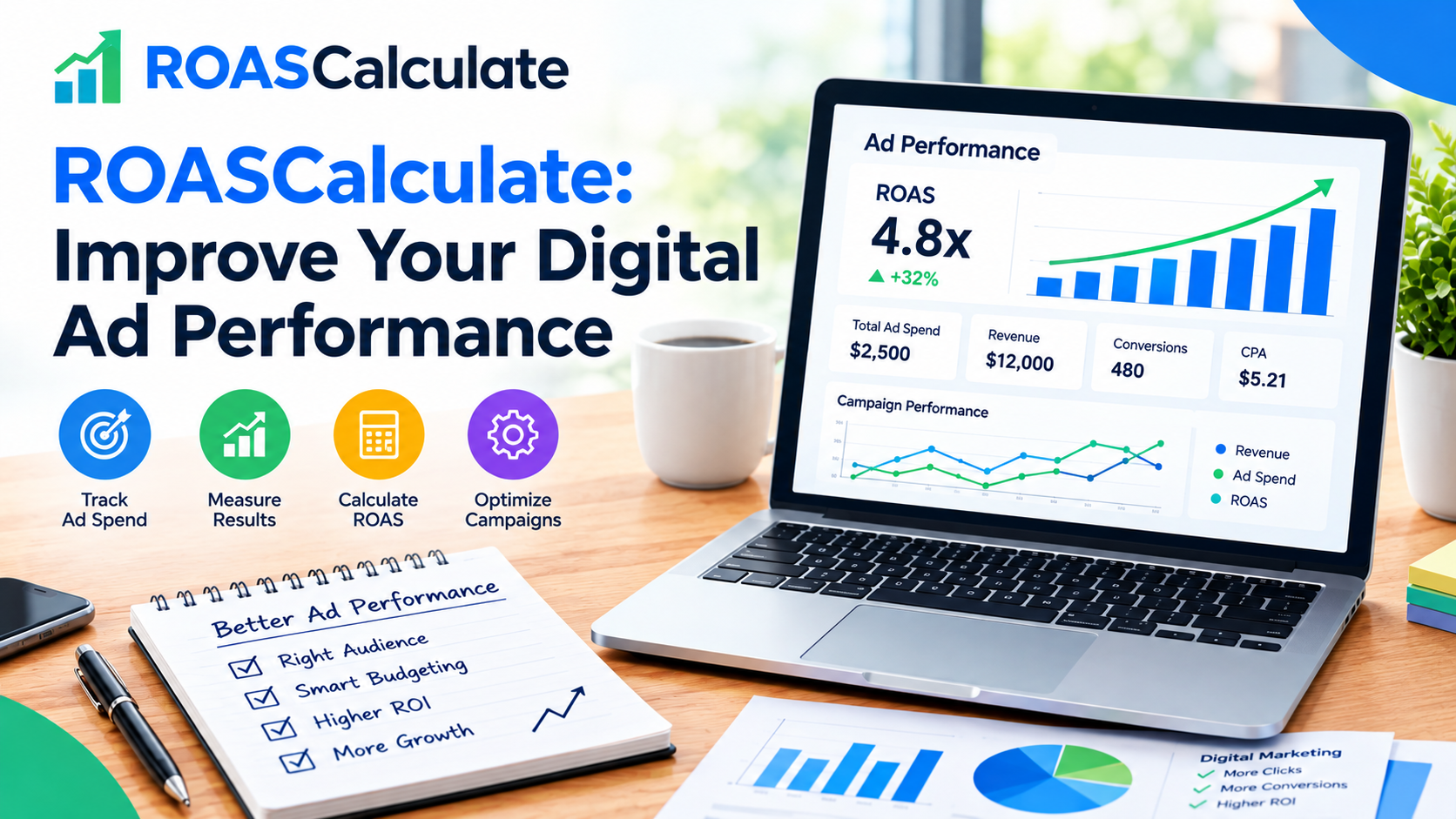
Introduction
Digital advertising gives businesses a way to reach targeted audiences, promote products, and generate sales. However, running campaigns without measuring results can lead to wasted budgets and missed opportunities. Marketers need reliable data to understand which ads perform well and where improvements are necessary. Learning to calculate ROAS helps businesses connect advertising costs with the revenue generated by their campaigns. With RoasCalculate, marketers can better understand advertising performance, evaluate spending decisions, and develop a practical approach to improving their digital marketing results.

What Is Digital Ad Performance?
Digital ad performance refers to how effectively an advertising campaign achieves its goals. These goals may include generating sales, attracting qualified leads, increasing website traffic, or building brand awareness.

Businesses commonly monitor impressions, clicks, click-through rates, conversion rates, cost per acquisition, and return on ad spend. Each metric provides different information about campaign activity.
For example, an advertisement may receive 10,000 impressions and 500 clicks but generate only five purchases. Although the ad attracts attention, its conversion performance may need improvement. Reviewing multiple metrics helps marketers identify problems and decide what to test next.
ROAS is particularly useful for businesses that want to understand the revenue associated with their advertising expenditure.
Understand the ROAS Formula
The ROAS formula measures attributed advertising revenue against the cost of running ads.
ROAS = Revenue Attributed to Ads ÷ Advertising Spend
Suppose an online business spends $1,000 on a campaign and generates $4,000 in attributed revenue.
ROAS = $4,000 ÷ $1,000 = 4
The result is a 4:1 ROAS, meaning the business generates $4 in revenue for every $1 spent on advertising. Expressed as a percentage, this equals 400%.
However, revenue does not represent net profit. Businesses must also consider product costs, shipping, transaction fees, and other operating expenses when evaluating profitability.
Using consistent reporting periods and accurate conversion tracking helps marketers produce more reliable ROAS calculations.
How to Calculate ROAS for Your Campaigns
Calculating ROAS requires two main figures: attributed revenue and advertising expenditure.
Step 1: Record Advertising Costs
Review your advertising platform reports to determine how much you spent during the selected period. Keep campaign dates consistent when comparing results.
Step 2: Measure Attributed Revenue
Identify the revenue associated with the campaign using your chosen attribution method. Analytics platforms and conversion tracking tools can help connect customer purchases with advertising activity.
Step 3: Apply the Calculation
Divide attributed revenue by advertising expenditure. The result indicates how much revenue the campaign generates per advertising dollar.
Step 4: Compare Campaign Results
Review ROAS across campaigns, audiences, products, and channels. Look for patterns that explain why some campaigns perform better than others.
This process helps businesses move beyond guesswork and make decisions using measurable results.
Use a ROAS Calculator to Evaluate Results
A ROAS calculator makes performance analysis faster and reduces the risk of manual calculation errors. Marketers can enter campaign revenue and advertising costs to determine their return.
For example, a company spends $800 on social media advertising and generates $2,400 in attributed sales. The ROAS calculator produces a result of 3:1.
The marketing team can compare this result with other campaigns to identify opportunities for improvement. If another campaign generates a 4:1 ROAS, the team can investigate differences in targeting, creative content, product selection, or landing page performance.
RoasCalculate can help marketers understand these calculations and use ROAS as part of a consistent campaign review process.
A calculator provides the numerical result, but businesses still need accurate data and careful analysis to make effective decisions.

Plan Better Budgets with an Ad Spend Calculator
An ad spend calculator helps marketers estimate the budget required to reach a specific revenue target.
Consider a business that wants to generate $15,000 in attributed revenue and aims for a 5:1 ROAS. Based on this target, the estimated advertising budget is $3,000.
This estimate assumes the campaign achieves the expected return. Actual results may differ because of competition, audience demand, pricing, and conversion rates.
Businesses should begin with a realistic budget, monitor performance regularly, and increase spending only when the results support that decision. Testing budget changes gradually can help marketers understand how additional expenditure affects returns.
Practical Case Study: Improving Campaign Performance
Imagine an online retailer running two advertising campaigns during the same month.
Campaign A spends $1,000 and generates $4,000 in attributed revenue, producing a 4:1 ROAS.
Campaign B spends $1,500 and generates $4,500 in attributed revenue, producing a 3:1 ROAS.
Campaign A generates more revenue per advertising dollar, while Campaign B produces more total revenue. The retailer should compare profit margins, customer acquisition costs, and conversion rates before reallocating its budget.
The team might test different product images, improve landing page information, or refine audience targeting. After making changes, it should compare the new results with the original figures.
Using RoasCalculate as a reference for understanding advertising measurements can help marketers interpret campaign results and make more informed adjustments.
Practical Ways to Improve Digital Ad Performance
Improving campaign results requires regular testing and monitoring. Businesses can focus on several areas.
Improve Audience Targeting
Reach people whose interests, needs, and purchasing behavior match the product. Review audience performance to identify segments that generate relevant traffic and conversions.
Test Advertising Creative
Experiment with different headlines, images, offers, and calls to action. Change one major element at a time when possible so the results are easier to interpret.
Optimize Landing Pages
Make sure landing pages load quickly, explain the offer clearly, and provide a simple purchasing process. A better visitor experience can help reduce unnecessary drop-offs.
Monitor Performance Consistently
Review ROAS alongside conversion rates, average order value, and profit margins. This broader view helps businesses avoid making decisions based on a single metric.
Conclusion
Improving digital ad performance starts with accurate measurement and informed decisions. The ROAS formula, a ROAS calculator, and an ad spend calculator help marketers evaluate advertising costs, measure attributed revenue, and plan campaign budgets.
RoasCalculate helps make these concepts easier to understand and apply. By monitoring results, testing campaign improvements, and considering profitability alongside revenue, businesses can build a more effective approach to digital advertising.
Frequently Asked Questions
1. What is ROAS in digital marketing?
ROAS measures how much attributed revenue a business generates for every dollar spent on advertising.
2. How do you calculate ROAS?
Divide attributed advertising revenue by advertising expenditure. For example, $3,000 divided by $1,000 equals a 3:1 ROAS.
3. What is a good ROAS?
A good ROAS depends on product margins, operating costs, and business objectives. Every business should establish a target based on its financial needs.
4. How can a ROAS calculator help?
It calculates advertising returns quickly and helps marketers compare campaigns using revenue and spending data.
5. Can businesses improve ROAS over time?
Yes. Better targeting, creative testing, landing page improvements, and accurate tracking may improve results, although performance is never guaranteed.