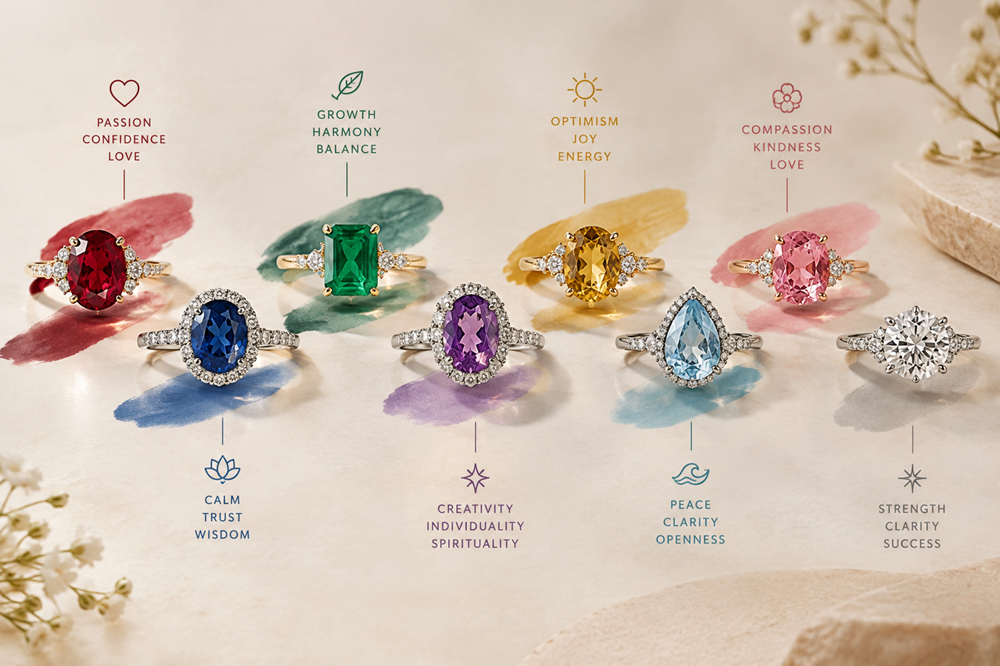
Most people choose a ring the way they choose a car colour, which happens quickly, instinctively, and without much conscious reasoning. But that instinct isn’t random. Psychologists have spent decades studying how colour shapes perception, mood, and even how others read us, and jewellery is one of the few places where that research plays out in real time. A ring sits on a finger, positioned at eye level, constantly catching light and drawing attention in every handshake and gesture. Among the clearest examples of this phenomenon are aquamarine eternity rings, which tend to draw a very particular kind of person, and the contrast they create against bolder choices is where things get genuinely captivating.

Why Colour Choice Isn’t as Random as It Feels
Colour psychology isn’t fringe science. It’s been used in branding, interior design, and fashion for years, built on the observation that colour triggers fast, largely unconscious associations before any conscious thought kicks in. Jewellery is simply a slower-moving, more personal version of the same effect, which is a choice made once, then worn daily, quietly reinforcing an identity.

The Split-Second Judgement
Research on colour perception consistently shows that people form impressions of colour within milliseconds, long before they process shape or detail. That means a ring’s stone colour is doing communicative work before anyone even registers the setting or cut. A pale blue stone reads as calm before anyone notices the carat weight.
Why This Matters More in Jewellery Than Clothing
Clothing changes daily, but a ring usually doesn’t. That permanence means the colour association isn’t a one-off impression but becomes part of how someone is consistently perceived, which is a big part of why stone choice feels like such a weighty decision for a piece meant to be worn for years.
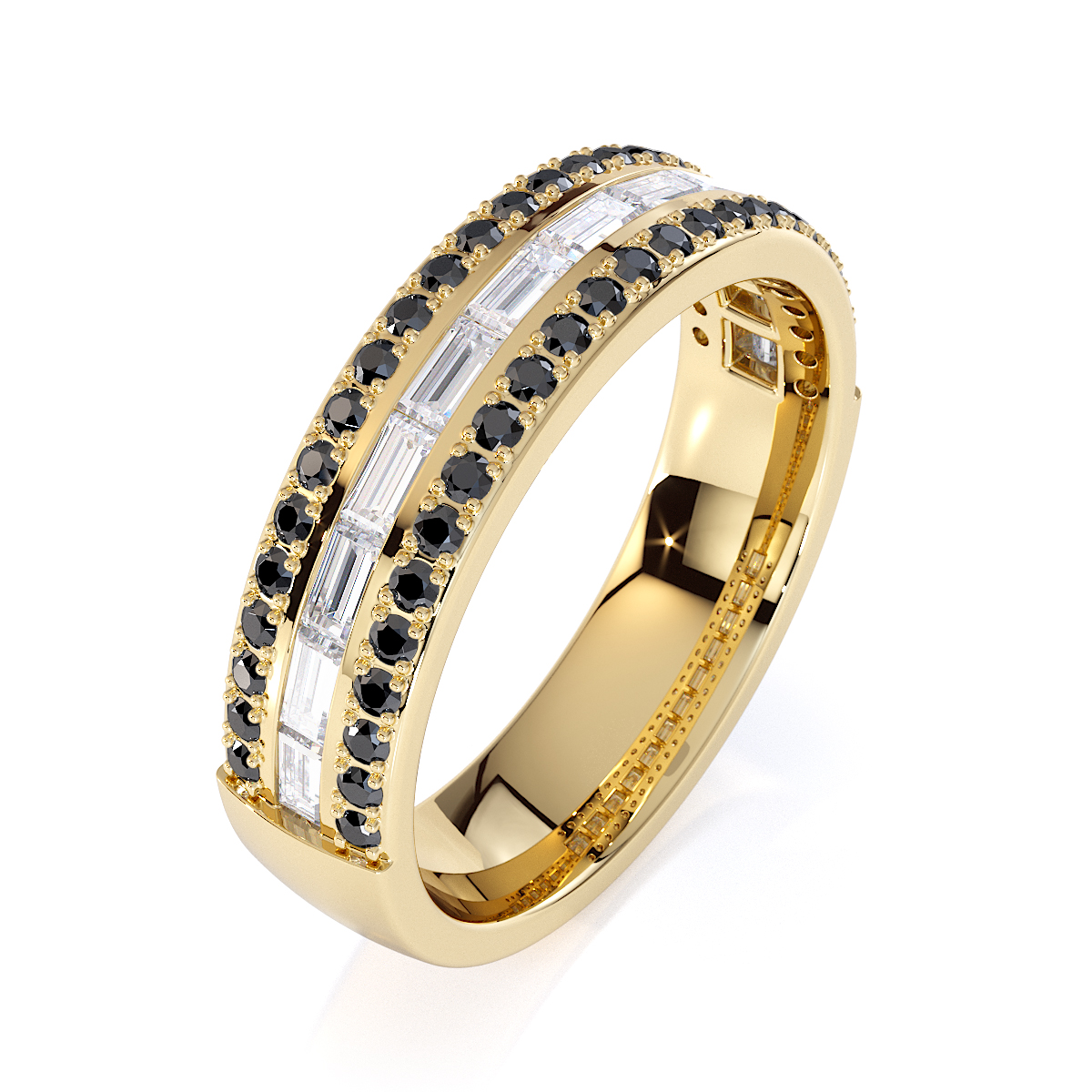
Black: Power, Depth, and Quiet Confidence
Black is one of the most psychologically loaded colours in any design context. Judges’ robes, tailored suits, and luxury packaging exemplify its associations with authority, formality, and restraint. In gemstones, this association remains largely unchanged.
What Black Diamond Eternity Rings Signal
Black diamond eternity rings tend to attract people who want to be read as deliberate rather than decorative. The stone doesn’t sparkle in the traditional sense, which gives it a grounded, architectural quality. Psychologically, that reads as confidence without needing to announce itself. It’s not a loud choice; it’s a controlled one.
The Modern Shift Toward Black
Black diamonds were historically considered unconventional, even industrial-grade, until designers started setting them deliberately in the 1990s. Their rise since then tracks closely with a broader cultural shift toward minimalism and understatement in luxury goods; black diamond eternity rings fit that mood because they communicate without relying on brightness or size to do it.
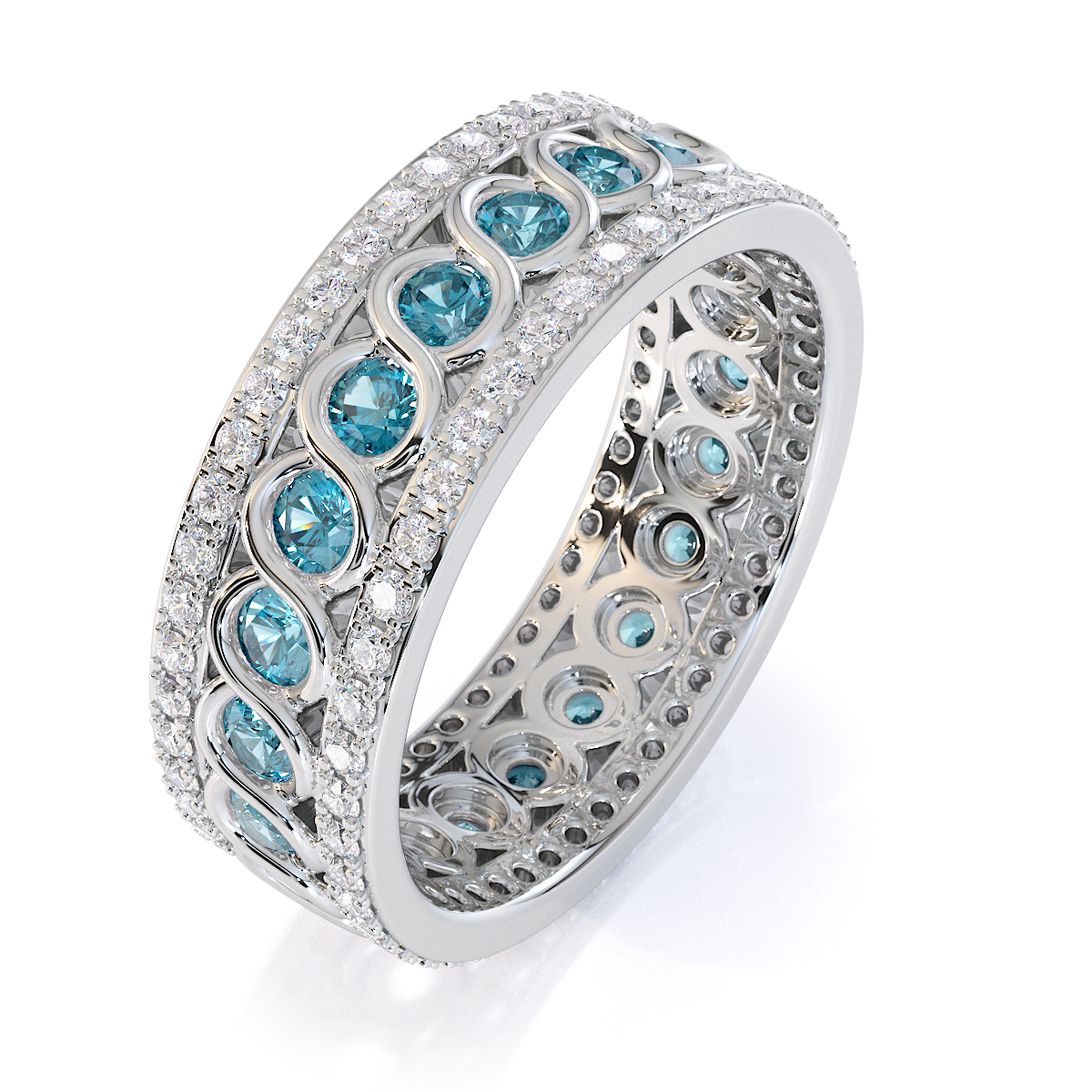
Blue: Calm, Trust, and Emotional Steadiness
Blue is consistently rated across psychological studies as the most universally “liked” colour, and it’s strongly tied to feelings of calm, trust, and stability. That’s not a coincidence of taste but a factual one, as blue is the colour of the sky and open water, two things the human brain has long associated with safety and space.

Aquamarine and the Psychology of Softness
Aquamarine eternity rings sit at the gentlest end of that blue spectrum. Unlike a saturated sapphire, aquamarine is pale and slightly translucent, almost watery in quality. That softness matters psychologically, as it reads as approachable rather than commanding, which is likely why aquamarine has become such a popular stacking stone. It doesn’t compete for attention; it settles in.
A Stone That Signals Steadiness
People drawn to aquamarine eternity rings often describe wanting something that feels calm rather than showy. That instinct lines up with established colour research: pale blue tones are associated with lower perceived stress and higher trust ratings in social perception studies. Worn daily, that’s a quiet but consistent signal that means someone who values steadiness over spectacle.

Yellow-Blue Brightness: Optimism Without Excess
Not every meaningful colour signal comes from the darkest or softest end of the spectrum. Some of the most psychologically interesting stones are clear, bright, and energetic but remain tasteful rather than becoming clear, bright, and energetic, yet do not tip into being clear, bright, and energetic without tipping into flashy.
What a Topaz Eternity Ring Communicates
A topaz eternity ring typically has a brighter, more saturated blue than aquamarine, with noticeably more sparkle and clarity. Psychological associations with optimism and openness closely align with that brightness, as perception research consistently links bright, clear colours to friendliness and approachability. Someone wearing a topaz tends to be read as warm and easy-going rather than reserved.
The Accessibility Factor and What It Signals
There’s also a less obvious psychological layer here: price accessibility itself shapes perception. A topaz ring lets people invest in colour and brightness without the financial weight of a sapphire-level stone, which often translates into it being worn more freely, more often, and with less preciousness. That ease of wear becomes part of the signal too, as a topaz eternity ring often reads as joyful rather than status-driven, precisely because it isn’t trying to prove anything.
What Happens When You Mix Signals
Few people wear just one ring anymore, and that’s where colour psychology gets genuinely layered. A stack combining a black diamond piece with an aquamarine band sends a different message than either stone alone. Add a topaz ring into that same stack, and the brightness introduces warmth that keeps the whole combination from feeling too serious.
Summing Up
To sum up, most people don’t consciously consider colour theory when selecting a ring, and they don’t have to. Instinct typically precedes conscious thought. But understanding why a particular stone pulled focus can be useful, especially for anyone building a ring collection piece by piece rather than buying everything at once.
Colour, in the end, is rarely decorative alone. In fine jewellery especially, it’s one of the few choices worn close enough and long enough to genuinely shape how someone is perceived, which is probably why the decision never feels as small as it should.