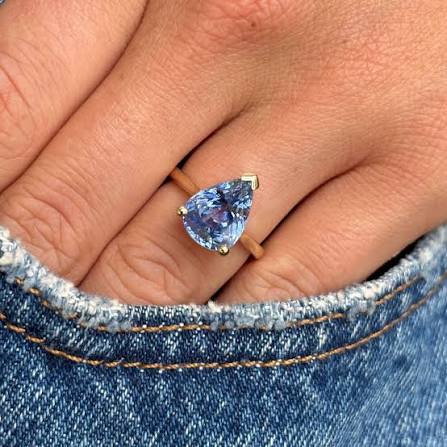
Engagement rings with blue sapphires offer a beautiful alternative to traditional diamond rings. Their rich blue color, classic appeal, and impressive durability make them especially attractive to couples looking for an engagement ring that feels meaningful and distinctive.

Blue sapphire has long been associated with qualities such as loyalty, sincerity, and wisdom. Beyond symbolism, sapphire is also practical for everyday jewelry. It ranks 9 on the Mohs hardness scale and has excellent toughness, making it one of the most suitable colored gemstones for an engagement ring.

Whether you prefer a classic oval sapphire surrounded by diamonds or a simple solitaire design, a blue sapphire engagement ring can create a sophisticated look that remains beautiful for years.
Why Choose a Blue Sapphire Engagement Ring?
There are several reasons blue sapphire continues to be a popular choice for engagement jewelry.
1. Striking Blue Color
The most obvious attraction is the gemstone’s color. Blue sapphires can range from lighter, soft blue tones to deep, saturated royal blue. According to the Gemological Institute of America (GIA), the most highly valued blue sapphires typically display strong to vivid saturation with medium to medium-dark tones.
The right shade ultimately depends on personal preference. Some couples prefer a lighter blue because it creates a softer, romantic appearance, while others love the dramatic look of a deep royal-blue stone.
2. Excellent Durability
An engagement ring is designed to be worn regularly, so durability matters. Sapphire is particularly well suited to daily wear because it has a hardness of 9 on the Mohs scale. It is also relatively tough and has no cleavage, meaning it does not have a natural plane along which it readily splits.
That makes sapphire a practical option for people who want a colorful center stone without choosing a particularly delicate gemstone.
3. A Distinctive Alternative to Diamonds
Diamonds remain a classic engagement-ring choice, but they are not the only option. A blue sapphire immediately gives a ring a different personality while still maintaining a traditional and elegant appearance.
The gemstone can also be paired with diamonds around the center stone, along the band, or in a halo setting. This combination provides the brilliance of diamonds with the distinctive color of sapphire.
Popular Styles of Engagement Rings With Blue Sapphires
One of the advantages of choosing sapphire is the number of designs available. The same blue gemstone can look completely different depending on its cut, setting, and surrounding stones.
Blue Sapphire Solitaire Rings
A solitaire setting places all the attention on the center sapphire. This is an excellent option if you want the gemstone’s color and shape to remain the focal point.
Oval, cushion, round, and pear-shaped sapphires can all work beautifully in solitaire designs. A simple band can create a clean contemporary appearance, while a detailed band can give the ring a vintage-inspired feel.
Blue Sapphire Halo Engagement Rings
A halo setting surrounds the sapphire with smaller diamonds or gemstones. The contrast between a deep blue center and sparkling diamonds creates a dramatic appearance.
Halo designs can also make the center stone appear larger visually, making them a popular choice for couples who want a statement engagement ring.
Three-Stone Blue Sapphire Rings
Three-stone rings feature a central sapphire accompanied by two smaller stones. Diamonds are a particularly popular complement because their neutral appearance allows the blue center stone to stand out.
The three stones can also represent a relationship’s past, present, and future, giving this design additional sentimental appeal.
Vintage-Inspired Sapphire Rings
Blue sapphires naturally complement vintage and antique-inspired designs. Milgrain detailing, intricate metalwork, engraved bands, and small accent diamonds can give a ring a romantic, heirloom-like appearance.
If you appreciate Art Deco or vintage jewelry, a geometric sapphire design can be an especially attractive option.
How to Choose the Right Blue Sapphire
Choosing a sapphire involves more than selecting the bluest gemstone available. Several factors influence its beauty and overall value.
Color
Color should be one of your first considerations. Look for a sapphire with attractive saturation and an even appearance. Extremely dark stones can sometimes lose brightness, while very light stones may not provide the rich blue appearance many buyers expect.
Viewing several sapphires side by side can make differences in color much easier to recognize.
Cut
Cut has a major effect on how a sapphire looks. A well-cut stone should interact with light effectively and display an attractive combination of color and brilliance.
GIA notes that cut is an important quality factor because cutters must consider proportions, color zoning, pleochroism, and the gemstone’s lightness or darkness when shaping a sapphire.
Clarity
Unlike diamonds, blue sapphires commonly contain inclusions. Minor inclusions are not necessarily a problem, particularly when they do not affect the gemstone’s durability or appearance.
The important thing is to make sure inclusions do not compromise the stone. GIA specifically notes that sapphire value can decrease when inclusions threaten durability.

Carat Weight
Carat weight is another consideration, but sapphire should not be evaluated by carat weight alone. Two sapphires with the same carat weight can have different dimensions depending on their cut and proportions.
Instead of focusing only on the number on the scale, compare the gemstone’s actual appearance, measurements, color, and cut.
Natural vs. Treated Blue Sapphires
When shopping for a blue sapphire engagement ring, it is important to ask whether the gemstone has been treated.
Heat treatment is an accepted practice used to improve the color and appearance of many sapphires. Untreated stones with exceptional color can be particularly rare and valuable. Other treatments, such as lattice diffusion, can also alter sapphire color and should be disclosed.
Ask the jeweler about the sapphire’s treatment history and whether documentation is available. For a significant purchase, an independent gemological report can provide additional information about the gemstone’s identity, treatments, and other characteristics.
Which Metal Looks Best With Blue Sapphire?
Blue sapphire works well with several precious-metal colors.
White gold and platinum: These metals create a crisp, contemporary contrast against blue and allow the sapphire to remain the focal point.
Yellow gold: Yellow gold provides a warm contrast that can make a blue sapphire feel more traditional and luxurious.
Rose gold: Rose gold creates a softer contrast and can give the ring a romantic, modern appearance.
There is no single “correct” combination. Your choice can depend on your existing jewelry, skin-tone preferences, desired style, and whether you want the ring to look classic or contemporary.
How to Care for a Blue Sapphire Engagement Ring
Sapphire is durable, but proper care can help keep the ring looking its best.
For routine cleaning, warm soapy water is a safe option for sapphire. GIA also notes that ultrasonic and steam cleaning are generally safe for untreated, heat-treated, and lattice-diffusion-treated sapphires, while fracture-filled, cavity-filled, or dyed material requires more cautious care.
It is also a good idea to:
- Clean the ring regularly with a soft brush.
- Store it separately from softer jewelry.
- Check the setting periodically for loose prongs.
- Ask your jeweler about the appropriate cleaning method for your specific sapphire.
- Keep documentation about the gemstone and any treatments.
Why Blue Sapphire Rings Feel So Personal
An engagement ring should represent more than its appearance. For many couples, the appeal of blue sapphire comes from the combination of symbolism, color, and individuality.
Sapphire is also September’s birthstone, which can add another personal connection for someone born in that month.
A sapphire ring can also become a meaningful heirloom. Its durability makes it suitable for long-term wear, while its distinctive color gives it a recognizable identity that can remain associated with a particular family or relationship.
Finding Your Perfect Blue Sapphire Engagement Ring
When choosing between engagement rings with blue sapphires, start with the features that matter most to you: gemstone color, shape, setting, metal, and overall design. Then consider practical factors such as treatment, durability, certification, and how the ring fits your lifestyle.
A carefully selected sapphire can provide the elegance of a fine gemstone while offering something different from the traditional diamond engagement ring. At Brilani, couples can explore distinctive jewelry designs and find a style that reflects their relationship, whether that means a classic sapphire solitaire, a diamond halo, or a more contemporary setting.
The best ring is ultimately the one that feels right when you wear it. Choose a blue sapphire whose color catches your eye, pair it with a setting that matches your personal style, and prioritize quality craftsmanship so the ring can remain part of your story for years to come.
Frequently Asked Questions
Are blue sapphires good for engagement rings?
Yes. Sapphire ranks 9 on the Mohs hardness scale and has excellent toughness, making it one of the more durable colored gemstones for everyday engagement-ring wear.
What does a blue sapphire symbolize?
Blue sapphire has traditionally been associated with qualities such as loyalty, sincerity, wisdom, and commitment, making its symbolism particularly fitting for an engagement ring.
What is the best color for a blue sapphire?
The ideal color is a matter of personal preference, but GIA notes that highly valued blue sapphires generally have strong to vivid saturation and medium to medium-dark tones.
Can blue sapphire engagement rings have diamonds?
Absolutely. Diamonds can be placed around the sapphire in a halo, used as side stones in a three-stone design, or added along the band for extra sparkle.
How should I clean a blue sapphire engagement ring?
Warm, soapy water is generally a safe cleaning method for sapphire. However, the appropriate cleaning method can depend on treatments and the condition of the gemstone, so ask your jeweler if you are unsure.
Are untreated blue sapphires better?
Not necessarily for every buyer. Treatment is an important part of evaluating sapphire, and heat treatment is an accepted practice. Untreated sapphires with exceptional quality can be rarer and command a premium, so buyers should understand and compare treatment information before making a decision.