For UK bakeries, packaging is an important part of delivering a good customer experience. Fresh cakes, cupcakes and pastries can be delicate, so the right packaging needs to protect them from damage while keeping them clean and attractive.
Good bakery packaging also helps a business create a professional image. This is particularly important for small bakeries, cafés and online businesses where customers may receive their products through delivery rather than buying them directly from a shop.

Choosing the right packaging is not simply about finding a box that looks good. Bakeries should consider food safety, product size, material strength, moisture, grease, delivery conditions and customer convenience. A well-planned packaging system can help reduce product damage and improve customer satisfaction.
Why Bakery Packaging Matters
Baked goods can easily lose their quality when they are packed or transported incorrectly. Cream, icing and decorations may be damaged, while pastries can become crushed or lose their texture.
Suitable bakery packaging can help:
- Protect delicate products
- Keep baked goods clean
- Reduce movement during delivery
- Improve presentation
- Make products easier to carry
- Support brand recognition
Packaging should always be used together with good food handling, storage and hygiene practices.
Choose Packaging Based on the Product
Different baked goods have different packaging needs. A large decorated cake requires more space and support than a small cupcake.
Before choosing packaging, bakeries should consider:
- Product size
- Product height
- Weight
- Decoration
- Moisture content
- Grease level
- Delivery distance
Understanding the product first makes it easier to select the right box structure and size.
Choosing the Right Cake Boxes
Cakes often have delicate icing, cream layers and decorative toppings. A suitable cake box should provide enough height so that the lid does not touch the decoration.
The base should also be strong enough to support the cake during handling. A secure closure can help prevent the lid from opening during delivery.
For celebration cakes, presentation is especially important. Customers may order cakes for birthdays, weddings and other special events, so the packaging should help the product arrive looking as good as it did in the bakery.
Packaging for Cupcakes
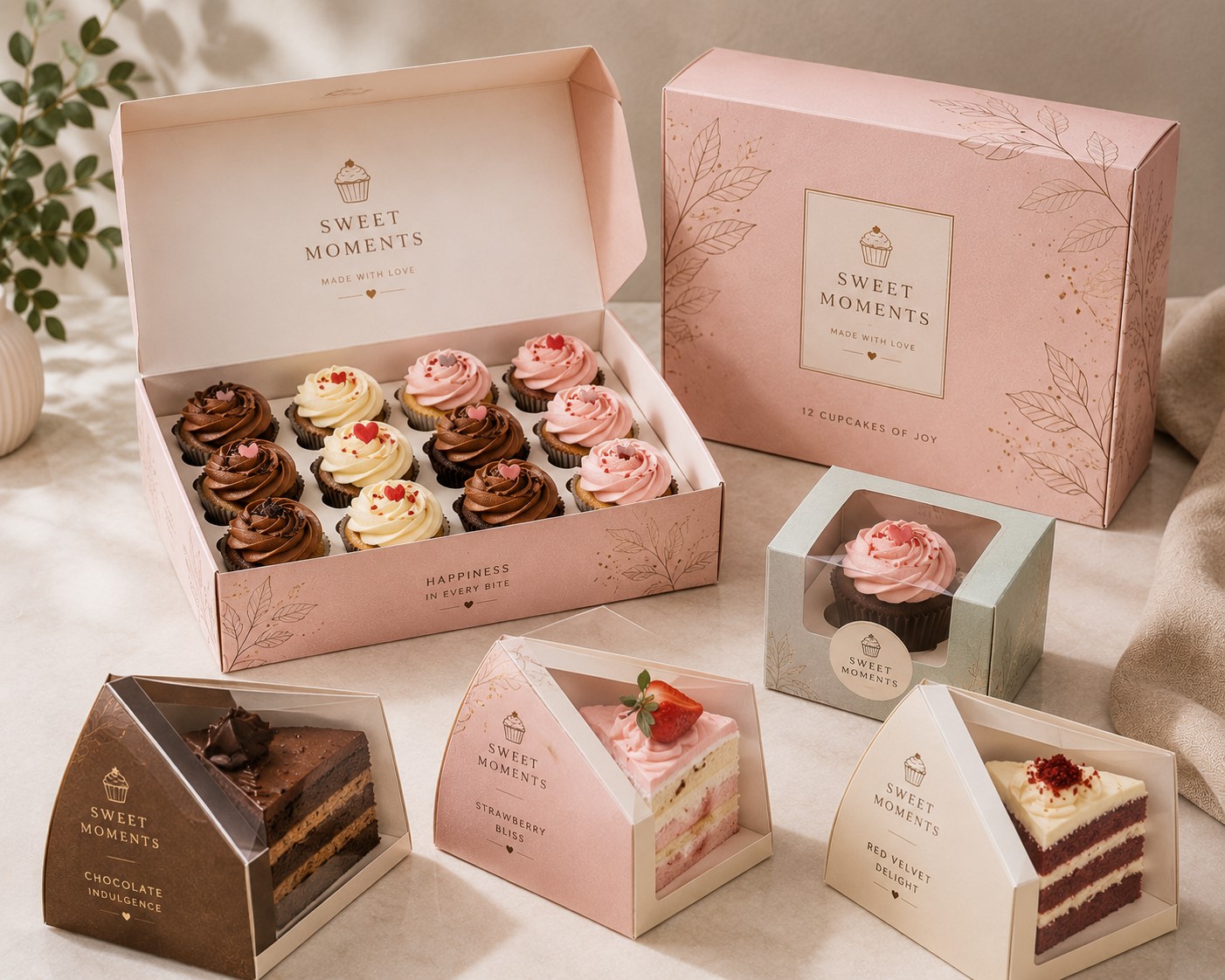
Cupcakes need careful protection because their toppings can easily become damaged. If several cupcakes are placed together without suitable support, they may move during transportation.
A box with an appropriate insert or individual spaces can help keep cupcakes secure. For larger orders, 12 cupcake boxes UK can provide a practical format for businesses selling multiple cupcakes together.
The box should be tall enough for the frosting and strong enough to remain stable during handling. Bakeries should always test the box with their actual cupcakes before ordering in large quantities.
Packaging for Cake Slices and Small Products
Cake slices and individual desserts require packaging that keeps the product stable while making it easy for customers to carry.
Slice cupcake boxes can be considered where the box structure is suitable for the bakery’s individual products. The most important factor is that the packaging should match the actual dimensions and shape of the product.
A properly fitted box can help prevent movement and protect cream, icing and other delicate toppings.
Use Food-Safe Packaging Materials
Food safety should be one of the first considerations when selecting bakery packaging. Materials should be appropriate for their intended use and stored in clean, dry conditions.
Food-safe bakery packaging can help protect products from contamination while supporting good hygiene practices.
When comparing materials, bakeries should consider:
- Food-contact suitability
- Material strength
- Grease resistance
- Moisture resistance
- Clean storage
Businesses should ask suppliers for relevant material information when needed, particularly when packaging comes into direct contact with food.
Consider Grease and Moisture
Many bakery products contain butter, cream, chocolate and oils. These ingredients can affect packaging if the material is not suitable.
Grease-resistant packaging materials can help reduce oil marks and prevent the box from becoming weak. Moisture management is also important for products that release steam or contain wet fillings.
The packaging should provide the protection required by the product without adding unnecessary materials.
Protect Baked Goods During Delivery
Delivery can be challenging for bakeries because products may be moved several times before reaching the customer. Boxes need to remain secure throughout normal transportation.
Good bakery delivery packaging should help reduce:
- Product movement
- Crushing
- Moisture exposure
- Dust
- Damage to decorations
A simple delivery test can provide useful information. Place the actual product inside the box and transport it using the normal delivery method. Check the product after the journey to see whether it remains secure and attractive.
Use Packaging to Strengthen Your Brand
Packaging is also an opportunity for bakeries to build recognition. A customer may remember a bakery more easily when its packaging has a consistent design.
Custom printed bakery packaging can include:
- Logo
- Brand colours
- Website details
- Social media information
- QR codes
- Thank-you messages
A clean design is often more effective than a package filled with information. Branding should support the product rather than distract from it.
Consider Sustainable Bakery Packaging
Sustainability is becoming increasingly important to UK customers. Bakeries can reduce unnecessary waste by choosing recyclable materials and correctly sized boxes.
Eco-friendly bakery packaging may include recyclable cardboard and kraft board. Businesses should consider how much material is required and whether the packaging can be disposed of responsibly.
However, sustainability should not compromise product protection. If a cake arrives damaged because the packaging is too weak, the result can be additional food waste.
Environmental claims should also be accurate, particularly when using terms such as recyclable, biodegradable or compostable.
Make Packaging Easy for Customers
A good bakery box should be easy to carry and open. Customers should not have to struggle with the packaging or risk damaging the product while opening it.
Useful features can include:
- Secure closures
- Easy opening
- Stable bases
- Convenient carrying
- Suitable internal space
For larger orders, boxes should also stack safely during transportation.
Balance Quality and Cost
Packaging costs matter, especially for small and growing bakeries. However, choosing packaging based only on the lowest price may create problems.
Poor packaging can result in:
- Damaged products
- Customer complaints
- Refunds
- Replacements
- Negative reviews
Businesses should compare material quality, product protection, box size, order quantity and storage requirements.
Testing samples before placing a large order is a practical way to find a suitable balance between cost and quality.
Test Packaging Before Bulk Orders
Bakeries should test packaging with real products whenever possible. This provides useful evidence about how the packaging performs in everyday conditions.
Check whether:
- The product fits correctly.
- Decorations remain protected.
- The box closes securely.
- The product stays stable.
- The box is easy to carry.
- The packaging looks professional.
This simple process can help prevent expensive packaging mistakes.
Final Thoughts
Choosing packaging for cakes, cupcakes and pastries requires careful consideration. UK bakeries should focus on food safety, correct sizing, material strength, product protection and customer convenience.
The right bakery box can protect delicate products while improving presentation and supporting a stronger customer experience. Sustainable materials and custom branding can add further value when they are chosen for a clear purpose.
By testing packaging with real products and selecting boxes according to actual bakery requirements, businesses can reduce damage, improve delivery performance and give customers a better experience from the moment their order arrives.