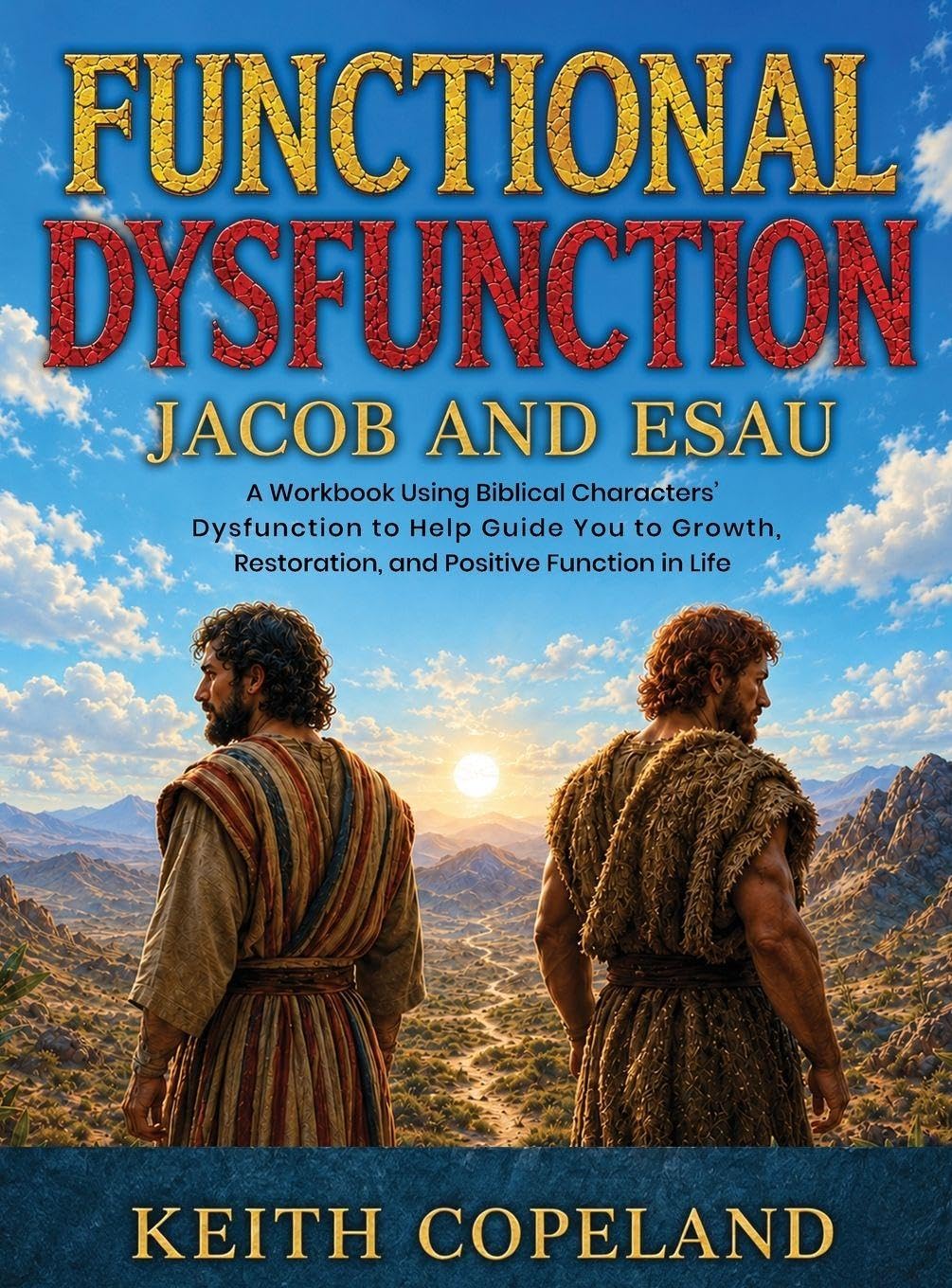
Chapter 6 of Functional Dysfunction: Jacob and Esau, titled “When Superman Meets Lois Lane,” encourages readers to think about how cultural customs influence the way people understand one another. Using Jacob’s journey to Haran and his first encounter with the shepherds at the well, the workbook reminds readers that people often judge unfamiliar situations before taking time to understand them.

The chapter teaches that customs and traditions develop for reasons that may not be immediately obvious. Instead of assuming that another community is wrong for doing things differently, readers are encouraged to ask questions, seek understanding, and show respect.

This lesson continues the workbook’s emphasis on personal growth by helping readers recognize the importance of looking beyond first impressions.
Jacob’s Arrival at the Well
After leaving his family, Jacob traveled to the land of the people of the east. There he came upon a well where several flocks of sheep had gathered. Jacob noticed that the shepherds had not yet watered their flocks, even though they were already assembled.
To Jacob, this seemed unusual. He questioned why the shepherds were waiting instead of removing the large stone from the well.
The shepherds explained that it was their custom to wait until all the flocks had gathered before removing the stone and watering the animals.
The workbook uses this simple event to introduce the importance of cultural customs and reminds readers that unfamiliar practices often have practical reasons behind them.
Understanding Before Judging
One of the strongest lessons in the chapter is that people should seek understanding before making judgments.
Jacob’s first impression did not include all the facts. Only after speaking with the shepherds did he learn why they followed that particular custom.
The workbook encourages readers to think about situations in which they may have misunderstood someone because they lacked important information.
Different communities develop different ways of living. What seems unusual in one place may be completely ordinary somewhere else.
Learning about cultural customs helps people appreciate differences rather than criticize them.
Why Customs Develop
The chapter explains that many customs exist because they serve practical purposes.
In the case of the well, waiting until everyone arrived helped ensure fairness for all who depended on the water. The custom promoted cooperation within the community.
The workbook encourages readers to think about customs in their own families and communities. Many traditions continue because they provide order, strengthen relationships, or preserve important values.
Not every custom will be the same, but each deserves understanding before being evaluated.
This perspective helps readers recognize that cultural customs often develop from the needs and experiences of a particular community.
Learning From Different Communities
Throughout the chapter, readers are encouraged to appreciate that every community has developed its own way of doing certain things.
Instead of assuming one way is always better than another, the workbook promotes learning through observation and conversation.
Jacob’s experience at the well demonstrates that asking respectful questions leads to greater understanding.

The workbook invites readers to consider:
-
Have you ever misunderstood another person’s customs?
-
Have others misunderstood yours?
-
What happened after you learned more about the situation?
-
Did greater understanding change your opinion?
These reflections encourage readers to become more thoughtful when encountering unfamiliar situations.
Relationships Grow Through Respect
Another important message in the chapter is that respect strengthens relationships.
When people make an effort to understand cultural customs, communication often becomes easier. Misunderstandings become fewer, and relationships grow stronger because people feel respected rather than judged.
The workbook reminds readers that communities are strengthened when people value one another’s experiences and traditions.
Respect does not require complete agreement with every custom. It begins with a willingness to listen, learn, and appreciate why others may do things differently.
This attitude helps create healthier relationships within families, churches, and communities.
Practical Lessons From the Chapter
Chapter 6 encourages readers to apply several important principles:
-
Learn before forming opinions.
-
Respect cultural customs that may differ from your own.
-
Ask questions when you do not understand.
-
Appreciate the experiences of different communities.
-
Build relationships through understanding rather than judgment.
These lessons support the workbook’s overall goal of helping readers grow in wisdom and positive function in life.
Final Thoughts
Chapter 6 of Functional Dysfunction: Jacob and Esau shows that understanding often begins with a willingness to learn. Through Jacob’s experience at the well, readers discover that cultural customs frequently exist for meaningful reasons, even when they seem unfamiliar at first.
The workbook encourages readers to approach others with patience, respect, and curiosity rather than quick judgment. By taking time to understand cultural customs, people strengthen relationships, develop greater compassion, and become more thoughtful in the way they interact with others. These lessons continue to guide readers toward growth, restoration, and positive function in life.