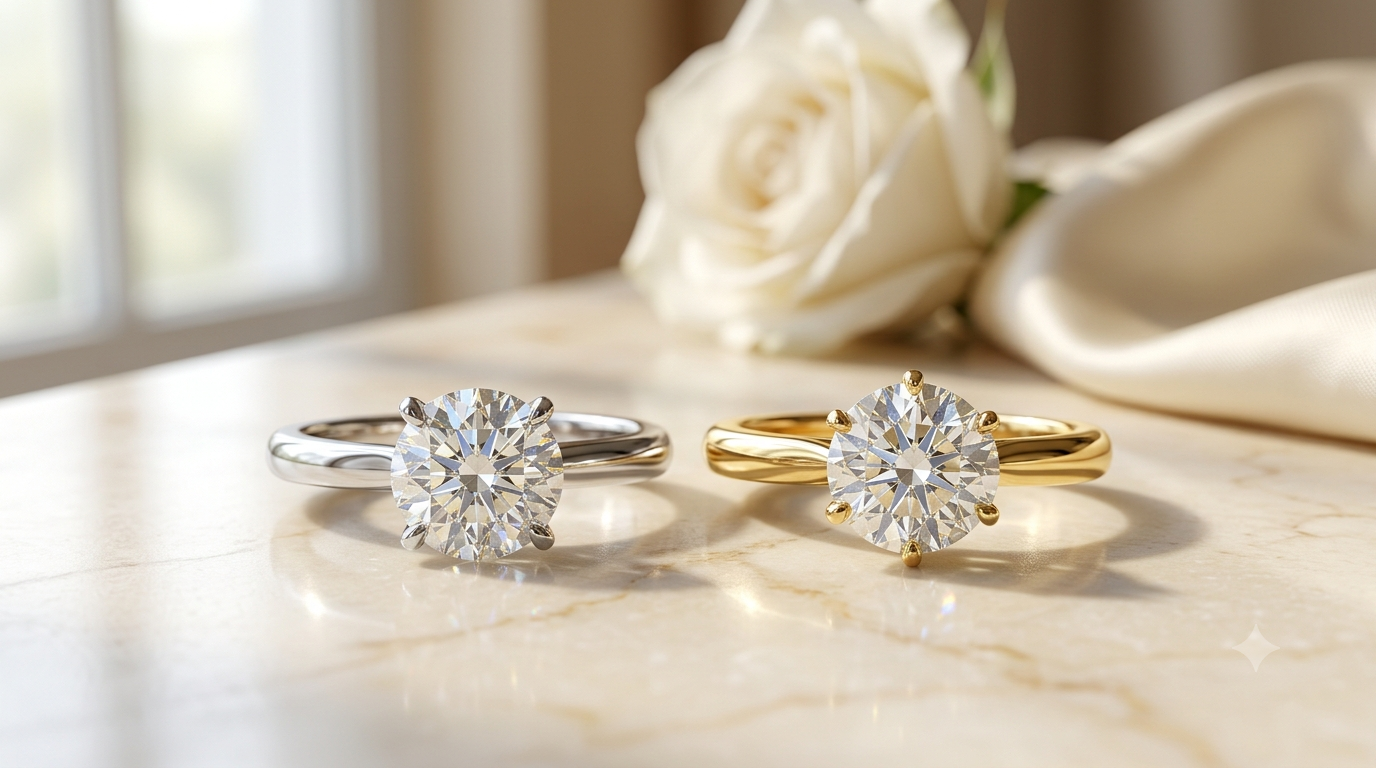
Buying Solitaire Diamond Rings is a special moment. A solitaire ring is more than just beautiful jewelry—it is a symbol of love, commitment, and personal style. One of the biggest decisions you will make is choosing between white gold and yellow gold. While both metals are timeless, they create very different looks and can even change how your diamond appears.
White gold offers a modern and elegant finish, while yellow gold gives a warm and classic feel. The right choice depends on your style, skin tone, diamond quality, and how much maintenance you are comfortable with. This guide explains the differences in simple terms, helping you choose the perfect metal for a ring you’ll treasure for years.

The First Impression Test
When you first look at a solitaire diamond ring, the metal color is one of the first things you notice. Even with the same diamond, changing the metal can completely transform the ring’s appearance.
A yellow gold band creates a traditional and rich look. It brings warmth and vintage charm, making it a favorite for people who love classic jewelry.
A white gold band gives the ring a clean and modern appearance. Its bright white finish blends with the diamond, creating a sleek and sophisticated style.
Since many people wear their solitaire ring every day, choosing a metal that matches your personality is just as important as choosing the diamond itself.
Visual Impact and Diamond Color
How Yellow Gold Warms the Stone
Yellow gold has a natural warm tone that can make a diamond appear slightly warmer. This works especially well with diamonds that have a small amount of natural color.
Diamonds graded G-H, which are considered near-colorless, often look bright and beautiful in yellow gold settings. The warm metal helps hide slight yellow tones, making the diamond appear whiter than it might in another setting.
This allows buyers to save money without giving up beauty. Instead of paying more for a higher color grade, many people choose a G-H diamond in yellow gold because it offers excellent value.
Example: Saving Money with Yellow Gold
Imagine two solitaire rings with the same size and cut.
- Ring A features a D-color diamond in white gold.
- Ring B features a G-color diamond in yellow gold.
To most people, Ring B will still look bright and sparkling, but it usually costs less because G-color diamonds are more affordable than D-color diamonds.
This is why many jewelry experts recommend yellow gold for buyers who want to maximize their budget while still getting an impressive diamond.
The High-Contrast Look of White Gold
White gold creates a completely different effect. Its bright white surface reflects light around the diamond, making colorless stones stand out even more.
Diamonds in the D-F color range look especially stunning in white gold because there is almost no visible color. The diamond appears crisp, icy, and full of brilliance.
However, white gold also reveals color more easily. If you choose a diamond with noticeable warmth, the slight yellow tint may become more visible because the white metal creates a stronger contrast.
For buyers choosing white gold, investing in a higher color-grade diamond is often worth considering.
Popular Diamond Pairings in 2026
Current jewelry trends show two combinations leading the market:
- White gold with D-F color diamonds for a clean, luxury look.
- Yellow gold with G-H color diamonds for timeless elegance and better value.
These combinations balance beauty and budget, making them popular choices for engagement rings and everyday solitaire designs.
Durability and Long-Term Maintenance
Your ring should stay beautiful for many years. While both metals are durable, they require different types of care.
Rhodium Plating and the Fade Factor
White gold is not naturally bright white. It is made by mixing pure gold with white metals such as nickel or palladium. To achieve its brilliant white shine, it is coated with a thin layer of rhodium.
Rhodium is a rare metal that gives white gold its reflective finish while adding extra protection against scratches.
Over time, this coating slowly wears away, especially if the ring is worn every day. Areas that receive frequent contact may begin to show the warmer color of the gold underneath.
This doesn’t mean the ring is damaged. It simply needs professional re-plating to restore its original shine.
How Often Should White Gold Be Re-Plated?
Most jewelers recommend rhodium re-plating every 12 to 24 months, depending on how often you wear the ring and your daily activities.
People who frequently use their hands for work, exercise, or household tasks may notice the finish wearing faster.
Professional cleaning and polishing during routine inspections can also help keep the ring looking like new.
Natural Wear and Scratching in Yellow Gold
Yellow gold does not require rhodium plating because its natural color is already part of the metal.
Like all precious metals, yellow gold develops small scratches over time. However, these scratches usually blend into the warm surface instead of standing out.
Many jewelry lovers appreciate this natural aging process because it creates a soft patina that gives the ring character rather than making it look worn.
Understanding Gold Alloys
The durability of your ring also depends on whether it is made from 14K or 18K gold.
- 14K gold contains more alloy metals, making it harder and better suited for everyday wear.
- 18K gold contains more pure gold, giving it a richer color but making it slightly softer.
For someone who plans to wear a solitaire ring every day, 14K gold is often the practical choice because it offers excellent durability without sacrificing beauty.
A Real-World Example
Imagine a yellow gold solitaire ring worn daily for ten years.
Instead of losing its beauty, it develops a smooth, soft finish with tiny marks that reflect years of memories. Many owners love this natural patina because it tells the story of the ring.
A white gold ring of the same age can look equally stunning, but it may have needed several rhodium re-plating treatments to maintain its bright white appearance.
Both metals age beautifully—they simply do so in different ways.
Choosing between them depends on whether you prefer the evolving warmth of yellow gold or the polished brilliance of white gold.