India’s export sector continues to grow as businesses expand into international markets and strengthen global trade relationships. However, competing successfully in international markets requires more than quality products. Manufacturers and exporters also need efficient government support, lower production costs, and streamlined import procedures that enhance competitiveness.
Two of the most valuable initiatives supporting exporters are the EPCG License and Advance Authorisation. While both schemes encourage exports, they address different operational requirements. An EPCG License focuses on importing capital goods for production, whereas Advance Authorisation allows duty-free import of raw materials required for manufacturing export products.

Understanding both programs enables businesses to improve production efficiency, reduce costs, and expand internationally with greater confidence.
Understanding the EPCG License
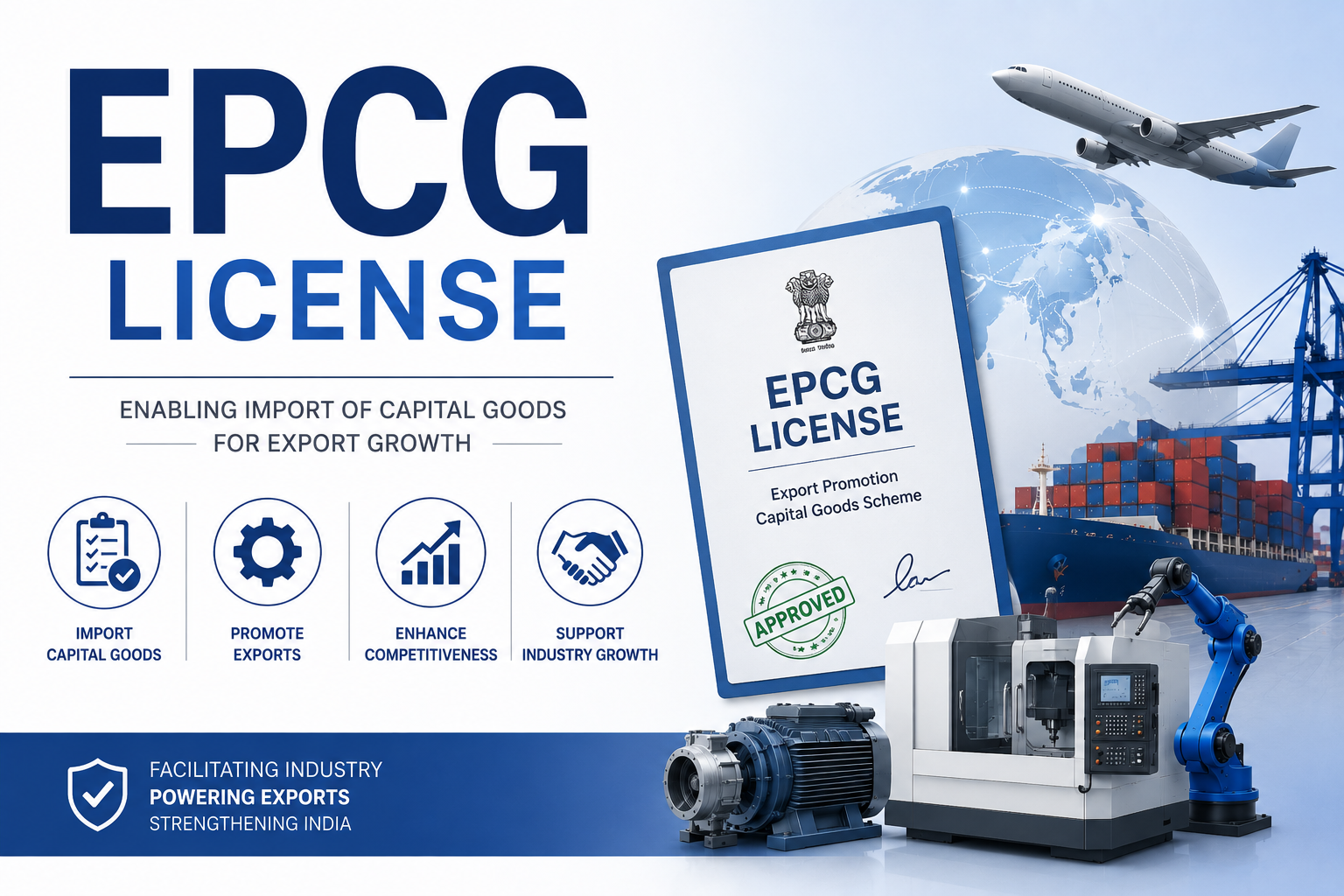
An EPCG License is issued under the Export Promotion Capital Goods Scheme, allowing eligible businesses to import capital goods at concessional or zero customs duty in exchange for fulfilling specified export obligations.
Capital goods may include machinery, equipment, production technology, manufacturing systems, and tools that improve industrial productivity.
The objective is to encourage technology upgradation while strengthening India’s export capabilities.
Benefits of an EPCG License
The scheme offers several strategic advantages.
Encourages Technology Upgradation
Modern equipment improves manufacturing quality.
- Businesses gain access to advanced machinery that increases production efficiency, enhances product quality, and improves operational performance.
- Technology investments often help organizations compete more effectively in international markets.
Reduces Capital Investment
Lower import duties improve financial flexibility.
- Businesses can allocate more resources toward innovation, workforce development, and market expansion instead of paying high import duties.
Supports Export Growth
Efficient production strengthens competitiveness.
- Modern manufacturing facilities allow exporters to meet increasing global demand while maintaining competitive pricing.
Understanding Advance Authorisation
Advance Authorisation is another export promotion initiative that allows businesses to import raw materials, components, consumables, and other inputs without paying customs duty, provided these materials are used in manufacturing products intended for export.
Unlike the EPCG License, which focuses on importing production equipment, Advance Authorisation supports day-to-day manufacturing by reducing the cost of imported inputs.
Benefits of Advance Authorisation
The program provides valuable operational support.
Reduces Manufacturing Costs
Duty-free imports improve profitability.
- Businesses save significantly on imported raw materials, making export production more cost-effective.
Improves Global Competitiveness
Lower production costs strengthen market position.
- Cost savings help exporters offer competitive pricing while maintaining product quality.
Encourages Export Expansion
Greater financial flexibility supports growth.
- Businesses can invest additional resources into expanding production capacity and exploring new international markets.
EPCG License vs Advance Authorisation
Although both initiatives support exports, their purposes differ.
EPCG License
Supports long-term production investment.
- Businesses import machinery and capital goods required to improve manufacturing capabilities.
Advance Authorisation
Supports ongoing production activities.
- Companies import raw materials needed to manufacture export products efficiently.
Many exporters successfully utilize both programs depending on operational requirements.
Industries That Frequently Benefit
Several industries regularly use these export promotion schemes.
Engineering Industry
Advanced machinery improves production.
- Engineering companies frequently invest in modern manufacturing equipment through the EPCG License while importing specialized materials under Advance Authorisation.
Textile Industry
Competitive manufacturing supports exports.
- Textile manufacturers often reduce production costs by combining advanced machinery with duty-free raw material imports.
Pharmaceutical Industry
Quality production requires modern technology.
- Pharmaceutical exporters benefit from efficient manufacturing equipment and imported production inputs.
Automobile Components
Global supply chains demand efficiency.
- Manufacturers improve productivity while maintaining cost-effective production for export markets.
Best Practices for EPCG License
Careful planning improves long-term benefits.
Select Suitable Machinery
Technology should support future production goals.
- Businesses should evaluate long-term manufacturing requirements before importing capital equipment.
Monitor Export Obligations
Regular tracking prevents compliance issues.
- Export commitments should be reviewed periodically to ensure timely fulfillment.
Maintain Complete Documentation
Proper records simplify verification.
- Import documents, export invoices, installation certificates, and compliance records should remain organized.
Best Practices for Advance Authorisation
Efficient management supports successful implementation.
Forecast Raw Material Requirements
Planning improves inventory management.
- Businesses should accurately estimate production requirements before applying.
Maintain Input-Output Records
Documentation supports regulatory compliance.
- Proper tracking ensures imported materials are used according to authorization conditions.
Stay Updated on Regulations
Government policies occasionally change.
- Businesses should review revised DGFT notifications regularly.
Long-Term Benefits of Using Both Schemes
Organizations managing both programs effectively often experience substantial advantages.
Stronger Financial Performance
Reduced costs improve profitability.
- Savings generated through duty exemptions create additional investment opportunities.
Better Production Efficiency
Modern technology supports operational excellence.
- Efficient manufacturing processes improve productivity while maintaining quality standards.
Greater Export Competitiveness
Improved pricing attracts international buyers.
- Lower production costs strengthen market position globally.
Sustainable Business Growth
Balanced investment supports future expansion.
- Technology upgrades and cost-efficient manufacturing create strong foundations for long-term success.
Conclusion
The EPCG License and Advance Authorisation are two important government initiatives that help Indian exporters improve production efficiency, reduce operational costs, and strengthen international competitiveness. While the EPCG License supports investment in advanced manufacturing equipment, Advance Authorisation enables duty-free import of raw materials required for export production.
Businesses that understand and effectively utilize both schemes can improve productivity, maintain regulatory compliance, and expand confidently into global markets while building sustainable long-term growth.
Looking to improve your export operations and reduce production costs? Consult experienced trade professionals to understand how an EPCG License and Advance Authorisation can help your business maximize government benefits, strengthen manufacturing efficiency, and achieve long-term international success.